Advertisement
Regulation & Policy
Share
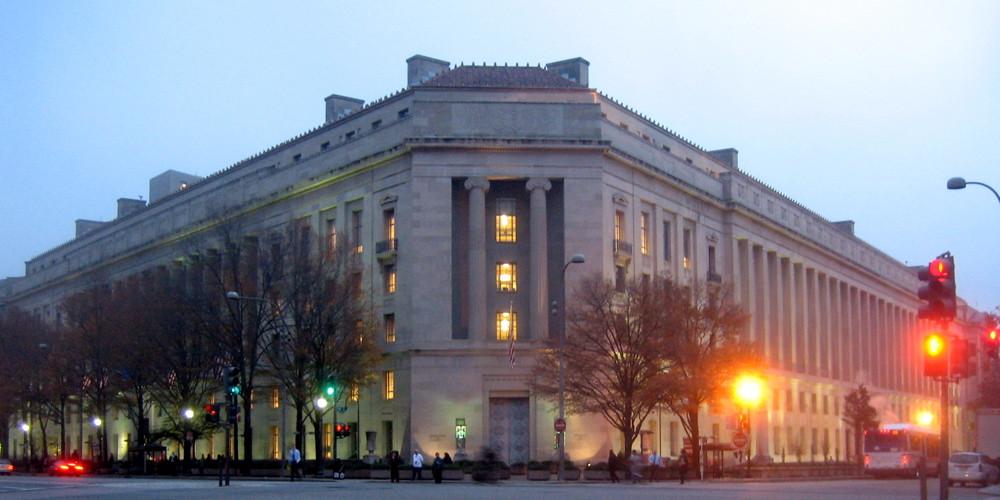
The U.S. DOJ filed a civil forfeiture complaint on Nov. 23 seeking to permanently recover $1.1 billion in USDC across 36 addresses on 18 blockchain networks, linked to the Oct. 29 Binance hack attributed to North Korea's Lazarus Group and APT38.
The U.S. Department of Justice (DOJ) has filed a civil forfeiture action seeking to recover more than $1.1 billion in USDC linked to the October cyberattack on Binance, escalating efforts to reclaim cryptocurrency stolen by North Korean cyber actors in one of the largest digital asset thefts on record.
The complaint, filed on November 23 in the U.S. District Court for the District of Columbia, seeks the forfeiture of USDC held across 36 cryptocurrency addresses on 18 blockchain networks. U.S. authorities allege that the assets represent proceeds of the Binance theft and cryptocurrency subsequently laundered by the attackers.
The action follows earlier efforts by U.S. authorities and private-sector partners to freeze assets associated with the incident. According to the DOJ, the United States has assisted in freezing, seizing or facilitating the return of nearly $3 billion in cryptocurrency since the theft.
Circle, the issuer of USDC, cooperated with investigators to restrict access to the targeted assets. The forfeiture proceedings now seek to establish the government's legal right to permanently recover them.
According to the DOJ complaint, the targeted assets consist of more than $1.1 billion in USDC associated with 36 cryptocurrency addresses across 18 blockchain networks.
Investigators traced the funds to the October 29 Binance breach and subsequent transactions allegedly designed to conceal their origins and movement.
The assets had previously been subjected to a government-requested restraining order following coordination with Circle, which helped restrict access to the identified USDC.
Under the arrangement described in the proceedings, Circle has agreed to issue an equivalent amount of new USDC and transfer it to the U.S. government if the court grants a final forfeiture order.
The distinction is important: the targeted funds have already been restricted, but they have not yet been permanently forfeited to the government. The civil proceedings are intended to establish that legal transfer.
The case illustrates how authorities can combine blockchain transaction tracing, cooperation with stablecoin issuers and traditional judicial procedures to pursue the recovery of digital assets across multiple networks.
The forfeiture action stems from the October 29 attack on Binance, in which unauthorized actors accessed approximately $6 billion in cryptocurrency from the exchange.
The FBI, U.S. Secret Service and IRS Criminal Investigation assess that the theft was carried out by members of North Korean military hacking groups known as the Lazarus Group and Advanced Persistent Threat 38 (APT38), according to the court complaint.
The attackers moved the stolen assets through multiple cryptocurrency addresses and blockchain networks, using transactions and conversion activity that investigators say formed part of an effort to launder the proceeds.
The incident triggered an international recovery effort involving Binance, law enforcement agencies, blockchain analytics firms and cryptocurrency companies.
In its initial response, Binance said it was working with industry partners to freeze affected assets and protect customers. The exchange also committed corporate resources to cover the financial impact of the breach.
Unlock Blockchain previously examined the technical circumstances surrounding the incident in Binance's $6.3B Hack: How Could One Laptop Open the Door?, which explored the exchange's preliminary findings, the possible compromise of internal infrastructure and the broader security implications.
The case also highlights the role of centralized stablecoin issuers in cryptocurrency investigations and asset recovery.
Unlike Bitcoin, USDC incorporates issuer-level controls that can allow Circle to restrict access to tokens associated with certain suspicious or illicit activities, subject to applicable legal and contractual requirements.
In this case, Circle's cooperation helped prevent access to the USDC identified in the forfeiture complaint while U.S. authorities pursued the legal process to recover the assets permanently.
The proposed replacement-token arrangement also demonstrates how stablecoin issuers can support the transfer of frozen assets through a combination of blockchain controls and legal authorization.
However, this mechanism does not apply universally across digital assets. Bitcoin and other decentralized cryptocurrencies do not have centralized issuers capable of freezing tokens at the protocol level, making their recovery dependent on different investigative and legal mechanisms.
The proceedings therefore illustrate both the opportunities and limitations of stablecoin controls in combating cryptocurrency-enabled financial crime.
The latest U.S. action follows a separate international recovery effort involving Abu Dhabi Global Market (ADGM) Courts.
On November 18, Binance announced that it had secured a worldwide freezing injunction covering approximately $6.5 billion in assets associated with the October theft. The proceedings involved 18 cryptocurrency companies and established a legal framework for maintaining existing freezes and pursuing the eventual return of affected assets.
Unlock Blockchain previously reported on the proceedings in Binance Secures $6.5B Global Freeze Through Abu Dhabi Courts, examining how the Abu Dhabi court orders could help establish a legal route for recovering assets held by third-party companies across jurisdictions.
The ADGM proceedings and the latest U.S. forfeiture action represent separate legal efforts, but both address a central challenge in cryptocurrency theft cases: freezing stolen assets does not automatically establish who is legally entitled to receive them.
The U.S. complaint adds another layer to the recovery process by seeking a final forfeiture order covering a specific pool of USDC linked to the attack.
The DOJ said the latest forfeiture action forms part of a wider government effort to assist Binance in recovering more than $6 billion in stolen cryptocurrency.
Since the October 29 theft, U.S. authorities have assisted in freezing, seizing and facilitating the return of nearly $3 billion in assets from multiple sources.
The FBI, U.S. Secret Service and IRS Criminal Investigation are continuing to investigate the incident, working with cryptocurrency companies and other private-sector partners to trace transactions and restrict access to additional funds.
The latest proceedings also underscore the growing importance of public-private cooperation in cryptocurrency enforcement. Blockchain networks provide transaction records that investigators can use to follow the movement of stolen funds, while centralized exchanges and stablecoin issuers can help restrict access to assets under their control.
However, the distinction between frozen, seized, returned and permanently forfeited cryptocurrency remains important. The $1.1 billion covered by the latest complaint has not yet been transferred permanently to the U.S. government.
As the legal proceedings advance, the case will test how effectively traditional forfeiture laws can be applied to digital assets that move across multiple blockchain networks and jurisdictions.

Disclaimer of Warranty
The information provided in this article is for general informational purposes only. We make no warranties about the completeness, reliability, and accuracy of this information. Read full disclaimer

Editor's Picks
In the Same Space
US Nominates Four Officials to SEC and CFTC With Crypto Policy Experience

News Desk

Nov 13, 2026

4 min
SEC Enters Legal Fight Over Stock Perpetuals
News Desk
Nov 12, 2026
4 min

South Korea Extends Crypto Licensing Checks to Major Shareholders
News Desk
Nov 24, 2026
5 min
CFTC Lets Derivatives Exchanges Use Crypto to Meet Financial Requirements
News Desk
Nov 24, 2026
4 min