
Advertisement
Regulation & Policy
Share
SN
Senior English Editor


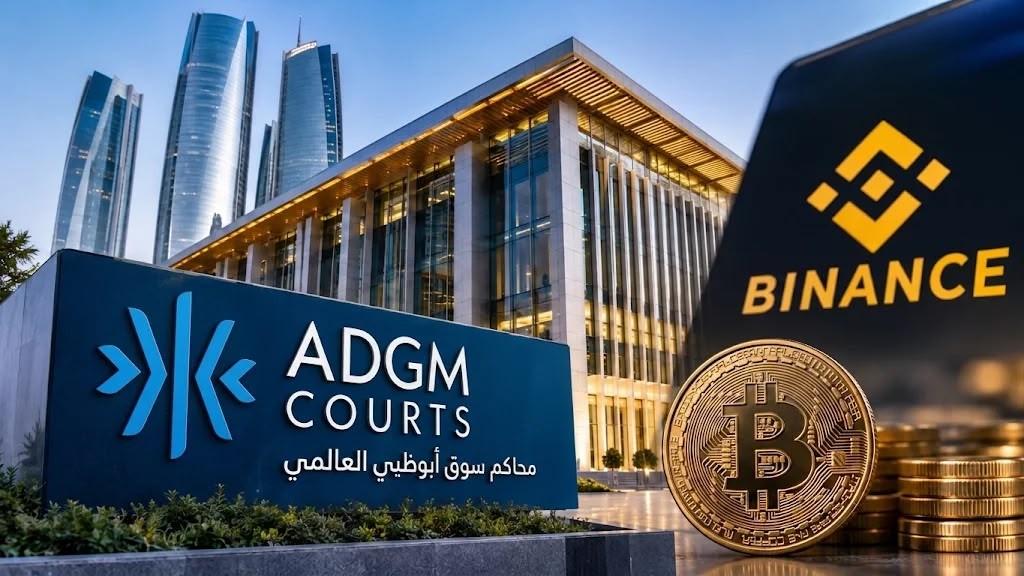
ADGM Courts granted Binance a $6.5 billion worldwide freezing injunction following the exchange's October 29 security breach, placing Abu Dhabi at the center of a multi-jurisdictional digital-asset recovery effort involving 18 cryptocurrency companies.
Abu Dhabi Global Market (ADGM) Courts have granted Binance a $6.5 billion worldwide freezing injunction as the cryptocurrency exchange pursues the recovery of assets stolen in its October 29 security breach. The proceedings involve 18 cryptocurrency companies and introduce a legal mechanism for preserving and returning digital assets across multiple jurisdictions.
The injunction represents a significant development in one of the cryptocurrency industry’s largest theft cases, placing Abu Dhabi’s judicial infrastructure at the centre of an international digital-asset recovery effort.
Binance announced on November 18 that the orders were obtained against unidentified individuals accused of carrying out the attack. The exchange said the legal action is intended to help cryptocurrency issuers, exchanges and other industry participants freeze and return assets connected to the incident.
The approximately $6.34 billion theft involved assets across multiple blockchain networks. However, the $6.5 billion figure represents the value covered by the worldwide freezing injunction, not the amount already recovered.
According to Binance, its lawyers have identified approximately 26,000 wallet addresses associated with the stolen funds. The list will be continuously updated as investigators trace the movement of assets across blockchain networks.
The ADGM Courts issued a worldwide freezing injunction against the alleged perpetrators, alongside separate proprietary injunctions and delivery-up orders intended to support the recovery of specific assets.
The proceedings also involve 18 cryptocurrency companies that have previously frozen tokens connected to the theft. These include Circle, the issuer of USDC, and World Liberty Financial, which issues the USD1 stablecoin.
Under the orders, the named companies must maintain freezes on the relevant assets and cannot lend, swap or mix the affected tokens with other assets while the proceedings continue.
The court has not accused the 18 companies of wrongdoing. Rather, the orders provide a legal framework for preserving assets already identified and frozen by industry participants.
The distinction is important because identifying and freezing stolen cryptocurrency does not automatically establish who is legally entitled to receive it.
Some stablecoin issuers, exchanges and other intermediaries require formal judicial authorization before releasing or transferring frozen assets. Binance’s legal proceedings are intended to provide that basis.
The orders can also be served through blockchain transactions, according to M. Kendall Day of Gibson Dunn, the law firm representing Binance.
The process involves maintaining a continuously updated list of approximately 26,000 wallet addresses identified as holding stolen assets. Relevant market participants can receive notifications as investigators identify additional addresses or trace the movement of funds.
The proceedings highlight the growing role of cryptocurrency issuers and intermediaries in responding to digital-asset theft.
Following the October 29 incident, several companies moved to freeze tokens linked to the stolen funds.
Binance previously reported that approximately $2.85 billion of the affected cryptocurrency had been frozen or intercepted by third parties. This included assets held in USDC and USD1.
Tether, the issuer of USDT, separately reported freezing approximately $1.5 billion connected to the incident. Although Tether is not among the 18 companies named in the ADGM proceedings, it confirmed that it was working directly with Binance on returning the frozen assets.
The recovery process also illustrates the differences between blockchain-based assets.
Stablecoins issued by centralized companies can, depending on their technical and contractual arrangements, be frozen or reissued by their issuers. Bitcoin and Ether, by contrast, do not have centralized issuers capable of freezing tokens at the protocol level.
As stolen assets move between wallets and blockchain networks, investigators must therefore coordinate with exchanges, custodians, issuers and blockchain intelligence firms to identify and intercept funds.
This makes legal authorization an important part of the recovery process, particularly when assets are already held by third parties.
The Abu Dhabi proceedings form part of a broader international effort to recover the stolen cryptocurrency.
On November 13, the US Department of Justice announced that authorities had obtained court authorization to seize or restrict the disposal of more than $1.2 billion in cryptocurrency linked to the Binance incident.
The amount formed part of more than $2.7 billion in assets that had been frozen through cooperation between government agencies and private-sector participants, according to US authorities.
The FBI and Binance attributed the October attack to North Korea-linked actors. The incident has also renewed attention to the cybersecurity risks facing cryptocurrency exchanges and digital-asset infrastructure providers.
Binance said it had absorbed the financial impact of the theft and covered affected customer assets using its corporate resources and protection funds. The exchange is continuing to pursue the stolen cryptocurrency despite having addressed the losses suffered by customers.
A further hearing is scheduled for December 1, when the ADGM Courts will consider whether the proprietary injunction should continue and under what conditions.
The case places another dimension of Abu Dhabi’s digital-asset ecosystem in focus: the role of judicial institutions in protecting ownership rights and resolving disputes involving assets that move across borders.
As financial institutions, custodians and asset managers expand their exposure to tokenized securities, stablecoins and other blockchain-based financial instruments, the ability to establish ownership and enforce legal claims becomes increasingly important.
For institutional participants, the Binance proceedings illustrate how digital-asset recovery can depend on cooperation between courts, financial intermediaries and blockchain infrastructure providers.
This is particularly relevant as ADGM continues to develop its regulatory and institutional digital-asset ecosystem. Its Financial Services Regulatory Authority (FSRA) has established a framework covering activities involving virtual assets and fiat-referenced tokens, including issuance, custody and related services.
The legal dimension is also developing elsewhere in the UAE. In Dubai, the DIFC Courts have introduced access to specialized digital-asset custody and blockchain intelligence services to support complex disputes involving cryptocurrencies and tokenized assets.
Together, these developments reflect the growing need for legal and operational infrastructure capable of addressing disputes involving assets held on blockchain networks.
The Binance case does not establish that a single court order can automatically recover cryptocurrency across every jurisdiction. Its effectiveness will depend on the relevant legal proceedings, the location and nature of the assets, and the cooperation of intermediaries capable of controlling them.
Nevertheless, the proceedings demonstrate how judicial mechanisms can complement blockchain analytics and asset-freezing capabilities in international recovery efforts.
For Abu Dhabi, the case adds a practical dimension to its ambitions in digital finance: the development of a financial centre requires not only regulated markets and institutional participation, but also legal mechanisms capable of addressing disputes when digital assets are stolen or ownership is contested.

Disclaimer of Warranty
The information provided in this article is for general informational purposes only. We make no warranties about the completeness, reliability, and accuracy of this information. Read full disclaimer

Editor's Picks
In the Same Space

Licensed, Then What? Dubai’s VASP Commercial Reality

Walid Abou Zaki

Nov 18, 2026

6 min

Copper Withdraws ADGM License to Focus on US and Switzerland
Ola Rajeh
Nov 11, 2026
5 min
Stake RWA Secures Full VARA License for Broker-Dealer Services in Dubai
News Desk
Nov 11, 2026
3 min

VARA and Mastercard Partner to Support the Future of Digital Assets in Dubai
News Desk
Nov 10, 2026
3 min