Advertisement
Regulation & Policy
Share
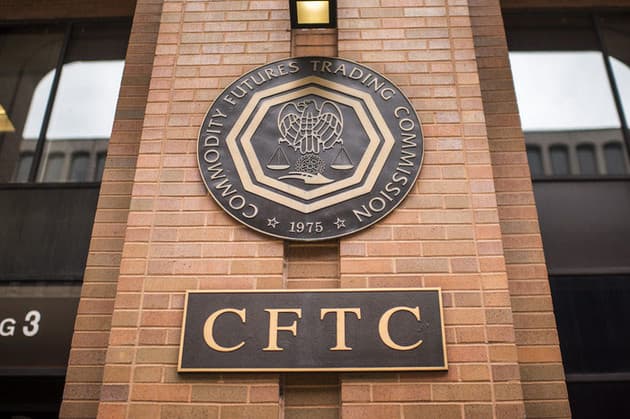
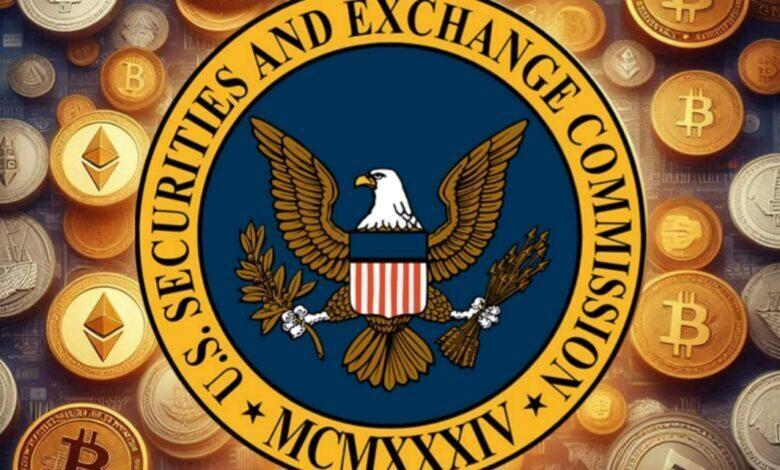
The SEC filed an amicus brief supporting the CFTC against a lawsuit by the Capital Markets Alliance (CMA), which argues that single-stock perpetual futures approved for Coinbase, Kalshi, and Payward fall under SEC jurisdiction, not CFTC authority.
The US Securities and Exchange Commission (SEC) has entered a legal dispute over who should regulate perpetual futures tied to individual stocks, filing a court brief in support of the Commodity Futures Trading Commission (CFTC) as traditional financial industry groups challenge the approval of the products.
The SEC submitted an amicus brief this week in a lawsuit brought by the Capital Markets Alliance (CMA), an industry association whose members include Cboe and Citadel Securities. The group is seeking to overturn the CFTC's approval of single-stock perpetual derivatives, arguing that the products fall under the SEC's securities-market jurisdiction.
The SEC rejected the CMA's characterization of the CFTC as having acted without proper oversight. It said the agencies work together on matters involving these products and that the CFTC's relevant rule changes are also subject to SEC review. The filing underscores the agencies' shared role in overseeing equity-related derivatives, rather than establishing that either regulator has exclusive authority over every aspect of the market.
The CMA filed its lawsuit last week, arguing that the CFTC violated the Administrative Procedure Act by approving the products without adequately explaining its decision. It maintains that single-stock perpetual contracts should be treated as security-based swaps, placing them under the SEC's jurisdiction and subjecting them to a different regulatory framework.
The association has asked the court to overturn the approvals, contending that the CFTC exceeded its authority and did not follow the required administrative process.
The dispute follows the CFTC's decision to deem applications from Coinbase, Kalshi and Payward approved on November 2, allowing the firms to pursue listings of perpetual contracts linked to US stocks.
The firms have argued that the products can be regulated under the existing framework for security futures, which involves coordination between the SEC and CFTC. Coinbase, Kalshi, Payward, DRW Holdings, Jump Trading and Paradigm have also filed a joint amicus brief supporting the CFTC in the case.
The disagreement therefore concerns not only which regulator oversees the products, but also how they should be legally classified under US derivatives and securities laws.
The legal challenge has brought digital-asset companies and established financial-market participants into opposing positions.
Crypto firms supporting the CFTC's approach argue that the existing security-futures framework provides a basis for listing equity perpetuals under coordinated regulatory oversight. They also contend that allowing these products within US-regulated markets could give domestic investors access to instruments that are already traded on offshore platforms.
The CMA and other critics argue that the contracts function more like securities swaps than conventional futures. Better Markets, which has also opposed the approvals, said the products should fall under SEC oversight and raised concerns about leverage, investor protection and potential losses for retail traders.
Former SEC Commissioner Allison Herren Lee has also supported the view that the products should be regulated by the SEC.
The competing positions reflect a wider disagreement over whether the regulatory treatment of perpetual contracts should be determined primarily by their structure as futures or by their economic characteristics as derivatives linked to securities.
Perpetual futures, commonly called perps, are derivatives contracts that allow traders to speculate on an asset's price without holding the underlying asset. Unlike conventional futures, they have no fixed expiration date. Positions can remain open indefinitely as long as traders meet the applicable margin requirements.
In crypto markets, perpetual futures are widely used and often involve leverage and periodic funding payments between long and short positions. Bringing similar instruments linked to individual stocks into US-regulated markets introduces additional questions involving securities law, exchange oversight, clearing, collateral and investor protections.
The regulatory dispute could affect how Coinbase, Kalshi and Payward structure and launch their proposed equity-perpetual products in the United States. It also has implications for other platforms seeking to expand crypto-style derivatives into traditional financial markets.
For now, the SEC's filing supports the CFTC in the ongoing litigation but does not resolve the underlying jurisdictional dispute or amount to a final ruling on the products' regulatory classification. The court's consideration of the CMA's challenge will help determine how the existing US regulatory framework applies to this emerging derivatives market.

Disclaimer of Warranty
The information provided in this article is for general informational purposes only. We make no warranties about the completeness, reliability, and accuracy of this information. Read full disclaimer

Editor's Picks

Binance After the $6.3B Hack: A Turning Point for the Exchange

Walid Abou Zaki

Nov 2, 2026

10 min

“One Financial System”: What OKX’s New Investors Are Backing
Walid Abou Zaki
Oct 8, 2026
6 min

When Assets Move—or Stop—Without Consent: The Limits of Crypto Wallet Control
Walid Abou Zaki
Sep 29, 2026
6 min
Read More Articles

In the Same Space

VARA and Mastercard Partner to Support the Future of Digital Assets in Dubai
News Desk
Nov 10, 2026
3 min

Hyperliquid Strategies Seeks US License to Offer Regulated Perpetual Futures
News Desk
Nov 6, 2026
5 min

FSB Urges Türkiye to Close Stablecoin Regulation Gap
Salma Naueihed
Nov 11, 2026
4 min
Copper Withdraws ADGM License to Focus on US and Switzerland
Ola Rajeh
Nov 11, 2026
5 min