Advertisement
Regulation & Policy
Share
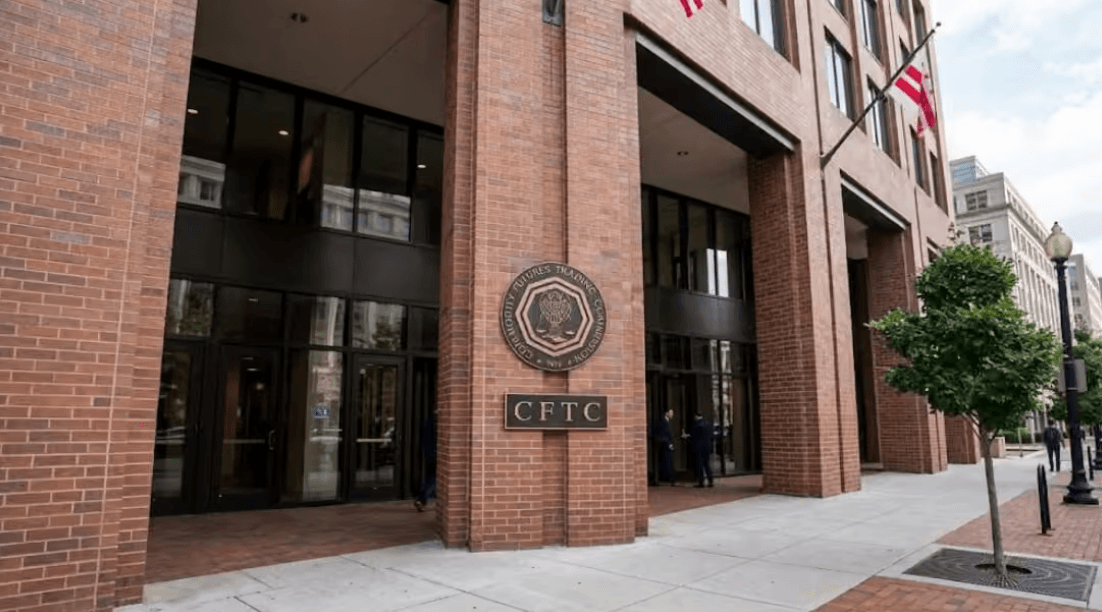
The CFTC has approved equity perpetual futures for trading on qualifying US exchanges, extending a derivatives model from crypto markets to individual stocks, but the decision faces an immediate federal lawsuit from a traditional finance industry group including Cboe and Citadel Securities.
The US Commodity Futures Trading Commission (CFTC) has cleared the way for perpetual futures contracts tied to individual stocks to trade on qualifying US exchanges for the first time, extending a derivatives model popularized by cryptocurrency markets into traditional equities. However, the decision has already triggered a legal challenge from a financial industry group backed by major traditional market participants, including Cboe and Citadel Securities.
CFTC Chairman Michael Selig announced on November 3 that equity perpetual futures, also known as Equity Perps, can begin trading on designated contract markets registered with the agency and also registered with the Securities and Exchange Commission (SEC) as national securities exchanges for security futures products.
The contracts were deemed approved under CFTC Regulation 40.3 as security futures products, placing them within the existing framework governing products subject to both commodities and securities laws.
Selig described the move as an effort to bring innovative derivatives products into regulated US markets rather than leaving American traders dependent on offshore platforms.
However, the regulatory decision faces an immediate legal challenge over whether the CFTC has the authority to classify and oversee these products under the existing security futures framework.
Perpetual futures are derivative contracts that allow traders to speculate on an asset's price without owning the underlying asset or dealing with a fixed expiration date.
Unlike conventional futures contracts, which expire on predetermined dates, perpetual contracts allow positions to remain open indefinitely, subject to margin requirements and liquidation rules.
They typically use funding payments exchanged between long and short position holders to keep contract prices aligned with the underlying asset's market price. Leverage is also common, allowing traders to control larger positions with relatively smaller amounts of collateral while increasing exposure to potential losses.
The instrument became a defining feature of cryptocurrency derivatives trading, particularly on offshore centralized exchanges and decentralized platforms such as Hyperliquid.
The CFTC's latest decision extends this structure to individual equity securities, potentially creating a regulated domestic alternative to stock perpetual products that have been offered through offshore platforms.
However, the agency has not yet identified which exchanges will list the contracts, which individual stocks will be available or when trading will begin.
Under the announced framework, exchanges must hold a CFTC designated contract market registration and SEC notice registration as national securities exchanges for security futures products.
The regulatory announcement was followed by a legal challenge from the Capital Markets Alliance, a group backed by traditional financial market participants, including Cboe and Citadel Securities.
The organization filed a lawsuit in federal court in the Southern District of New York on November 3, seeking to overturn the CFTC's decision.
The lawsuit argues that equity perpetual futures should be treated as securities-based swaps rather than security futures, placing them under a different regulatory framework and challenging the CFTC's authority to authorize their trading through its existing approach.
The group also argues that the agency failed to adequately explain its position and comply with the Administrative Procedure Act.
The dispute reflects a broader disagreement over how derivatives linked to individual stocks should be classified and which regulator should oversee them.
The American Securities Association also criticized the CFTC's approach, arguing that classifying the products as security futures could bypass regulatory restrictions applicable to securities-based swaps.
CFTC Chairman Selig defended the decision, emphasizing the need to bring innovative derivatives products into regulated markets. The agency also described the lawsuit as troubling interference with regulated market innovation.
The SEC has not publicly commented on the specific lawsuit.
The introduction of equity perpetual futures comes as cryptocurrency platforms and traditional financial exchanges increasingly compete over derivatives products, trading infrastructure and market access.
Platforms such as Hyperliquid have helped establish perpetual futures as a major segment of digital asset trading, demonstrating demand for leveraged exposure without conventional contract expiration dates.
Traditional financial firms have also begun exploring the infrastructure behind these markets.
Intercontinental Exchange (ICE), the parent company of the New York Stock Exchange, recently invested in tradeXYZ, a platform developing perpetual futures markets on Hyperliquid.
The latest CFTC decision could provide a pathway for regulated US exchanges to compete for trading activity that has historically been concentrated on offshore cryptocurrency platforms.
It also builds on the agency's earlier efforts to accommodate perpetual futures linked to digital assets. In May, the CFTC allowed regulated US platforms to offer Bitcoin perpetual futures, marking an important step toward bringing crypto-native derivatives structures into domestic markets.
However, the expansion into individual stocks introduces additional regulatory complexity because the underlying assets fall within the SEC's securities jurisdiction.
The legal challenge places the future classification of perpetual futures back under scrutiny, particularly as traditional exchanges and crypto-native platforms pursue products with similar structures.
CME Group previously challenged the CFTC's approach to cryptocurrency perpetual futures, arguing that contracts without expiration dates should be classified as swaps rather than futures under the Dodd-Frank Act.
The latest lawsuit involving equity perpetuals extends that disagreement into traditional stock markets, where the distinction between securities and derivatives creates additional regulatory considerations.
For the CFTC and SEC, the dispute also tests their ability to coordinate oversight of products that combine characteristics of traditional securities and derivatives markets.
Although the CFTC's decision establishes a regulatory pathway for qualifying exchanges, the absence of announced listings and the pending legal challenge leave the timing and scope of actual market launches uncertain.
The outcome could influence whether perpetual futures become a more established feature of regulated US financial markets or face further restrictions over their legal classification and oversight.

Disclaimer of Warranty
The information provided in this article is for general informational purposes only. We make no warranties about the completeness, reliability, and accuracy of this information. Read full disclaimer

Editor's Picks

Binance After the $6.3B Hack: A Turning Point for the Exchange

Walid Abou Zaki

Nov 2, 2026

10 min

“One Financial System”: What OKX’s New Investors Are Backing
Walid Abou Zaki
Oct 8, 2026
6 min

When Assets Move—or Stop—Without Consent: The Limits of Crypto Wallet Control
Walid Abou Zaki
Sep 29, 2026
6 min
Read More Articles

In the Same Space

VARA Expands PRYPCO License as Real Estate Tokenization Evolves
Salma Naueihed
Oct 29, 2026
5 min

Binance's $6.3B Hack: How Could One Laptop Open the Door?
Walid Abou Zaki
Oct 30, 2026
15 min

Crypto Bets $176M on Who Shapes US Digital Asset Rules
News Desk
Oct 28, 2026
4 min

Ripple Wins Federal Bank Approval as Hyperliquid Names Kraken Parent First CFTC-Regulated HIP-3 Deployer
Anna K.
Oct 27, 2026
5 min