Advertisement
Regulation & Policy
Share

AK
Senior English Editor


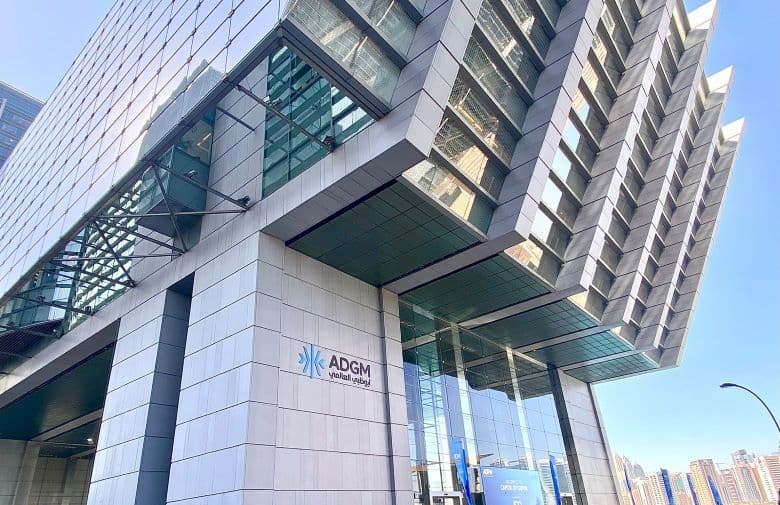
ADGM's Registration Authority has published guidance establishing a commercial licensing route for crypto mining under activity code 7230, while defining when third-party asset involvement triggers FSRA financial-services regulation. The framework targets the identifiable businesses behind blockchain networks rather than the decentralized protocols themselves.
A blockchain network does not need a central administrator to function. The businesses that mine, validate, and support those networks, however, operate through identifiable entities, contractual relationships, and management structures. That creates a regulatory opening: even when the underlying infrastructure is decentralized, the commercial activity surrounding it can still be organized through companies that regulators can license and supervise.
Abu Dhabi Global Market (ADGM) is building on that distinction with its Guidance on Crypto Mining Activities in and from ADGM, published by its Registration Authority (RA) on October 28. The guidance establishes a commercial licensing route for crypto mining under activity code 7230, while clarifying when activities involving third-party digital assets may fall within the Financial Services Regulatory Authority’s (FSRA) perimeter.
But the more interesting development is not the introduction of a mining licence. It is the model of accountability the guidance attempts to establish: one that connects a company's legal identity to its on-chain activity and extends supervisory scrutiny to international operations managed from ADGM.
That approach raises a broader question for crypto regulation. If regulators cannot meaningfully supervise a decentralized network as a single entity, can they achieve their objectives by focusing on the businesses that organize activity around it?
ADGM’s guidance offers one answer. Its limitations are just as important as its ambitions.
The guidance makes a distinction that is easy to overlook: participating in blockchain consensus is not necessarily the same as providing a financial service.
Under ADGM’s approach, solo mining or validation conducted for an operator’s own account falls within the commercial licensing regime and does not, in itself, constitute a regulated financial activity. The position can change when an operator holds, controls, or exercises discretion over digital assets belonging to third parties.
That distinction matters because two businesses can perform technically similar activities while assuming very different responsibilities.
An operator validating transactions for its own account is using its own capital and receiving its own rewards. A business that pools customer assets, manages validator keys on behalf of clients, or exercises discretion over third-party holdings introduces another layer of risk: it is no longer simply operating infrastructure but potentially taking responsibility for assets entrusted to it.
ADGM identifies circumstances in which such activities may require a separate Financial Services Permission, including custody or management of third-party assets. It also distinguishes non-custodial technical services that do not take possession or control of client assets from arrangements that may fall within the FSRA’s regulatory perimeter.
The regulatory logic is significant. Instead of treating every activity associated with blockchain validation as belonging to one category, the framework differentiates according to what the business does and whose assets are involved.
That distinction may help preserve a commercial route for infrastructure operators without automatically subjecting every participant in a consensus mechanism to financial-services regulation. It also makes the boundary between infrastructure and financial intermediation a central compliance question for businesses whose models evolve over time.
The difficult cases are likely to be those in which the distinction is less straightforward: operators that combine technical infrastructure with pooled arrangements, asset management, or client-facing services. Their regulatory position cannot be determined simply by calling themselves miners or staking providers. It depends on the substance of their activities.
The broader lesson is that the regulatory perimeter of blockchain infrastructure may be determined as much by the business model surrounding the technology as by the technology itself.
ADGM’s treatment of on-chain reward flows reveals a second dimension of this approach.
The guidance expects licensed mining entities to disclose the blockchain wallet and smart-contract addresses they own or control and use to receive or manage mining or validation rewards. It also says the RA may use third-party tools to monitor those disclosed addresses for supervisory purposes. Information provided under the disclosure requirement is to be treated as confidential supervisory information rather than published publicly.
This creates a link between a company's corporate identity and its on-chain activity. Ownership records identify the people who ultimately own or control the business; disclosed reward-flow addresses give the regulator a way to identify specific parts of its digital asset activity.
The significance is not that blockchain addresses suddenly make a business transparent. It is that they provide another source of information through which a regulator can assess the activities of an identifiable entity.
There is an important limit, however. A disclosed address does not, on its own, establish the full commercial purpose of every transaction, identify every party involved, or explain the relationship between all the entities in a complex operation. The value of the information depends on its connection to corporate records and other supervisory evidence.
ADGM’s guidance implicitly recognizes the need to maintain that connection. It calls for notification of material or structural changes to reward-flow arrangements, such as a change in custody architecture or provider, while distinguishing those changes from routine address rotation for security purposes.
That distinction is revealing. The framework is not simply asking businesses to provide a static list of wallets. It seeks information about the arrangements through which rewards are received and managed, while allowing routine operational changes that do not materially alter those arrangements.
For operators, this means on-chain records and corporate compliance cannot be managed as entirely separate functions. Businesses need to understand which addresses they own or control, how those addresses relate to their licensed activity, and when a change to their arrangements is material.
For regulators, the challenge is to use that information proportionately. Greater visibility can support supervision, but it does not eliminate the need to interpret transactions in context.
The underlying principle is that decentralized infrastructure can still generate identifiable points of accountability. The more difficult question is how much those points reveal about the wider activity.
The limits of corporate accountability become more apparent when a business operates across borders.
An ADGM-registered mining entity may manage facilities, subsidiaries, contractors, and personnel in other jurisdictions. Its headquarters may oversee the business without controlling every operational decision made at each site.
ADGM’s guidance addresses this structure directly. It says the RA may request information about overseas operations, including locations, operational scale, ownership structures, subsidiaries, and key management personnel. It also encourages proportionate due diligence on foreign jurisdictions and business partners.
Crucially, the guidance defines reasonable oversight in terms of governance accountability, rather than day-to-day operational control of activities conducted elsewhere. The headquarters is expected to promote appropriate governance and compliance while recognizing that overseas operations remain subject to applicable local laws and regulations.
This is a meaningful distinction. A regulator seeking accountability from an ADGM-registered headquarters does not necessarily need that entity to run every foreign facility directly. It can instead assess whether the headquarters understands its international footprint, has appropriate reporting and accountability structures, and takes reasonable steps to manage the associated risks.
The RA may also request further documentation, seek periodic reporting, engage with international regulatory counterparts, and conduct inspections in locations where an entity operates, including overseas. Licensed entities should promptly report significant compliance breaches or material regulatory actions involving their international operations.
Yet the model also raises a practical question: how should responsibility be assessed when a headquarters oversees operations it does not control on a daily basis?
The guidance establishes the principle of reasonable oversight, but the application of that principle will depend on the structure, complexity, and risk profile of individual businesses. A company with wholly owned subsidiaries may face a different oversight challenge from one relying heavily on independent partners and contractors.
This is not a weakness unique to ADGM. It is a structural challenge for any jurisdiction seeking to supervise internationally active businesses through a locally registered entity. The regulatory task is to establish meaningful accountability without assuming that headquarters control is equivalent to direct operational control.
For mining businesses, the implication is that an international footprint may become relevant to their regulatory relationship with ADGM even when the physical activity takes place elsewhere. For regulators, the challenge is to make that oversight meaningful and proportionate.
ADGM’s approach depends on two distinctions working together: the difference between commercial mining and regulated financial services, and the difference between headquarters accountability and direct control over global operations.
Both are straightforward in principle. Their application becomes more complicated as businesses expand, combine services, change custody arrangements, or operate through increasingly complex international structures.
A company may begin by validating a network for its own account and later introduce services involving third-party assets. A mining business may establish a headquarters in ADGM while relying on facilities and contractors elsewhere. In each case, the original structure may no longer tell the whole story about the risks or responsibilities involved.
This is where the guidance’s risk-based approach matters. ADGM says supervisory intensity may vary according to factors such as operational scale and the provision of services to third parties. Its framework also identifies cybersecurity, physical security, operational resilience, record-keeping, and applicable financial-crime obligations as relevant considerations.
The guidance is also explicit about its own status: it is non-binding indicative guidance that must be read alongside the applicable legislation. It does not replace the relevant laws or provide a definitive answer for every business model. The RA retains discretion in determining whether an activity presented as incidental is, in substance, commercial mining requiring a licence.
These qualifications matter because the document should not be read as a blanket requirement covering every individual who runs a validator or every business that interacts with a blockchain. Small-scale personal mining is generally outside its scope, as are certain incidental node or validator operations that meet the stated conditions.
ADGM has established an initial framework, not eliminated every classification question. Its planned broader framework and further consultation will provide an opportunity to develop the approach as the industry and its business models evolve.
ADGM’s guidance points towards a practical approach to regulating blockchain infrastructure: focus on the identifiable organization operating the activity, determine whether it handles its own assets or those of others, and assess how it manages the risks associated with its wider operations.
That does not make decentralized networks themselves fully transparent or controllable. Nor does it mean that regulating a company resolves every question about activity on a global blockchain. What it does is establish a framework for supervising the commercial entity where legal responsibility, management decisions, and operational arrangements can be assessed.
The distinction between own-account activity and third-party asset services is central to that framework. So is the effort to connect corporate records with on-chain reward flows and to assess international operations through governance rather than an assumption of direct control.
The next question is how these principles will be applied in practice. Regulatory clarity depends not just on having a licensing category, but on businesses being able to determine which requirements apply to them and on supervisory expectations remaining proportional to their activities.
For ADGM, the opportunity is to develop a framework that accommodates the diversity of blockchain infrastructure businesses while maintaining clear distinctions between commercial activity and regulated financial services. For operators, the challenge is to build organizations that can demonstrate what they do, whose assets they handle, and how their activities are governed.
The central insight is that decentralization does not remove the corporate structures through which much of the industry operates. Those structures provide regulators with a point of accountability, but the reach of that accountability has limits. How ADGM balances those two realities will be more consequential than the existence of a mining licence alone.

Disclaimer of Warranty
The information provided in this article is for general informational purposes only. We make no warranties about the completeness, reliability, and accuracy of this information. Read full disclaimer

Editor's Picks

Binance After the $6.3B Hack: A Turning Point for the Exchange

Walid Abou Zaki

Nov 2, 2026

10 min
“One Financial System”: What OKX’s New Investors Are Backing
Walid Abou Zaki
Oct 8, 2026
6 min

When Assets Move—or Stop—Without Consent: The Limits of Crypto Wallet Control
Walid Abou Zaki
Sep 29, 2026
6 min
Read More Articles

In the Same Space

VARA Expands PRYPCO License as Real Estate Tokenization Evolves
Salma Naueihed
Oct 29, 2026
5 min

Robinhood Plans Dubai Launch in 2027 After DFSA Authorization
Walid Abou Zaki
Oct 22, 2026
4 min

VARA Grants Bybit License for Spot Trading in Dubai
Walid Abou Zaki
Oct 22, 2026
6 min
Further Asset Management Brings Programmable Compliance to ADGM Tokenization
News Desk
Oct 28, 2026
4 min