Advertisement
Regulation & Policy
Share
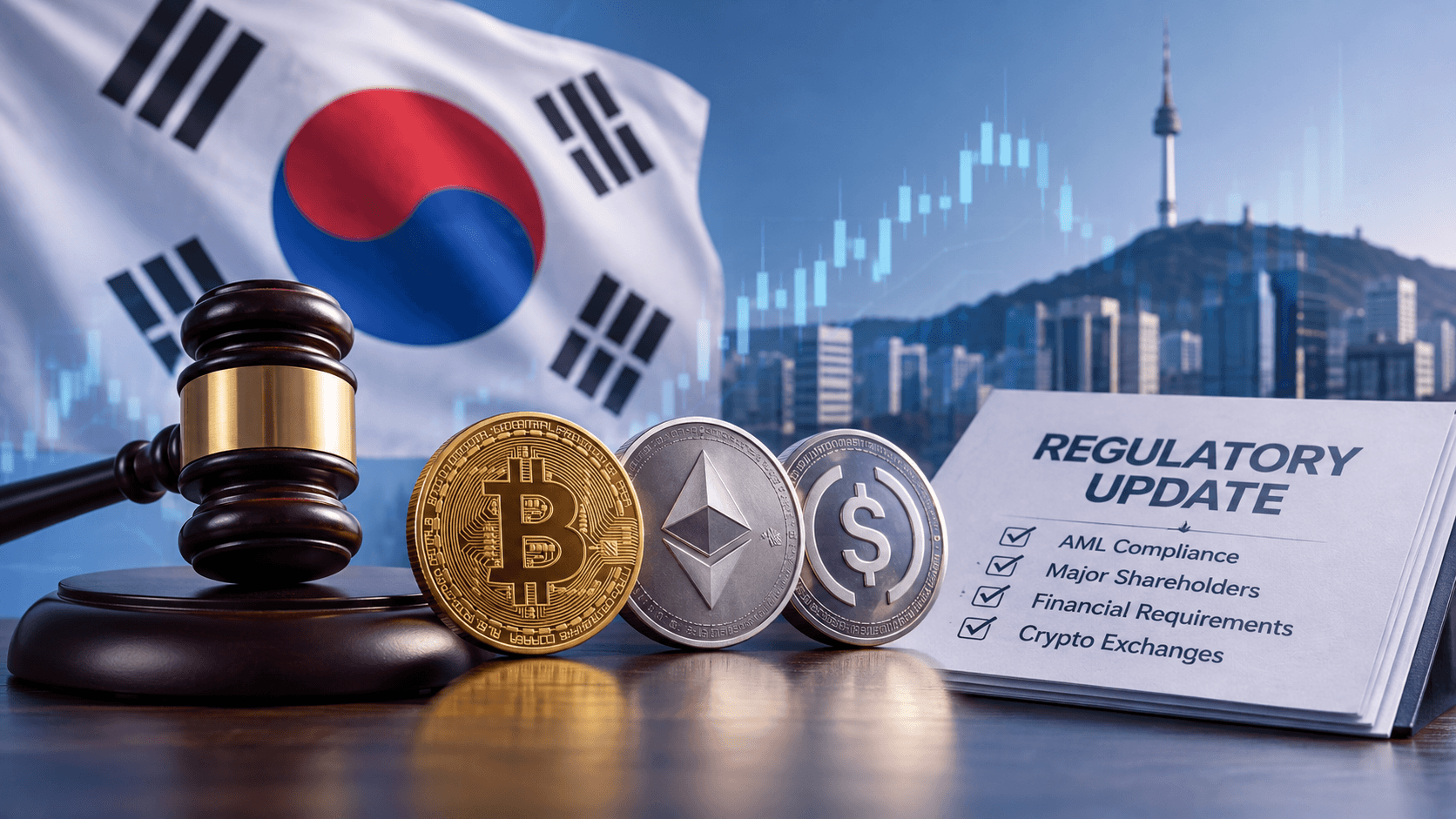
South Korea's FIU and FSS have begun reviewing all 28 registered cryptocurrency businesses under amended rules that, for the first time, extend eligibility screening to major shareholders, financial health, and compliance infrastructure.
South Korea has begun reviewing the ownership structures, financial standing and compliance arrangements of 28 registered cryptocurrency businesses under stricter regulatory requirements, bringing major shareholders under direct eligibility scrutiny for the first time.
The country's Financial Intelligence Unit (FIU) and Financial Supervisory Service (FSS) confirmed on November 24 that all 28 existing virtual asset service providers (VASPs) had submitted supplementary registration filings before the November 20 deadline under amendments to the Act on Reporting and Using Specified Financial Transaction Information.
The submissions cover five Korean won-based cryptocurrency exchanges, 13 crypto-to-crypto trading platforms and 10 other businesses, including wallet and custody providers.
The revised requirements, which took effect on August 20, expand the scope of regulatory screening beyond companies and their executives to include major shareholders. Authorities will also assess financial soundness, internal controls, staffing and technological infrastructure as part of the review.
The most significant change concerns the introduction of eligibility checks for major shareholders of registered cryptocurrency businesses.
Previously, regulatory screening primarily focused on the service provider, its chief executive and other executives. Under the amended framework, the review now extends to the largest shareholder, investors holding at least 10% of a company's shares and shareholders with sufficient influence to appoint the chief executive or a majority of directors.
Where a controlling shareholder is another company, regulators can also examine that company's largest shareholder and representative.
The FIU will assess the legal violation records and financial credibility of individuals and entities falling within the expanded screening scope. The range of offenses considered has also been broadened to include violations involving fair competition and tax legislation, among other financial and legal requirements.
The changes give authorities greater visibility into the individuals and corporate entities controlling cryptocurrency businesses, rather than limiting their assessment to the registered operators themselves.
However, historical violations are subject to transitional provisions. Incidents predating the amendments' August 20 effective date will generally be assessed under the previous rules, meaning existing shareholders will not automatically face registration rejection solely because of fines or debt defaults incurred before that date.
The revised framework also introduces stricter financial and operational standards for cryptocurrency businesses.
VASPs must maintain a debt-to-equity ratio of no more than 200%, with certain customer deposits excluded from the calculation of liabilities. The requirements also cover financial soundness, regulatory compliance personnel, technological infrastructure and internal control systems.
Among the organizational requirements is maintaining at least four employees responsible for anti-money laundering (AML) operations, alongside appropriately qualified compliance personnel and technical staff.
Regulators will examine whether companies have the necessary systems and personnel in place to manage operational risks, protect users and meet their anti-money laundering obligations.
However, existing operators have been granted a one-year transition period to meet the new financial and compliance requirements. The grace period runs until August 20, 2027, meaning companies that currently fall short of the debt ratio or organizational standards will not automatically lose their registrations during the initial review solely on those grounds.
The FIU and FSS will nevertheless assess companies' financial statements, staffing levels and implementation plans during this period. Businesses that remain non-compliant after the deadline could face administrative deregistration.
The review will extend beyond checking the documents submitted by the 28 businesses.
The FIU and FSS said they may request supplementary information and conduct on-site inspections to assess whether companies have adequate IT infrastructure and functioning internal control systems.
Authorities will also examine the progress operators have made toward meeting the requirements subject to the transition period.
The FIU said the reviews would apply consistent standards across all registered providers while being conducted promptly to limit uncertainty in the cryptocurrency market.
The supplementary filings do not, however, extend the validity of existing business registrations. VASP registrations remain subject to their separate three-year validity period, with operators required to submit renewal applications at least 45 days before expiration.
The latest reviews form part of South Korea's broader effort to strengthen oversight of its cryptocurrency sector, particularly around ownership transparency, financial stability and anti-money laundering controls.
In August, the government approved additional changes to VASP registration and AML requirements, including expanding the scope of the Travel Rule.
The revised framework extends the requirement to collect and share sender and recipient information for transfers between registered domestic VASPs to transactions of all sizes, replacing the previous threshold of 1 million Korean won.
Authorities have also introduced additional reporting requirements for transfers of 10 million won or more to overseas virtual asset service providers and wallet operators, regardless of the transaction's risk classification.
Separately, South Korea is advancing work on its proposed Digital Asset Basic Act, which is expected to address broader questions surrounding cryptocurrency market regulation, exchange ownership structures and digital asset issuance.
The shareholder eligibility reviews now underway represent a concrete step in the implementation of the amended registration framework. Their outcome could have implications for how existing cryptocurrency businesses structure their ownership, maintain financial resources and organize their compliance operations in one of Asia's largest digital asset markets.

Disclaimer of Warranty
The information provided in this article is for general informational purposes only. We make no warranties about the completeness, reliability, and accuracy of this information. Read full disclaimer

Editor's Picks
In the Same Space
Hong Kong Flags Hyperliquid Over Licensing Concerns

News Desk

Nov 19, 2026

6 min

Binance Eyes Five Asian Markets as $6.3B Hack Tests Recovery
News Desk
Nov 18, 2026
5 min
Toss Brings Crypto to 30 Million Users as Its Bank Tests Stablecoin Transfers
News Desk
Nov 16, 2026
4 min

Dubai Finance and VARA Partner to Advance Dubai’s Cashless Economy
News Desk
Nov 23, 2026
3 min