Advertisement
Regulation & Policy
Share
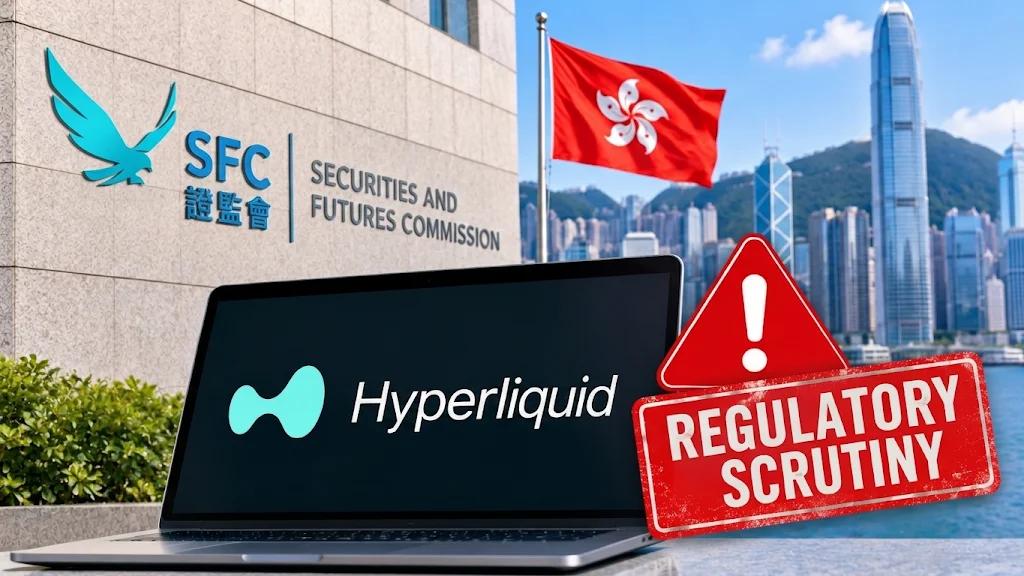
Hong Kong's SFC added Hyperliquid to its suspicious virtual asset trading platform list on November 18, citing unlicensed operation and marketing of crypto trading services to Hong Kong investors — the second such alert in Asia after Singapore's MAS flagged the platform in June.
Hong Kong's Securities and Futures Commission (SFC) has added decentralized trading platform Hyperliquid to its list of suspicious virtual asset trading platforms, raising fresh regulatory questions around the operation and marketing of decentralized cryptocurrency exchanges in the region.
The regulator added Hyperliquid / Hyperliquid Hong Kong to its alert list on November 18, identifying its trading application, app.hyperliquid.xyz/trade, as an unlicensed platform suspected of operating, holding itself out as operating, or actively marketing virtual asset trading services to the Hong Kong public.
The listing does not constitute a formal finding of wrongdoing or an order to shut down the platform. However, it signals that the SFC considers Hyperliquid's activities potentially subject to Hong Kong's virtual asset trading platform licensing requirements.
The development follows an earlier warning from Singapore's financial regulator, which added Hyperliquid to its Investor Alert List in June, placing the platform under scrutiny in two major Asian financial centres.
According to the SFC's official alert, Hyperliquid is not licensed by the regulator and is suspected of providing or promoting virtual asset trading services to the Hong Kong public without the required authorization.
The regulator identified the platform's trading application but did not disclose a specific investigation, enforcement proceeding or alleged transaction that prompted the listing.
The SFC maintains its alert list to warn investors about platforms that appear to operate in Hong Kong or target local investors without holding the necessary licences.
It also cautions that customers using unlicensed platforms may face difficulties recovering their assets if an operator collapses, suffers a cyberattack or misappropriates customer funds. Seeking legal recourse against platforms without a Hong Kong presence can also be difficult.
The listing does not, by itself, establish that Hyperliquid has committed fraud or that trading through its decentralized infrastructure has been prohibited globally.
Hong Kong is the second major Asian financial centre to flag Hyperliquid this year.
On June 26, Singapore's Monetary Authority of Singapore (MAS) added Hyperliquid to its Investor Alert List. The entry included both the Hyperliquid trading application and the Hyper Foundation website.
The MAS list identifies entities that investors may mistakenly perceive as licensed, authorized or regulated by the Singaporean authority.
Following the listing, Hyperliquid said it had never claimed to be licensed or authorized by MAS and that the inclusion did not change its permissionless infrastructure.
The platform also expressed its willingness to engage with regulators and institutions to support the development of regulatory frameworks for on-chain finance.
The two regulatory notices are not identical. Singapore's listing is an investor alert, while Hong Kong specifically categorized Hyperliquid as a suspicious virtual asset trading platform and identified suspected activity involving the local market.
Neither listing, on its own, amounts to a global prohibition on accessing or using Hyperliquid.
Hyperliquid has established itself as a major decentralized trading venue, particularly for perpetual futures, a type of derivative contract that allows traders to speculate on asset prices without owning the underlying assets or dealing with a fixed expiration date.
Unlike conventional futures contracts, perpetuals can remain open indefinitely, subject to margin requirements, funding payments and liquidation mechanisms.
The products are widely used in cryptocurrency markets, where traders can take leveraged positions on digital assets.
However, their operation raises regulatory questions around investor protection, market surveillance, leverage, collateral management and responsibility for trading activities.
For decentralized platforms, another challenge concerns the regulatory status of the entities involved in developing, maintaining or promoting the trading infrastructure, particularly when services are accessible across multiple jurisdictions.
The distinction between decentralized technology and the entities responsible for operating or marketing a trading service is becoming increasingly important as regulators assess whether particular activities fall within existing licensing frameworks.
The Hyperliquid warning comes as Hong Kong is developing a regulatory framework that allows licensed virtual asset trading platforms to explore offering perpetual contracts to professional investors.
In February 2026, the SFC published a high-level framework for virtual asset perpetual contracts, setting out the conditions under which licensed platforms can develop and offer these products.
The framework requires platforms to establish safeguards covering margin requirements, collateral, position liquidation, market surveillance and risk disclosures.
It also limits access to professional investors, reflecting the regulator's concerns about the risks associated with leveraged derivatives.
The SFC further requires margin collateral to consist of fiat currency or stablecoins and tokenized deposits regulated by the Hong Kong Monetary Authority.
The approach illustrates that Hong Kong is not seeking to exclude perpetual futures from its digital asset market. Instead, it is attempting to bring the products within a supervised framework with defined investor protection and operational requirements.
The distinction is relevant to Hyperliquid, whose decentralized trading model operates outside the SFC's licensed platform framework.
The Hong Kong development coincides with efforts to establish a regulated route for parts of the Hyperliquid ecosystem to reach US customers.
As previously reported by Unlock Blockchain, Hyperliquid Strategies has pursued registration through its subsidiary, HypeStrat Markets, as a futures commission merchant (FCM) with the National Futures Association.
The proposal aims to facilitate access to permissioned perpetual futures markets built through Hyperliquid's HIP-3 framework, subject to the necessary regulatory approvals.
Importantly, Hyperliquid Strategies is a separate corporate entity from the decentralized exchange itself. Its registration efforts do not mean that the existing offshore trading platform has obtained US authorization.
The development reflects a broader effort to connect blockchain-based derivatives infrastructure with established regulatory systems.
It also comes amid wider changes in the treatment of perpetual futures in traditional financial markets. In November, Unlock Blockchain covered the US Commodity Futures Trading Commission's move to open a pathway for equity perpetual futures, extending a derivatives structure popularized by cryptocurrency markets into stock trading.
For Hyperliquid, the challenge is increasingly about how its trading infrastructure can operate across jurisdictions where regulators are establishing different requirements for derivatives, investor access and platform licensing.
The latest Hong Kong warning adds another regulatory hurdle, highlighting the growing importance of licensing and jurisdictional compliance as decentralized trading platforms seek broader market access.

Disclaimer of Warranty
The information provided in this article is for general informational purposes only. We make no warranties about the completeness, reliability, and accuracy of this information. Read full disclaimer

Editor's Picks
In the Same Space
Singapore and Germany Test Blockchain Settlement Without a Shared Ledger

News Desk

Nov 16, 2026

4 min
HSBC Connects Stablecoin Payments With Tokenized Investments Through RedCoin
News Desk
Nov 19, 2026
4 min
Standard Chartered and OCBC Bridge Separate Tokenized Deposit Networks
News Desk
Nov 19, 2026
5 min
Wall Street’s Tokenization Push Meets a Federal Reserve Reality Check
News Desk
Nov 18, 2026
6 min