Advertisement
Tokenization & RWA
Share
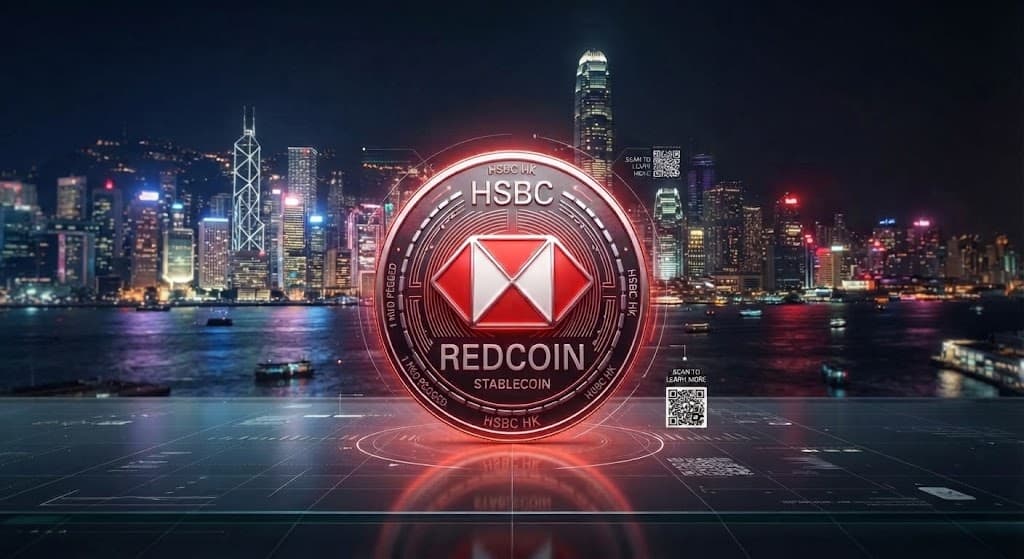
HSBC has extended its HKD stablecoin RedCoin beyond payments, enabling customers to subscribe to a tokenized share class of HSBC Global Money Funds – Hong Kong Dollar from as little as HK$100, effective November 19.
HSBC is expanding the role of its Hong Kong dollar-backed stablecoin, RedCoin, beyond everyday payments, allowing customers to use the digital currency to invest in tokenized money market fund units.
Starting November 19, customers can subscribe to a new tokenized share class of HSBC Global Money Funds – Hong Kong Dollar using RedCoin, marking the stablecoin's first application in retail wealth management.
According to the bank, investors can start with as little as HK$100 ($12.74), equivalent to 100 RedCoin, to purchase units in the fund. The development extends HSBC's digital asset strategy into investment distribution, connecting stablecoin-based payments with blockchain-recorded ownership of traditional financial products.
The launch follows HSBC's introduction of RedCoin in October, when the bank made its Hong Kong dollar-denominated stablecoin available through its PayMe application for peer-to-peer transfers and merchant payments.
The new offering allows eligible customers to use RedCoin to subscribe to Class SD, a tokenized share class of HSBC Global Money Funds – Hong Kong Dollar.
Rather than creating a new investment vehicle, HSBC has introduced a blockchain-based representation of ownership in an existing money market fund. Each digital token represents one unit of the tokenized share class, with beneficial ownership recorded through blockchain infrastructure.
The underlying fund invests primarily in Hong Kong dollar-denominated short-term deposits and high-quality money market instruments. It aims to preserve capital and provide daily liquidity, although capital preservation is not guaranteed.
The fund also targets daily dividend distributions, with declared dividends reinvested into additional tokenized units.
The minimum subscription of HK$100 lowers the initial investment threshold, potentially making tokenized money market products more accessible to retail customers.
HSBC launched RedCoin (RCHKD) on October 23 under its stablecoin issuer licence from the Hong Kong Monetary Authority (HKMA).
The Hong Kong dollar-denominated stablecoin is designed to maintain a 1:1 redemption value against the local currency and is backed by high-quality, highly liquid assets held in segregated accounts.
Initially, HSBC introduced RedCoin through PayMe, enabling its more than 3.3 million users to make peer-to-peer transfers and payments to participating merchants.
The bank had also indicated plans to introduce stablecoin wallet functionality into its Hong Kong mobile banking application and enable customers to subscribe to tokenized investment products.
The new fund subscription service puts that strategy into practice, extending RedCoin's utility from transferring and spending digital money to accessing conventional investment products.
HSBC's move comes as major financial institutions increasingly explore tokenized money market funds as a way to bring traditional investment products onto blockchain infrastructure.
JPMorgan, for example, has expanded its tokenized money market fund strategy through plans for another blockchain-based fund, building on its efforts to bring traditional investment portfolios onto digital infrastructure.
In May, Unlock Blockchain reported on JPMorgan's expansion into tokenized money market funds, highlighting the growing interest among established financial institutions in blockchain-based fund distribution and ownership.
The broader development also reflects a shift in how banks approach stablecoins. Rather than treating them exclusively as payment instruments, financial institutions are exploring how regulated digital currencies can connect payment systems, investment products and digital asset infrastructure.
For HSBC, combining RedCoin with tokenized fund subscriptions creates a more integrated model in which customers can use bank-issued digital money to access blockchain-based representations of traditional financial assets.
The next challenge will be expanding these services while maintaining the regulatory protections, liquidity arrangements and operational safeguards expected of conventional wealth management products.

Disclaimer of Warranty
The information provided in this article is for general informational purposes only. We make no warranties about the completeness, reliability, and accuracy of this information. Read full disclaimer

Editor's Picks
In the Same Space

stUSDT Winds Down After TVL Collapse

News Desk

Nov 16, 2026

3 min
DBS and Kinexys Launch 24/7 Cross-Border Tokenized Deposit Transfers
News Desk
Nov 16, 2026
3 min
Payward Takes 200+ European Stocks Onchain
News Desk
Nov 11, 2026
4 min
The World Bank Is Exploring USDC for Global Development Fund Transfers
News Desk
Nov 18, 2026
4 min