Advertisement
Stablecoins & Payments
Share
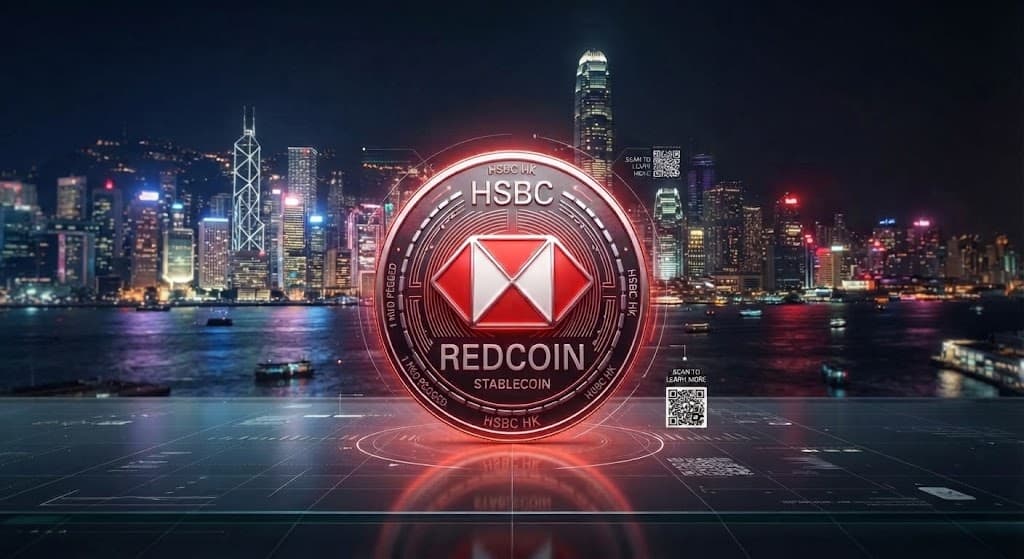
HSBC has launched its HKD-backed stablecoin RedCoin through its PayMe app, giving 3.3 million users access to person-to-person transfers and payments at approximately 100,000 merchants from October 23, under Hong Kong's Stablecoins Ordinance licensing regime.
HSBC has launched its Hong Kong dollar-backed stablecoin, RedCoin, through its PayMe payment service, taking Hong Kong’s regulated stablecoin market into everyday consumer payments.
The rollout begins on October 23, with more than 3.3 million PayMe users expected to gain access and payments supported at around 100,000 merchants by the weekend, according to local media reports. The initial use cases include person-to-person transfers and payments to merchants.
HSBC plans to add a RedCoin wallet to its HSBC Hong Kong mobile banking app later this year, expanding access beyond PayMe. The bank has also outlined plans to use the stablecoin for subscriptions to tokenized investment products, including Hong Kong dollar money-market funds.
RedCoin’s launch follows the Hong Kong Monetary Authority’s decision in April to grant stablecoin issuer licences to HSBC and Anchorpoint Financial, a venture backed by Standard Chartered, HKT and Animoca Brands.
The two approvals marked the first licences under Hong Kong’s Stablecoins Ordinance, which took effect in August 2025. The HKMA received 36 applications but approved only two issuers, reflecting a selective approach to bringing fiat-backed stablecoins into the regulated financial system.
HSBC has said RedCoin will be backed one-to-one by high-quality, liquid reserve assets held in segregated accounts and will be redeemable at face value in Hong Kong dollars. The stablecoin is being introduced through the bank’s existing consumer platforms rather than as a standalone crypto-trading product.
The rollout contrasts with the initial distribution strategy for HKDAP, the Hong Kong dollar-backed stablecoin launched by Anchorpoint Financial in August. As Unlock Blockchain reported at the time, HKDAP initially targeted institutional and professional investors, with retail access excluded from its first phase.
HSBC is instead starting with an established consumer payments network. PayMe already serves millions of users, giving RedCoin a route into person-to-person transfers and merchant payments without requiring customers to begin on a crypto exchange.
The difference is significant for Hong Kong’s stablecoin strategy. Rather than relying exclusively on institutional settlement or digital-asset trading, RedCoin is being introduced through a familiar payment interface. Its early reach, however, should not be confused with demonstrated adoption: usage levels, transaction volumes and the pace of merchant uptake will help determine whether the stablecoin offers a meaningful alternative to existing payment methods.
Hong Kong is seeking to develop a regulated market for fiat-backed digital currencies while maintaining controls over reserves, redemption, governance and financial-crime risks. Licensed stablecoins must meet requirements designed to support redemption at face value and protect holders if an issuer encounters financial difficulties.
HSBC’s launch also fits into its broader digital-assets activity in Hong Kong. In July, Unlock Blockchain covered HSBC’s first blockchain-native issuance of tokenized structured notes for institutional investors, a separate initiative that demonstrates the bank’s work across tokenized financial products and blockchain-based infrastructure.
RedCoin could connect these efforts by providing a digital payment asset for transactions involving tokenized investments. HSBC has identified such subscriptions as a planned use case, although the bank has not yet established the scale or timing of broader adoption.
The immediate test is whether customers and merchants use RedCoin for routine payments when conventional electronic payment options are already widely available. Its longer-term role will depend on practical benefits such as settlement speed, redemption convenience and integration with tokenized assets, alongside consumer confidence in security and regulatory oversight.

Disclaimer of Warranty
The information provided in this article is for general informational purposes only. We make no warranties about the completeness, reliability, and accuracy of this information. Read full disclaimer

Editor's Picks
In the Same Space
Qivalis Secures Dutch Approval for Euro Stablecoin

News Desk

Oct 15, 2026

3 min

Fuze Finance Targets US Market With New Modern Treasury Stablecoin Payment Deal
Anna K.
Oct 20, 2026
6 min

Mastercard’s New Mission: Stop Stablecoin Fraud Before It Hits the Blockchain
News Desk
Oct 20, 2026
6 min

EBA Names USDC EU’s First Significant E-Money Token
Salma Naueihed
Oct 15, 2026
3 min