Advertisement
Stablecoins & Payments
Share
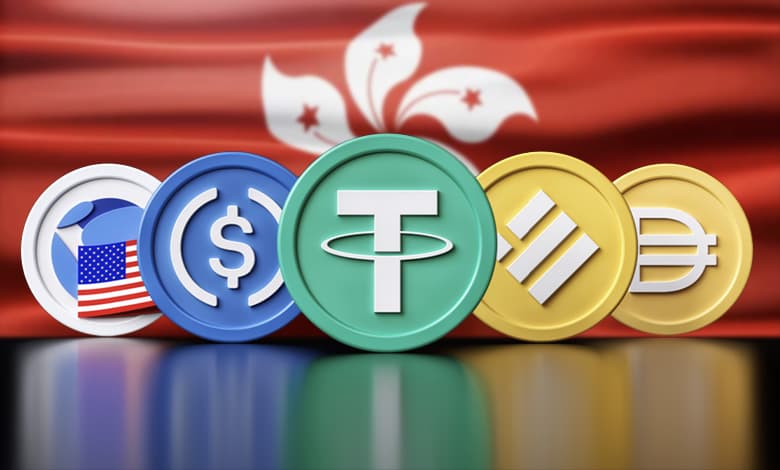
Anchorpoint Financial, a Standard Chartered subsidiary, launched HKDAP on August 12 as Hong Kong's first regulated HKD-backed stablecoin, initially restricted to institutional and professional investors under the city's new Stablecoins Ordinance.
Hong Kong has officially entered the regulated stablecoin market with the launch of its first Hong Kong dollar-backed stablecoin. However, access remains highly restricted during the initial phase.
Anchorpoint Financial launched HKD At Par, or HKDAP, on August 12, initially targeting institutions, corporate clients and professional investors. Retail users are not yet eligible to purchase or hold the stablecoin.
The Hong Kong Monetary Authority (HKMA) received 36 applications before closing its licensing window in September 2025, but approved only two. HSBC received one licence, while Anchorpoint Financial secured the other under licence FRS01.
Anchorpoint is a subsidiary of Standard Chartered Bank (Hong Kong), with HKT and Animoca Brands as venture partners. HashKey Exchange and OSL Group are responsible for distributing the stablecoin.
The launch comes under Hong Kong's Stablecoins Ordinance, which establishes strict requirements for licensed issuers.
Companies must maintain at least HK$25 million, or roughly $3.2 million, in paid-up capital. Reserve assets must also be kept separate from the issuer's own funds, while holders must be able to redeem their stablecoins at face value within one business day.
In addition, issuers cannot pay interest to stablecoin holders, while public distribution is restricted to licensed issuers, banks and regulated platforms.
For now, Anchorpoint is taking a gradual approach. The company expects to consider retail access toward the end of 2026, although it has not committed to a specific launch date. It has also yet to disclose figures for HKDAP's supply or transaction volume.
Hong Kong's options are shaped by its position within China's financial system. Beijing has opposed the development of offshore yuan-pegged stablecoins, leaving the Hong Kong dollar as the natural currency for locally regulated stablecoins.
As a result, both licensed issuers are building their strategies around HKD-backed digital assets, positioning Hong Kong's currency at the center of its emerging stablecoin market.
The approach also reflects the city's existing monetary framework. The Hong Kong dollar has been pegged to the US dollar since 1983, meaning HKDAP is ultimately tied to a currency that already operates within a dollar-linked monetary system.
While the launch is attracting attention, Hong Kong's financial authorities continue to focus on risks within the traditional banking system.
On August 13, the HKMA issued warnings concerning fake websites and cloned login pages associated with Chong Hing Bank, Chiyu Banking Corporation and OCBC Bank (Hong Kong).
Such warnings are not unusual. The regulator issued more than 50 similar alerts over a two-month period last year. Hong Kong's securities regulator also moved in July to prohibit crypto platforms from using one-time-password logins, citing related security concerns.
The bigger challenge for HKDAP may not come from local banks, but from the overwhelming dominance of dollar-based stablecoins.
The global stablecoin market is now worth around $300 billion, with Tether accounting for approximately 61% of the market. So far, no non-dollar stablecoin has managed to achieve comparable scale.
This gives Hong Kong's new stablecoin an uphill battle. Even with a clear regulatory framework and strong institutional backing, HKDAP must compete with an established dollar-based ecosystem that already dominates crypto trading, payments and cross-border transactions.
HKDAP's launch is significant less because of its initial size and more because of what it signals about Hong Kong's strategy. The city is not trying to challenge dollar stablecoins overnight; instead, it is building a tightly regulated local alternative and testing demand through institutional users before opening the market to retail customers.
The real test will come when HKDAP moves beyond its controlled launch. If institutions begin using it for payments, settlement and cross-border transactions, Hong Kong could strengthen the role of the HKD as a digital settlement currency across Asia. However, without meaningful adoption beyond the local market, strict regulation alone may not be enough to overcome the network effects that have made dollar stablecoins dominant.

Disclaimer of Warranty
The information provided in this article is for general informational purposes only. We make no warranties about the completeness, reliability, and accuracy of this information. Read full disclaimer

Editor's Picks
In the Same Space

Where Do the Dollars Behind the UAE’s Crypto Economy Sit?

Anna K.

Sep 21, 2026

9 min
UAE Stablecoin Market Expands as Digital Dirham Enters Next Phase
News Desk
Sep 18, 2026
7 min

Hong Kong Targets $2.6B Multi-Currency Digital Bond Sale
News Desk
Sep 24, 2026
3 min

Hong Kong Prepares 24/7 CBDC Settlement System for Tokenized Deposits
News Desk
Sep 18, 2026
3 min