Advertisement
Stablecoins & Payments
Share

WA
CEO & Editor-in-Chief


Circle launched Arc, a permissioned Layer 1 blockchain with USDC as its native gas currency and institutional validators including BlackRock, DTCC, Visa and Mastercard, one day after the U.S. Senate failed to advance the CLARITY Act market-structure bill. The launch marks Circle's shift from stablecoin issuer to owner of the settlement infrastructure through which USDC travels.
The contrast was difficult to ignore. On September 15, the U.S. Senate failed to advance the CLARITY Act after the market-structure bill secured only 49 of the 60 votes required to proceed. One day later, Circle opened Arc, its purpose-built Layer 1 blockchain, to the public.
The timing was coincidental. Circle had scheduled the launch before the Senate vote. Yet the two developments reveal different responses to the same question: how will digital assets become part of regulated financial infrastructure?
Washington is still struggling to define the wider structure of crypto markets. Circle, meanwhile, is building a financial network around the part of the market where legislation has already advanced: regulated stablecoins.
The Senate vote should not be interpreted as the failure of all U.S. crypto legislation. The GENIUS Act established a federal framework for payment stablecoins in 2025. What stalled this week was the broader attempt to divide regulatory responsibility across digital-asset markets and settle outstanding questions involving exchanges, tokens, decentralized finance and stablecoin rewards.
As Unlock Blockchain reported, stablecoin yield became one of the central points of disagreement. Banks warned that rewards could pull deposits away from the traditional financial system, while the crypto industry resisted restrictions that could reduce competition.
The failed procedural vote leaves much of the wider market waiting. Circle, however, occupies a different position. Its core product is no longer waiting for legislation to recognize stablecoins as a financial category. The company is now attempting to determine how that regulated money moves.
Arc launches with USDC as its native gas currency, sub-second deterministic finality and a permissioned validator group that includes BlackRock, DTCC, Galaxy, Mastercard, Visa, Standard Chartered, ICE, MoneyGram and other institutions.
Its opening ecosystem includes Aave, Morpho and Uniswap, tokenized funds from BlackRock and Janus Henderson, programmable Bitcoin through cirBTC, multiple fiat-backed stablecoins, wallets, exchanges and cross-chain infrastructure.
Viewed separately, none of these components is entirely new. USDC already operates across major blockchains. Tokenized funds are available on Ethereum and other networks. Lending, trading and cross-chain transfers are established parts of decentralized finance.
What changes with Arc is ownership of the stack.
Circle issues USDC. It operates Circle Payments Network for global money movement, StableFX for currency exchange, CCTP and Gateway for cross-chain liquidity, and wallet infrastructure for businesses and developers. Arc now gives Circle a settlement network beneath those products.
The company is moving from issuing money that circulates on other blockchains to controlling more of the infrastructure through which that money travels. In that sense, Arc is less a standalone blockchain than the final layer of Circle’s vertically integrated financial platform.
Circle enters this phase with advantages that most new blockchain networks cannot reproduce.
The company has traded on the New York Stock Exchange since June 2025. Its initial public offering generated approximately $1.2 billion in gross proceeds for Circle and selling shareholders, while giving the company access to public capital and subjecting it to the disclosure standards expected of a listed U.S. company.
In Europe, Circle’s subsidiary issues USDC and EURC as electronic-money tokens under the Markets in Crypto-Assets framework. In the United States, the Office of the Comptroller of the Currency granted Circle approval to establish a national trust bank, while the company also holds a New York limited-purpose trust charter.
Implementation of the GENIUS Act’s issuer-licensing framework is still evolving, so Circle’s regulatory transition should not be treated as complete. Nevertheless, its current authorization structure, public financial disclosures and relationships with institutions such as BlackRock and BNY place it closer to the regulated banking system than most stablecoin issuers.
Arc converts that position into infrastructure.
This also sharpens the distinction between the market’s two largest dollar stablecoins.
USDT became the dominant transactional dollar of crypto-native markets. Its strength comes from liquidity, exchange adoption, emerging-market demand and its use by individuals and businesses seeking access to dollars outside conventional banking channels.
USDC has increasingly followed an institutional path. Circle has connected it with banks, regulated custodians, asset managers, tokenized funds and treasury platforms. BNY now supports institutional USDC custody, minting and redemption, while Standard Chartered introduced a similar bank-led route through its DIFC operations.
The distinction is not absolute. USDT is used by institutions, and USDC reaches hundreds of millions of wallets. Tether is also expanding into private credit, tokenization and a planned U.S.-regulated stablecoin product. Unlock recently examined whether Tether is turning USDT into a broader financial infrastructure layer.
Still, their center of gravity remains different. USDT is primarily distribution-led. USDC is becoming infrastructure-led.
With Arc, Circle is betting that institutional users will prefer regulated digital money, tokenized assets and financial applications assembled within one connected environment.
Canton Network may be Arc’s most credible competitor in institutional capital markets, but it presents a different model.
Rather than building around one issuer and one primary stablecoin, Canton connects independently operated financial applications through a shared synchronization layer. Its architecture allows institutions to conduct atomic transactions while revealing sensitive information only to the relevant parties.
That privacy is particularly important for repo, collateral, securities and wholesale payments. Institutions cannot place every position, counterparty or transaction size on a fully transparent public ledger.
Canton’s advantage is therefore neutrality and institutional privacy. Arc’s advantage is integration, liquidity and accessibility. Canton connects institutions without requiring them to organize around Circle. Arc offers a ready-made financial environment anchored by USDC.
The choice may not be purely technical. Institutions will have to decide whether they prefer a neutral network connecting multiple systems or a vertically integrated platform built around a regulated digital dollar.
Tempo represents another direct challenge. Incubated by Stripe and Paradigm, the payments-first Layer 1 is designed for stablecoin settlement, global payouts and machine-driven payments.
Where Circle begins with a stablecoin and moves toward payments, Tempo begins with payment distribution and builds the blockchain beneath it. Stripe’s relationships with merchants and digital businesses could give Tempo access to transaction flows that blockchain networks usually spend years attempting to attract.
Tempo may not initially match Arc’s tokenized capital-markets ecosystem, but it could compete aggressively for commercial payments, merchant settlement and agentic transactions.
Ethereum also remains a structural competitor. USDC, BlackRock’s BUIDL fund, Aave and Uniswap already operate there. Circle must convince users that moving activity onto an issuer-connected network creates enough efficiency to justify fragmenting liquidity currently available on more neutral infrastructure.
ADI Chain occupies a different position. It cannot currently match USDC’s global liquidity or Circle’s range of live applications, but it possesses something Arc still lacks in the UAE: a Central Bank-licensed domestic settlement asset.
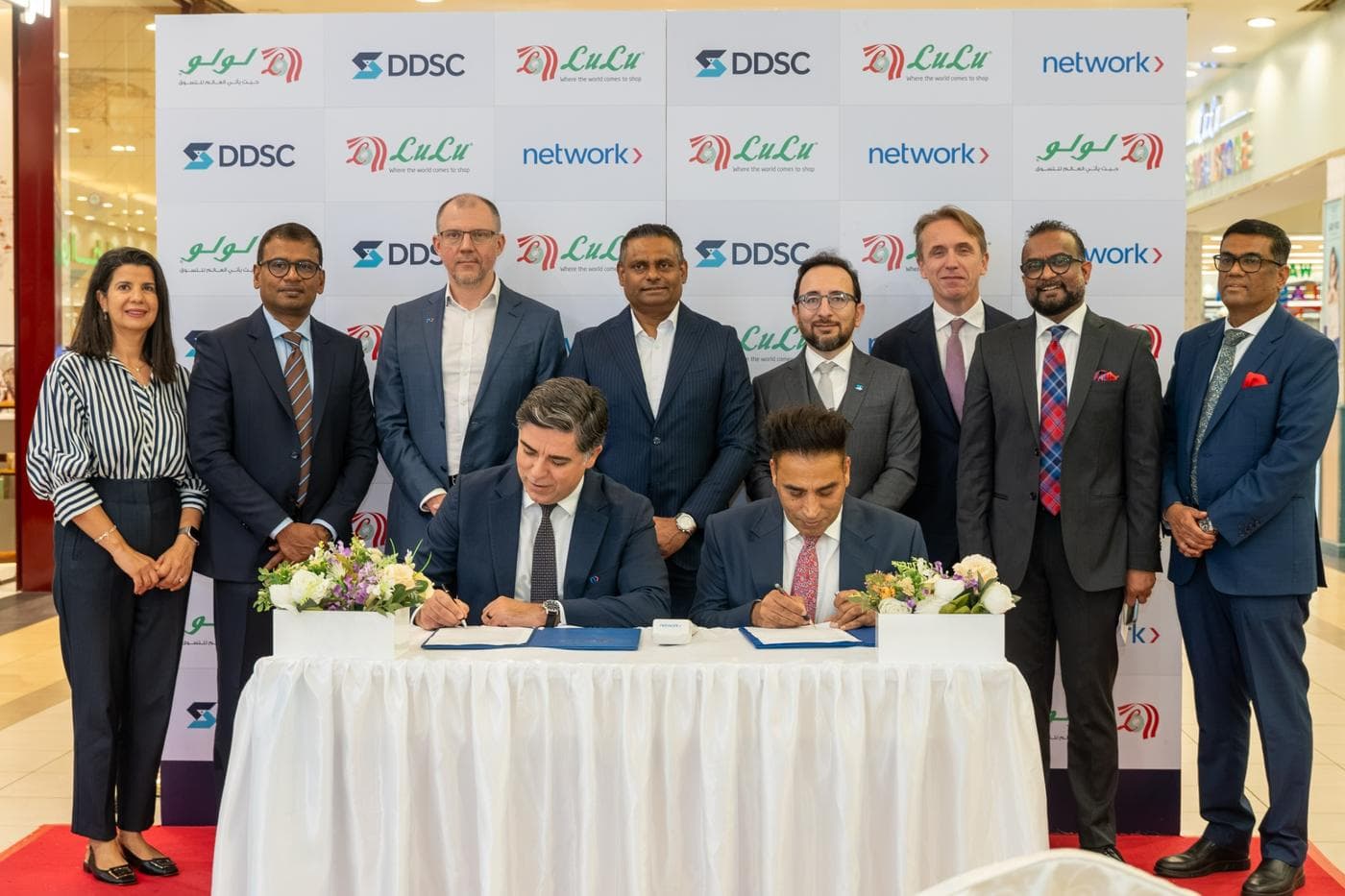
ADI Chain launched its mainnet in December 2025, approximately nine months before Arc. DDSC subsequently went live as a dirham-backed payment token licensed by the Central Bank of the UAE. The network supported an AED110 million institutional transaction and, more recently, a retail-payment pilot with Network International at Marks & Spencer and LuLu.
These are meaningful proof points. They place ADI inside the UAE’s regulated monetary infrastructure rather than merely alongside it.
However, ADI’s advantage has not yet compounded into the ecosystem breadth now visible on Arc. The AED110 million transaction demonstrated institutional-scale movement, but its commercial purpose, counterparty and settlement route were not disclosed. The retail pilot added a consumer-facing use case, although transaction volumes and a wider rollout schedule remain unconfirmed.
Unlock previously argued that, following its rapid delivery of a live mainnet, ADI’s next phase would be measured through observable activity: transaction patterns, liquidity, governance and recurring economic use. That test has now become more demanding.
ADI had time, regulatory alignment and access to the IHC, Sirius and FAB ecosystem. It used that period to produce important milestones, but it has not yet made its first-mover advantage decisive.
Its strongest path may not be to reproduce Arc. ADI could instead become the regulated regional gateway connecting dirham stablecoins, registered foreign payment tokens, tokenized assets and government infrastructure across the UAE and selected international corridors.
Circle’s international regulatory position does not automatically translate into complete coverage in every jurisdiction.
The FSRA granted Circle permission to operate as a Money Services Provider in ADGM. Standard Chartered also provides eligible institutions with access to USDC minting and redemption through DIFC. Neither development amounts to CBUAE registration of USDC as a Foreign Payment Token.
Publicly available records and Circle’s own licensing disclosures do not currently show such a registration. This matters because Arc requires USDC for network fees, while the UAE’s federal payment-token framework distinguishes between the authorization of a company and the registration of the token being used.
USDU has already completed that additional step, becoming the first USD-backed stablecoin publicly confirmed as a CBUAE-registered Foreign Payment Token.
The gap does not prevent Circle from operating within ADGM or supporting institutional access through DIFC. Nor does it mean Arc cannot be accessed from the UAE. It does, however, complicate the network’s positioning as a comprehensive UAE settlement layer outside those financial free-zone pathways.
For ADI, this preserves a regulatory window. For Circle, it identifies an obvious next step.
Arc’s launch changes the standard against which new financial blockchains will be judged. Technology, headline partnerships and transaction speed are no longer enough. Networks must bring regulated money, liquidity, usable assets, applications, distribution and institutional access together.
Circle has assembled more of those elements at launch than most competitors. Yet the network must still convert integrations into recurring financial activity. It must address questions around privacy, governance, validator concentration and the implications of allowing one company to influence the asset, settlement rail and surrounding financial services.
Canton offers privacy and neutrality. Tempo brings payment distribution. ADI holds a sovereign and regional regulatory foothold. Ethereum retains liquidity and open infrastructure. Tether continues to dominate the crypto-native dollar economy.
Circle’s wager is that institutions will ultimately choose integration: regulated digital money, financial assets and settlement infrastructure operating as one system. The unanswered question is whether that integration will become Arc’s defining advantage—or the reason institutions continue to preserve competing networks.

Disclaimer of Warranty
The information provided in this article is for general informational purposes only. We make no warranties about the completeness, reliability, and accuracy of this information. Read full disclaimer

Editor's Picks

Stablecoin Yield Fight Helps Derail CLARITY Act in Senate

Walid Abou Zaki

Sep 15, 2026

8 min
Why Zondacrypto’s Collapse Would Unfold Differently in the UAE
Walid Abou Zaki
Aug 28, 2026
8 min

The Missing Orchestration Layer Holding Back Institutional Digital Assets
Julian Sawyer
Aug 18, 2026
5 min
Read More Articles

In the Same Space

Visa Brings Onchain Credit to Stablecoin Card Financing
News Desk
Sep 9, 2026
3 min
A Swiss Franc Play in Europe’s Bank-Led Stablecoin Race
Salma Naueihed
Sep 9, 2026
5 min

X Bridges Social Media and Crypto Trading With New Cashtags
News Desk
Sep 16, 2026
5 min

Crypto Wealth Is Growing, but Traditional Wealth Infrastructure Is Not Ready
News Desk
Sep 10, 2026
4 min