Advertisement
Regulation & Policy
Share
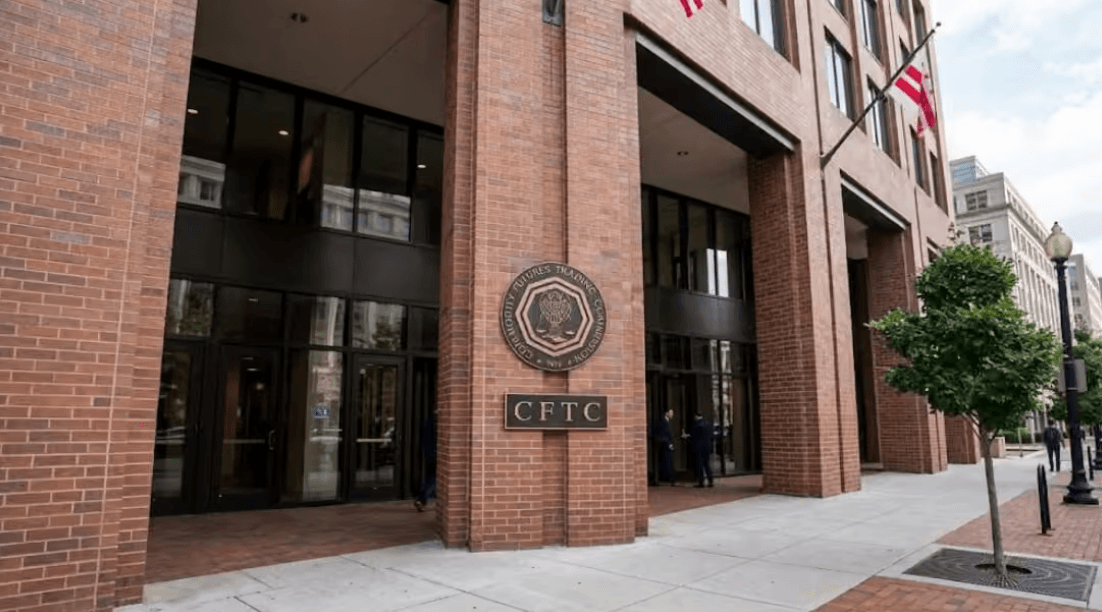
The CFTC has approved Backpack and tZERO to operate blockchain-based derivatives exchanges and clearing organizations in the US, marking a regulatory milestone for on-chain financial market infrastructure.
The US Commodity Futures Trading Commission (CFTC) has approved two financial technology companies, Backpack and tZERO, to establish regulated derivatives exchanges and clearing operations using blockchain technology, marking another step toward integrating digital-asset infrastructure into traditional financial markets.
The approvals cover different stages of the derivatives market infrastructure. Backpack has secured authorization for its US derivatives exchange and clearing operations, while tZERO has obtained the regulatory registrations needed to operate both a derivatives exchange and a clearing organization.
CFTC Chairman Michael Selig described the development as an important milestone for US financial markets, saying the approvals demonstrate that blockchain-based market infrastructure can operate within an established regulatory framework.
For Backpack, the approvals provide a pathway to bring its global derivatives trading business into the US under federal oversight.
The company's US platform is expected to offer leveraged cryptocurrency perpetual futures, allowing traders to maintain positions without fixed expiration dates. The planned infrastructure includes 24/7 trading, cryptocurrency and fiat collateral, cross-margining across positions, and access to a unified global order book.
Backpack said the model would allow US customers to access the same global liquidity pool as its international users, rather than operating through a separate domestic trading environment.
The company's US President, Mark Wetjen, a former CFTC commissioner, described the approval as a significant development for bringing blockchain-based financial infrastructure under US regulatory supervision.
The move also reflects Backpack's broader strategy of combining cryptocurrency trading, brokerage services and tokenized securities within a regulated financial platform.
tZERO's approvals establish a separate opportunity in the derivatives infrastructure market.
The company received approval to operate as a Designated Contract Market (DCM) on November 11, following its registration as a Derivatives Clearing Organization (DCO) on October 16.
Holding both registrations allows tZERO to develop derivatives trading and clearing services through its own regulated entities, extending its Infrastructure-as-a-Service business to financial institutions and other market participants.
The new capabilities complement tZERO's existing regulated securities infrastructure, which includes broker-dealer services, an alternative trading system, digital asset securities custody, transfer agency, clearing and settlement.
Rather than focusing exclusively on operating a trading venue for its own customers, tZERO is positioning the infrastructure as a service that other financial institutions can potentially use.
The approvals come as the CFTC increasingly explores how blockchain technology can be incorporated into existing US financial-market structures.
The agency has been examining areas including tokenized collateral, continuous trading and the classification of digital assets, while working with the Securities and Exchange Commission (SEC) on regulatory questions affecting the digital-asset industry.
The latest development also follows the CFTC's recent efforts to extend perpetual futures into regulated US markets.
Earlier this month, the agency opened a pathway for qualifying exchanges to offer perpetual futures linked to individual stocks, extending a product structure popularized by cryptocurrency markets. That decision, however, has faced a legal challenge over the division of regulatory authority between the CFTC and SEC.
Unlock Blockchain previously examined the implications in its coverage of the US approval of crypto-style equity perpetual futures and the subsequent legal dispute over the regulation of stock perpetuals.
The agency's broader approach has also included support for bringing tokenization into traditional financial markets, including the potential use of blockchain in clearing, settlement and collateral management.
With Backpack and tZERO now holding key regulatory approvals, blockchain is gaining a more direct role in the infrastructure supporting US derivatives markets. The next test will be whether these platforms can translate regulatory authorization into operating markets, attract institutional participation and compete with established derivatives exchanges.

Disclaimer of Warranty
The information provided in this article is for general informational purposes only. We make no warranties about the completeness, reliability, and accuracy of this information. Read full disclaimer

Editor's Picks
In the Same Space
Hyperliquid Strategies Seeks US License to Offer Regulated Perpetual Futures

News Desk

Nov 6, 2026

5 min

FSB Urges Türkiye to Close Stablecoin Regulation Gap
Salma Naueihed
Nov 11, 2026
4 min
Stake RWA Secures Full VARA License for Broker-Dealer Services in Dubai
News Desk
Nov 11, 2026
3 min
Copper Withdraws ADGM License to Focus on US and Switzerland
Ola Rajeh
Nov 11, 2026
5 min