Advertisement
Regulation & Policy
Share
CFTC staff issued a Nov. 23 advisory allowing SEFs, DCMs and DCOs to count Bitcoin, Ether and qualifying payment stablecoins toward 12-month operating-cost reserves, subject to haircuts of 20% for Bitcoin and Ether and 2% for stablecoins.
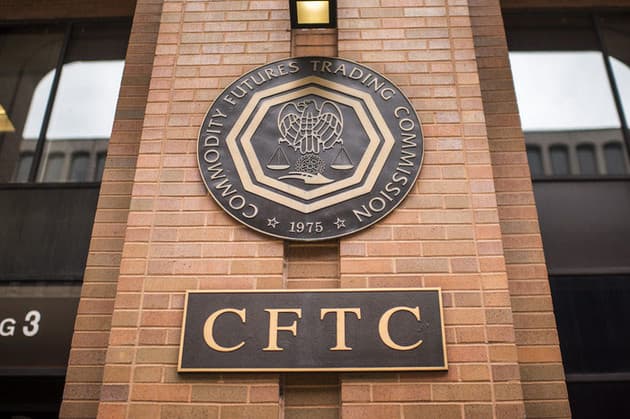
The U.S. Commodity Futures Trading Commission (CFTC) has opened another avenue for digital assets within regulated financial infrastructure, allowing certain derivatives exchanges and clearinghouses to count Bitcoin, Ether and qualifying payment stablecoins toward financial resources required to sustain their operations.
Staff at the CFTC's Division of Market Oversight and Division of Clearing and Risk issued an advisory on November 23 clarifying how regulated entities can use crypto assets to meet financial resource requirements under existing regulations. The guidance applies to swap execution facilities (SEFs), designated contract markets (DCMs) and derivatives clearing organizations (DCOs).
Under the framework, eligible firms may count qualifying digital assets toward financial resources required to cover at least 12 months of operating costs, subject to appropriate valuation discounts. The clarification provides greater flexibility in how regulated market operators maintain their financial buffers, particularly as digital assets increasingly feature in their business operations.
The advisory addresses CFTC Regulations 37.1301, 38.1101(a) and 39.11(a)(2), which govern financial-resource requirements for these entities.
The CFTC staff advisory identifies Bitcoin, Ether and qualifying payment stablecoins as assets that may contribute toward the financial resources regulated entities are required to maintain.
Staff indicated that it would accept minimum valuation haircuts of 20% for Bitcoin and Ether and 2% for qualifying payment stablecoins when these assets are included in the calculation.
The discounts reflect the risks associated with holding and valuing digital assets. For example, a firm holding $100 million in Bitcoin could count $80 million toward its financial-resource requirement after applying a 20% haircut, while $100 million in qualifying payment stablecoins could contribute $98 million after a 2% discount, assuming the assets meet the applicable conditions.
The requirements concern financial resources needed to cover ongoing operating expenses and certain business losses, rather than customer funds or assets held as trading collateral.
The clarification could give registered derivatives venues and clearinghouses greater flexibility in managing their balance sheets, particularly those already holding digital assets as part of their operations.
The advisory does not allow digital assets to satisfy every financial obligation imposed on regulated derivatives entities.
The CFTC staff clarified that crypto assets do not qualify as cash or highly liquid securities under the relevant accounting and regulatory framework. Consequently, Bitcoin, Ether and qualifying payment stablecoins cannot be counted toward the separate liquidity requirements that these entities must meet.
The distinction leaves regulated market operators with two separate obligations: maintaining financial resources sufficient to cover at least 12 months of operating costs and meeting their applicable minimum liquidity requirements using eligible assets.
The advisory therefore expands the range of assets that may contribute toward certain operating-resource requirements without changing the underlying liquidity rules.
The latest guidance builds on the CFTC's broader efforts to accommodate digital assets and blockchain-based financial infrastructure within existing regulatory frameworks.
In December 2025, the agency introduced a digital asset pilot program that enabled certain cryptocurrencies, including Bitcoin, Ether and USDC, to be used as collateral in regulated derivatives markets. The initiative also addressed tokenized collateral and the treatment of digital assets within existing derivatives rules.
Unlock Blockchain previously covered the initiative in its article, CFTC Unveils Landmark Pilot Program to Bring Tokenized Collateral Into U.S. Derivatives Markets, which examined the pilot's collateral provisions, tokenized asset guidance and regulatory changes.
The agency has also been advancing the integration of blockchain technology into market infrastructure. In November, the CFTC approved Backpack and tZERO to operate blockchain-based derivatives exchanges and clearing organizations in the United States, expanding the regulatory pathway for on-chain derivatives infrastructure.
As previously reported by Unlock Blockchain in CFTC Opens US Derivatives Markets to Blockchain-Native Infrastructure, the approvals marked another step toward incorporating blockchain-based platforms into regulated U.S. derivatives markets.
The latest advisory adds another dimension to that effort by addressing how digital assets held by regulated entities can contribute to their financial resilience.
However, the guidance represents the views of CFTC staff, does not create new rules or enforceable rights, is not a no-action position and does not necessarily reflect the views of the Commission.
The clarification nevertheless signals a broader evolution in how digital assets are being considered within the operational and financial requirements of regulated market infrastructure, extending their potential role beyond trading, settlement and collateral management.

Disclaimer of Warranty
The information provided in this article is for general informational purposes only. We make no warranties about the completeness, reliability, and accuracy of this information. Read full disclaimer

Editor's Picks
In the Same Space
CFTC Opens US Derivatives Markets to Blockchain-Native Infrastructure

News Desk

Nov 17, 2026

4 min

FSB Urges Türkiye to Close Stablecoin Regulation Gap
Salma Naueihed
Nov 11, 2026
4 min

Dubai Finance and VARA Partner to Advance Dubai’s Cashless Economy
News Desk
Nov 23, 2026
3 min

Hong Kong Flags Hyperliquid Over Licensing Concerns
News Desk
Nov 19, 2026
6 min