
Advertisement
Tokenization Infrastructure
The project adds Canada’s largest banks to a global shift toward tokenized deposits as an alternative infrastructure for bank-to-bank payments.
Share
Canada's six largest banks, including RBC, TD, and BMO, announced a joint initiative on September 22 to explore a shared Canadian-dollar tokenized deposit system for faster, programmable interbank payments, following regulatory clarity from OSFI that tokenized deposits are not legally distinct from traditional deposits.
Canada’s six largest banks are jointly exploring a Canadian-dollar tokenized deposit system that could enable faster and programmable payments between financial institutions.
Bank of Montreal (BMO), Canadian Imperial Bank of Commerce (CIBC), National Bank of Canada, Royal Bank of Canada (RBC), Scotiabank and TD Bank Group announced the initiative on September 22. The banks said the first phase will focus on moving tokenized deposits efficiently across Canadian financial institutions, with a longer-term goal of connecting the system with other digital asset initiatives.
The participating banks also said other deposit-taking institutions could join the project at a later stage.
The initiative is designed to explore Canadian-dollar digital money that can support faster, more efficient and programmable payments while remaining within the regulated banking system.
Unlike stablecoins, which are generally issued as separate digital assets by their issuers, tokenized deposits represent existing bank deposits in digital form. The underlying claim remains against the bank, while distributed ledger technology can provide a different way of recording and transferring that value.
The banks have not committed to issuing a tokenized deposit product. Instead, they are exploring a common infrastructure for moving tokenized deposits between participating institutions.
The distinction is important because the project is focused initially on interbank movement of bank money, rather than creating a new digital currency for consumers.
The announcement follows a September 10 statement from Canada's Office of the Superintendent of Financial Institutions (OSFI) clarifying its approach to tokenized and digitally represented deposits.
OSFI said the technology used to build or deliver a financial product does not determine its legal nature. It specifically stated that tokenized deposits are not legally distinct from traditional deposits. Federally regulated institutions remain responsible for complying with existing requirements, including technology, cyber and third-party risk management, and are expected to engage their OSFI supervisors before launching novel products or services.
The clarification provides important regulatory context for the six-bank initiative, although it does not amount to approval for a specific product or launch.
Canada's initiative follows a broader shift among banks toward shared blockchain infrastructure for tokenized deposits.
In the United States, major banks including JPMorgan, Bank of America, Citi and Wells Fargo have been working on a proposed tokenized deposit network targeting 2027. The planned system is designed to allow tokenized bank deposits to move between participating institutions and support continuous settlement.
Separately, 39 U.S. state banking associations launched the BankChain Alliance in August to develop shared blockchain infrastructure for tokenized deposits, stablecoins and smart payments.
Swift is also developing blockchain infrastructure for tokenized deposit payments. Its shared ledger is designed to support interoperable tokenized deposits and 24/7 cross-border payments, with participating banks retaining control over their own assets, liquidity and settlement processes.
More recently, Citi and DBS completed a weekend cross-border transfer using tokenized deposits through Swift's blockchain-based Digital Ledger, settling the transaction in minutes rather than the up to two business days that can be required through traditional processes.
The Canadian project therefore enters a market where banks are increasingly testing whether tokenized deposits can operate as shared payment infrastructure rather than isolated bank products.
The new initiative also builds on Canada's earlier experiments with blockchain-based financial markets.
In March, the Bank of Canada, RBC and TD completed Project Samara, a pilot involving the issuance, trading and settlement of a C$100 million bond using distributed ledger technology and tokenized wholesale Canadian dollars.
That experiment focused on securities issuance and settlement. The latest initiative shifts the focus toward bank money and interbank payments, potentially extending Canada's tokenization work from financial markets into payments.
The broader trend is also visible internationally, as banks develop tokenized deposits alongside other forms of digital money and financial assets. Unlock Blockchain previously examined the emerging competition between these models in “Stablecoins vs. Tokenized Deposits: Who Will Control Digital Money?”, which explored how banks and stablecoin issuers are approaching the future of digital money.
The six-bank initiative remains exploratory, with no announced launch date or commitment to issue a tokenized deposit.
Its significance lies instead in the institutions involved and the model being explored.
Canada's Big Six banks are collectively examining how tokenized bank money could move between financial institutions while remaining within the existing regulated banking framework. The initiative also gives the banks a potential foundation for connecting Canadian-dollar deposits with broader digital asset infrastructure in the future.
With regulators providing greater clarity and banks in the U.S., Europe and elsewhere moving toward shared tokenized deposit networks, Canada's latest project adds another major banking market to the global push to put commercial bank money onchain.

Disclaimer of Warranty
The information provided in this article is for general informational purposes only. We make no warranties about the completeness, reliability, and accuracy of this information. Read full disclaimer

Editor's Picks
In the Same Space

CoinMENA Becomes First Digital Asset Platform Live in Jordan’s Regulatory Sandbox

Anna K.

Sep 21, 2026

3 min

Why Are Apple and Google Recruiting for Blockchain and Stablecoin Roles?
News Desk
Sep 21, 2026
7 min
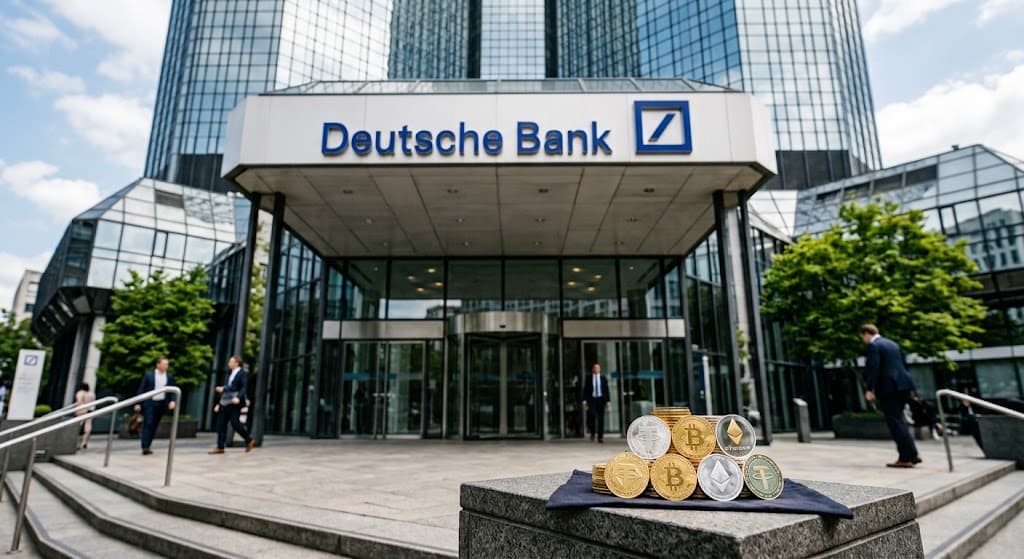
Deutsche Bank Moves Into Institutional Crypto Custody With Bitcoin, Ether and Stablecoins
News Desk
Sep 17, 2026
4 min

As U.S. Crypto Legislation Stalls, Circle Launches Its Own Financial Network
Walid Abou Zaki
Sep 16, 2026
9 min