Advertisement
Regulation & Policy
Share
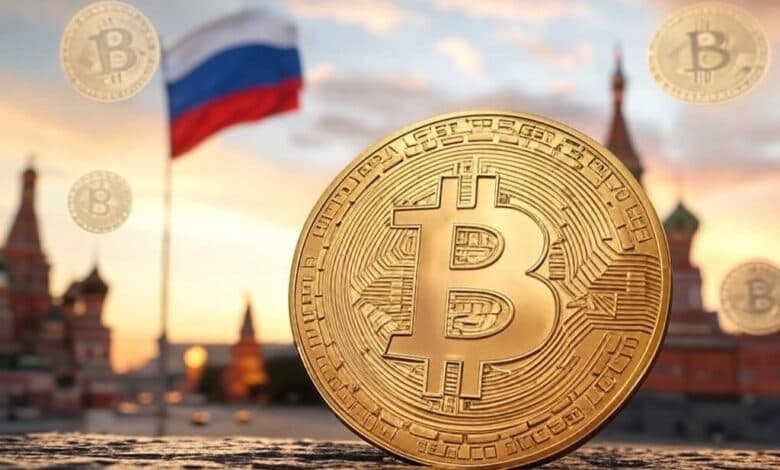
The Bank of Russia has proposed Bitcoin, Ether and USDT as the first cryptocurrencies eligible for organized retail trading under a new regulatory framework set to take effect September 1, 2026, with public comments accepted until August 24.
Russia is moving closer to opening regulated cryptocurrency trading to ordinary investors, with the Bank of Russia proposing Bitcoin, Ether and Tether’s USDT as the first assets eligible for organized trading under its new crypto market framework.
The central bank said the three cryptocurrencies meet proposed eligibility requirements based on market capitalization, average daily trading volumes and at least five years of price history on foreign trading platforms. The proposed list remains open for public comments until August 24.
The move gives the clearest indication yet of which cryptocurrencies could become accessible to Russia’s non-qualified investors when the country’s new cryptocurrency legislation takes effect on September 1, 2026.
Under the Bank of Russia’s proposed rules, non-qualified investors would be restricted to cryptocurrencies that meet the central bank’s liquidity and market-history requirements.
Bitcoin, Ether and USDT currently meet those criteria and have therefore been included in the draft list of cryptocurrencies that could be admitted to organized trading.
The proposed framework would impose an annual purchase limit of 300,000 rubles per intermediary on non-qualified investors. The limit would apply separately to purchases made through brokers, crypto exchange services and asset managers.
Investors would also have to pass a test and acknowledge the risks associated with crypto investments before conducting transactions, regardless of whether they are classified as qualified or non-qualified investors.
Qualified investors would face a different regime. Once they pass the required test, they would be able to trade cryptocurrencies available on organized and over-the-counter markets without the 300,000-ruble annual purchase ceiling.
The proposed asset list is part of a broader shift in Russia’s treatment of cryptocurrency.
In July, the Bank of Russia said new legislation would establish a regulated infrastructure for cryptocurrency transactions involving both non-qualified and qualified investors. The framework includes existing financial institutions alongside new market participants such as crypto exchanges and digital repositories.
The law, which is scheduled to take effect on September 1, will allow cryptocurrency transactions through intermediaries including brokers and management companies, as well as through organized trading platforms.
At the same time, Russia will retain its prohibition on using cryptocurrencies as a means of payment for goods and services domestically. The framework does, however, allow exporters and importers to use cryptocurrencies in certain cross-border transactions without the investment limits applied to retail purchases.
The legislation also gives market participants a transition period until July 1, 2027 to obtain the necessary licenses and bring their operations into compliance with the new requirements.
The Bank of Russia has already begun filling in the infrastructure required for the new market.
On July 27, the regulator published its first draft regulations for organized cryptocurrency trading, covering exchanges, digital depositories and digital accounts. Exchanges would establish their own trading procedures and calculate market and weighted-average prices for cryptocurrencies traded on their platforms.
Digital depositories, which would maintain records of cryptocurrency and digital-rights holdings, would face minimum equity requirements ranging from 50 million to 250 million rubles, depending on the scope of their activities.
The central bank would also maintain a register of digital depositories and oversee requirements for the recording of cryptocurrency holdings and transactions.
The infrastructure is therefore being developed alongside the rules governing which assets can actually enter the regulated market.
The regulatory shift has also prompted major Russian financial institutions to prepare crypto-related services.
Alfa-Bank has been testing cryptocurrency trading through its Alfa-Investments brokerage platform with a limited group of qualified investors. The bank has also been working on infrastructure for digital asset custody and conversion between crypto and rubles.
Sberbank has been developing a cryptocurrency wallet and digital asset depository, while T-Bank and VTB have also discussed plans for cryptocurrency trading and custody services.
The emergence of these products is tied to the September regulatory timetable rather than to an immediate opening of unrestricted retail crypto trading.
Russia’s move toward regulated crypto investment does not amount to legalizing cryptocurrency as a domestic payment instrument.
The new framework continues to prohibit the use of cryptocurrencies to pay for goods and services within Russia. The regulatory opening is instead focused on cryptocurrency as an investment and trading asset, with separate provisions allowing certain crypto-based cross-border settlements.
For now, Bitcoin, Ether and USDT represent the starting point rather than a finalized list.
The Bank of Russia is still accepting comments on the proposed rules through August 24. If the framework is adopted as proposed, the three assets would form the initial core of the cryptocurrency market accessible to Russia’s non-qualified investors when the new regime takes effect on September 1.

Disclaimer of Warranty
The information provided in this article is for general informational purposes only. We make no warranties about the completeness, reliability, and accuracy of this information. Read full disclaimer

Editor's Picks
In the Same Space
Stablecoin Yield Fight Helps Derail CLARITY Act in Senate

Walid Abou Zaki

Sep 15, 2026

8 min

Lunar Ark Secures VARA In-Principle Approval for Virtual Asset Brokerage
News Desk
Sep 17, 2026
2 min

Crypto's Biggest CEOs Turn on Each Other as CLARITY Act Stalls
News Desk
Sep 21, 2026
5 min
Binance Launches Tokenized U.S. Stocks and ETFs in UAE With bStocks
News Desk
Sep 21, 2026
4 min