Advertisement
Regulation & Policy
Share
The U.S. House Ways and Means Committee has released the Digital Asset Tax Certainty Act, a 114-page crypto tax bill covering small transaction exemptions, stablecoins, wash-sale rules, and mining and staking income, with a committee markup scheduled for September 16.
The U.S. House Ways and Means Committee has released a sweeping crypto tax bill that would establish new rules for digital-asset transactions, stablecoins, mining, staking and reporting, as lawmakers prepare to consider the legislation in committee on September 16.
The Digital Asset Tax Certainty Act, introduced by Ways and Means Committee Chairman Jason Smith, is a 114-page package that brings together several proposals aimed at providing clearer tax treatment for digital assets. The committee has scheduled a markup for 10 a.m. ET on Wednesday, when lawmakers will debate and vote on the measure.
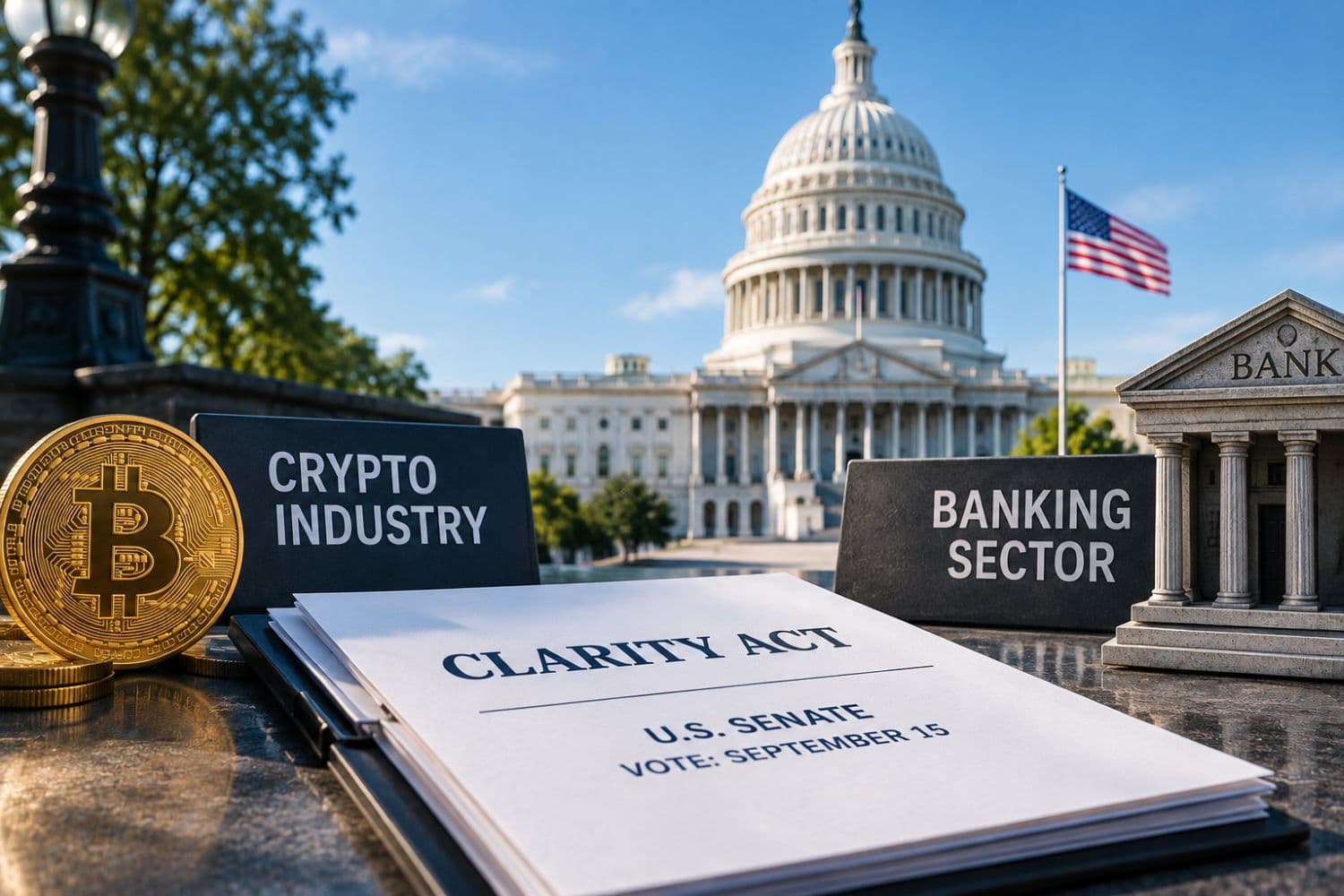
The bill comes as U.S. lawmakers pursue a broader legislative framework for digital assets, with the Senate separately preparing to vote on the CLARITY Act, which seeks to establish federal rules governing the digital-asset market.
One of the bill's provisions would create a $10 de minimis exception for certain network or transaction fees paid in cryptocurrency.
Under the proposal, users would generally not have to calculate or report a capital gain or loss when using digital assets to pay a qualifying fee of $10 or less. However, the exemption would not apply to taxpayers who made more than 5,000 qualifying transfers during the previous year.
The measure is intended to address a long-standing issue in U.S. crypto taxation, where even small transactions can potentially trigger capital-gains reporting requirements.
The proposed change, if enacted, would apply from 2028.
The legislation also addresses qualifying U.S. dollar-denominated stablecoins.
For certain stablecoin transactions involving small deviations from the $1 peg, the bill would generally allow the redemption value to be treated as the tax basis when the asset was acquired sufficiently close to that value.
The proposal also introduces simplified annual accounting for certain widely traded digital assets, with the relevant provisions likewise scheduled to begin in 2028.
The bill would extend wash-sale rules to traded digital assets.
Under the proposal, a taxpayer could have a loss disallowed when selling a digital asset and acquiring the same or a substantially identical asset within 30 days before or after the sale.
The legislation also contains provisions addressing digital-asset lending, with certain qualifying transfers under lending agreements excluded from being treated as sales or exchanges.
The proposed legislation includes separate provisions for mining and staking income.
Income generated through these activities would generally be treated as ordinary income. The bill would also allow certain investment trusts to stake digital assets without that activity alone affecting their tax status.
Notably, the new package does not include an earlier proposal that would have allowed certain taxpayers to defer income from newly created digital assets until a later taxable event. Crypto industry groups had pushed for that provision.
The bill would direct the U.S. Treasury Department and Internal Revenue Service to develop and publish additional rules where required to implement the proposed framework.
It would also establish a Digital Asset Voluntary Disclosure Program within 12 months of enactment. Eligible taxpayers would be able to amend previous returns and settle outstanding tax, interest and penalties under the program.
The Joint Committee on Taxation has separately published its description of H.R. 10357 and an estimate of its federal revenue effects ahead of the Ways and Means markup.
The Ways and Means Committee is scheduled to consider the Digital Asset Tax Certainty Act on September 16, marking an important step for U.S. crypto-tax legislation.
The bill's release comes as Congress considers several major pieces of digital-asset legislation. While the CLARITY Act focuses primarily on the regulatory structure governing digital assets, the House tax package targets how those assets are treated under the U.S. tax code.
The outcome of Wednesday's markup will determine whether the tax legislation moves forward in the House and could shape the direction of further congressional work on digital-asset taxation.

Disclaimer of Warranty
The information provided in this article is for general informational purposes only. We make no warranties about the completeness, reliability, and accuracy of this information. Read full disclaimer

Editor's Picks

Why Zondacrypto’s Collapse Would Unfold Differently in the UAE

Walid Abou Zaki

Aug 28, 2026

8 min

The Missing Orchestration Layer Holding Back Institutional Digital Assets
Julian Sawyer
Aug 18, 2026
5 min

Beyond Crypto Access: How ARP Digital Is Building the UAE’s Digital Capital Infrastructure
Anna K.
Aug 17, 2026
8 min
Read More Articles

In the Same Space

Kalshi's Bid for Non-Stop Stock Perpetuals Reignites CFTC-SEC Turf War
News Desk
Sep 11, 2026
8 min

Iran Turns to Crypto as Sanctions Bite, But USDT Has a Control Problem
Salma Naueihed
Sep 9, 2026
5 min

US and UK Launch Joint Effort to Tackle Crypto Investment Fraud
News Desk
Sep 4, 2026
5 min

CFTC Seeks Dismissal of CME Challenge to Kalshi Bitcoin Perpetuals
News Desk
Sep 3, 2026
4 min