Advertisement
Policy & Industry
Share
The CLARITY Act failed a U.S. Senate procedural vote on September 15, receiving 50 votes against the 60 required to advance, triggering public disputes among crypto executives, including Coinbase CEO Brian Armstrong and Ripple CEO Brad Garlinghouse, over who bears responsibility for the breakdown.
The collapse of the U.S. Senate’s latest attempt to advance the CLARITY Act has opened a new round of criticism within the cryptocurrency industry, with executives and lawmakers trading accusations over who bears responsibility for the legislation’s failure.
The bill, designed to establish a broader federal framework for digital assets, failed to clear a procedural Senate vote on September 15. It received 50 votes in favor and 49 against, falling short of the 60 votes required to advance. Four Republicans joined Democrats in opposing the measure.
The setback has since prompted competing explanations for why a bill that had drawn substantial support from the crypto industry could not secure enough backing on Capitol Hill.
Among the executives at the center of the debate is Coinbase CEO Brian Armstrong.
The Wall Street Journal reported on September 20 that Armstrong played a prominent role in negotiations surrounding the legislation, including discussions with lawmakers over provisions affecting Coinbase's stablecoin rewards business. The newspaper described his involvement in Washington as unusually extensive, with Armstrong making repeated trips to the capital and Coinbase's policy team maintaining frequent contact with lawmakers.
According to people familiar with the negotiations cited by the Journal, Armstrong was willing to withdraw his support over provisions he considered problematic. The dispute was particularly tied to proposed restrictions affecting rewards associated with digital assets, an issue that also brought the crypto industry into conflict with traditional banks.
The Wall Street Journal reported that some lawmakers and people involved in the negotiations viewed Armstrong's approach as contributing to the breakdown in consensus. Those accounts represent participants' interpretations of the negotiations rather than an established finding that any single executive caused the bill to fail.
The disagreement has also become visible among crypto companies themselves.
Ripple CEO Brad Garlinghouse, whose company supported the legislation, criticized divisions within the industry following the Senate vote.
Coinbase, meanwhile, defended Armstrong's earlier decision to withdraw support for parts of the legislation. Chief Policy Officer Faryar Shirzad told the Wall Street Journal that the company had repeatedly made concessions in an effort to preserve industry unity and advance the bill.
The disagreement reflects a broader problem facing the sector: companies that broadly support clearer crypto rules do not necessarily agree on what those rules should contain.
Stablecoin rewards have become one of the most contentious areas. Banking groups argued that such rewards could pull deposits away from traditional institutions, while crypto companies have resisted restrictions that could limit competition from digital-dollar products. PYMNTS reported that the issue had become a central point of tension during the negotiations.
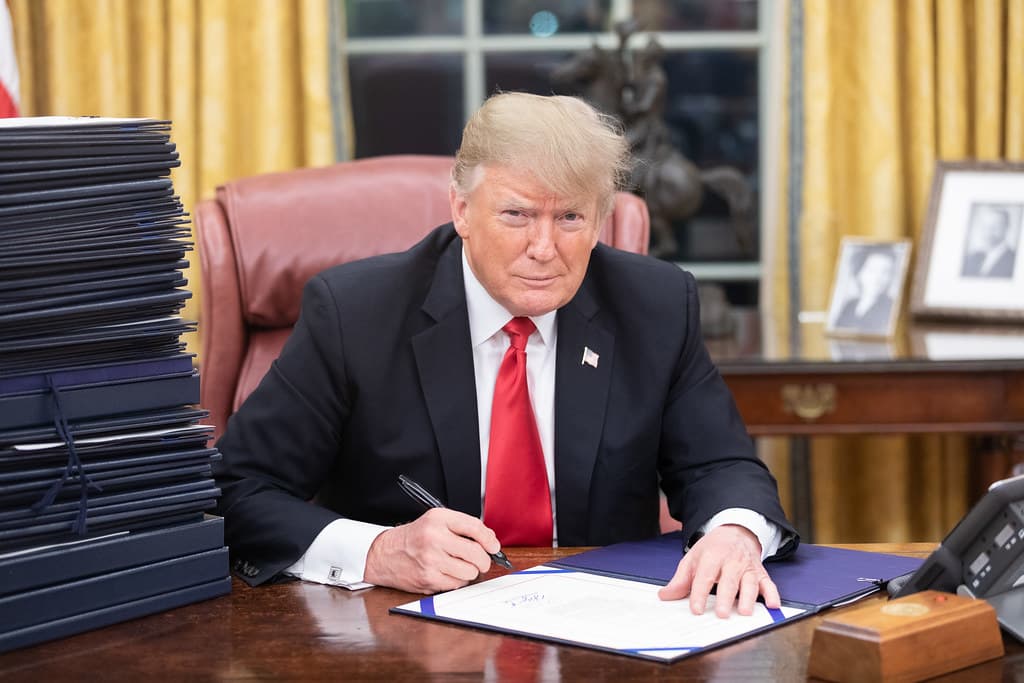
The legislative fight also became entangled with questions surrounding President Donald Trump's financial interests in the crypto industry.
Democratic lawmakers sought stronger ethics provisions related to Trump and other public officials with digital-asset interests. Republican negotiators subsequently incorporated additional ethics language into the legislation, alongside provisions addressing stablecoin-related deposit flight and other Democratic demands.
Those changes were not enough to secure the votes needed to advance the bill.
Reuters reported that four Republican senators voted against the procedural motion, while Democrats maintained opposition despite revisions made during negotiations. Senator Thom Tillis changed his procedural vote from yes to no, preserving the possibility of bringing the legislation back for reconsideration.
The result left the legislation stalled at a critical point, with the November midterm elections adding another constraint to the congressional calendar.
The CLARITY Act's failure does not mean that every part of the U.S. crypto regulatory agenda has stalled.
The GENIUS Act, enacted in 2025, already established a federal framework for payment stablecoins. That leaves stablecoins in a different regulatory position from other areas of the digital-asset market that the CLARITY Act sought to address.
PYMNTS described the situation as increasingly significant for stablecoins, which are becoming more closely integrated with banks, payment companies and financial-market infrastructure. The publication pointed to developments involving tokenized securities, Mastercard's stablecoin initiatives and Circle's expansion of blockchain-based financial infrastructure.
The underlying question is no longer simply whether digital assets can operate alongside traditional finance. Increasingly, it is how blockchain-based money and assets will connect with existing financial institutions and payment systems.
The collapse of the CLARITY Act has exposed a divide between the industry's broad demand for regulatory certainty and the different commercial interests involved in defining the rules.
For Coinbase, stablecoin rewards are an important part of its business model. For banks, deposit competition is a central concern. For lawmakers, the legislation also became a vehicle for debates over consumer protection, market oversight, ethics and the boundaries between digital assets and traditional financial services.
That makes the next phase of U.S. crypto regulation less straightforward than simply returning to negotiations over the same bill.
The Senate's September 15 vote demonstrated that industry support alone cannot guarantee legislative consensus. At the same time, developments in stablecoins, tokenization and blockchain-based payments are continuing independently of the stalled market-structure legislation.
For the crypto industry, the immediate challenge is therefore twofold: rebuilding bipartisan support for a broader regulatory framework while navigating disagreements over the commercial rules that framework would impose on different parts of the sector.

Disclaimer of Warranty
The information provided in this article is for general informational purposes only. We make no warranties about the completeness, reliability, and accuracy of this information. Read full disclaimer

Editor's Picks

As U.S. Crypto Legislation Stalls, Circle Launches Its Own Financial Network

Walid Abou Zaki

Sep 16, 2026

9 min

Stablecoin Yield Fight Helps Derail CLARITY Act in Senate
Walid Abou Zaki
Sep 15, 2026
8 min

Why Zondacrypto’s Collapse Would Unfold Differently in the UAE
Walid Abou Zaki
Aug 28, 2026
8 min
Read More Articles

In the Same Space

X Bridges Social Media and Crypto Trading With New Cashtags
News Desk
Sep 16, 2026
5 min

U.S. Bank Moves Its Stablecoin From Testing to Live Cross-Border Payment
News Desk
Sep 10, 2026
3 min

Digital Euro Enters Real-World Testing as ECB Calls on Merchants
News Desk
Sep 16, 2026
5 min

Oman Tightens Crypto Mining Rules, Warns Equipment Suppliers
News Desk
Sep 14, 2026
2 min