Advertisement
Regulation & Policy
Share
The House Ways and Means Committee voted 38-5 on September 16 to advance the Digital Asset Tax Certainty Act (H.R. 10357), the first proposed comprehensive federal tax framework for digital assets covering crypto transactions, stablecoins, mining, staking, and broker reporting.
The U.S. House Ways and Means Committee has advanced legislation that would establish a federal tax framework for digital assets, moving the bill toward consideration by the full House.
The committee voted 38-5 on September 16 to advance the Digital Asset Tax Certainty Act (H.R. 10357), which covers taxation of crypto transactions, stablecoins, mining and staking, digital asset trading and reporting.
The legislation, introduced by Ways and Means Chairman Jason Smith, R-Mo., follows more than a year of work on digital asset taxation. The committee described it as the first comprehensive federal tax framework specifically addressing digital assets.
One of the bill's provisions would create a de minimis exemption for qualifying network and transaction fees of $10 or less.
The measure is intended to address the tax reporting burden associated with small digital asset transactions. Under current rules, using crypto can create a taxable event because digital assets are generally treated as property for federal tax purposes.
The proposed exemption would not apply to service providers conducting transactions on behalf of others. The provision is also subject to a delayed effective date, with the committee's bill setting implementation for 2028.
The legislation also includes simplified accounting provisions for certain widely traded digital assets and would allow digital asset dealers and traders to use mark-to-market accounting.
H.R. 10357 would also extend existing tax anti-abuse provisions to digital assets, including wash-sale and constructive-sale rules.
The change would bring certain crypto transactions closer to the tax treatment already applied to traditional financial assets. Under the proposed framework, investors would face restrictions on claiming losses when they acquire substantially identical digital assets within the relevant wash-sale period.
The bill also contains provisions addressing digital asset lending, charitable contributions and broker reporting.
The legislation would classify income generated through digital asset mining and staking as ordinary income.
However, the bill does not include an earlier proposal that would have allowed taxpayers to defer recognition of mining and staking rewards until the assets were sold. As a result, while H.R. 10357 addresses the character of the income, questions around the timing of recognition remain unresolved.
Rep. Steven Horsford, D-Nev., who worked on the legislation, said the package establishes ordinary-income treatment but does not settle when mining and staking rewards should be recognized for tax purposes.
The bill would also allow certain investment trusts to stake digital assets without that activity alone affecting their tax status.
The bill directs the U.S. Treasury Department to establish a Digital Asset Voluntary Disclosure Program within 12 months of enactment.
Eligible taxpayers would be able to amend previous tax returns and settle outstanding tax, interest and applicable penalties under the program. The committee said the measure is intended to provide a pathway for taxpayers to address past digital asset reporting and compliance issues.
The package also seeks to align digital assets with existing tax treatment for comparable traditional financial assets. It includes provisions covering charitable donations of certain widely traded digital assets and applies additional existing tax rules to digital assets.
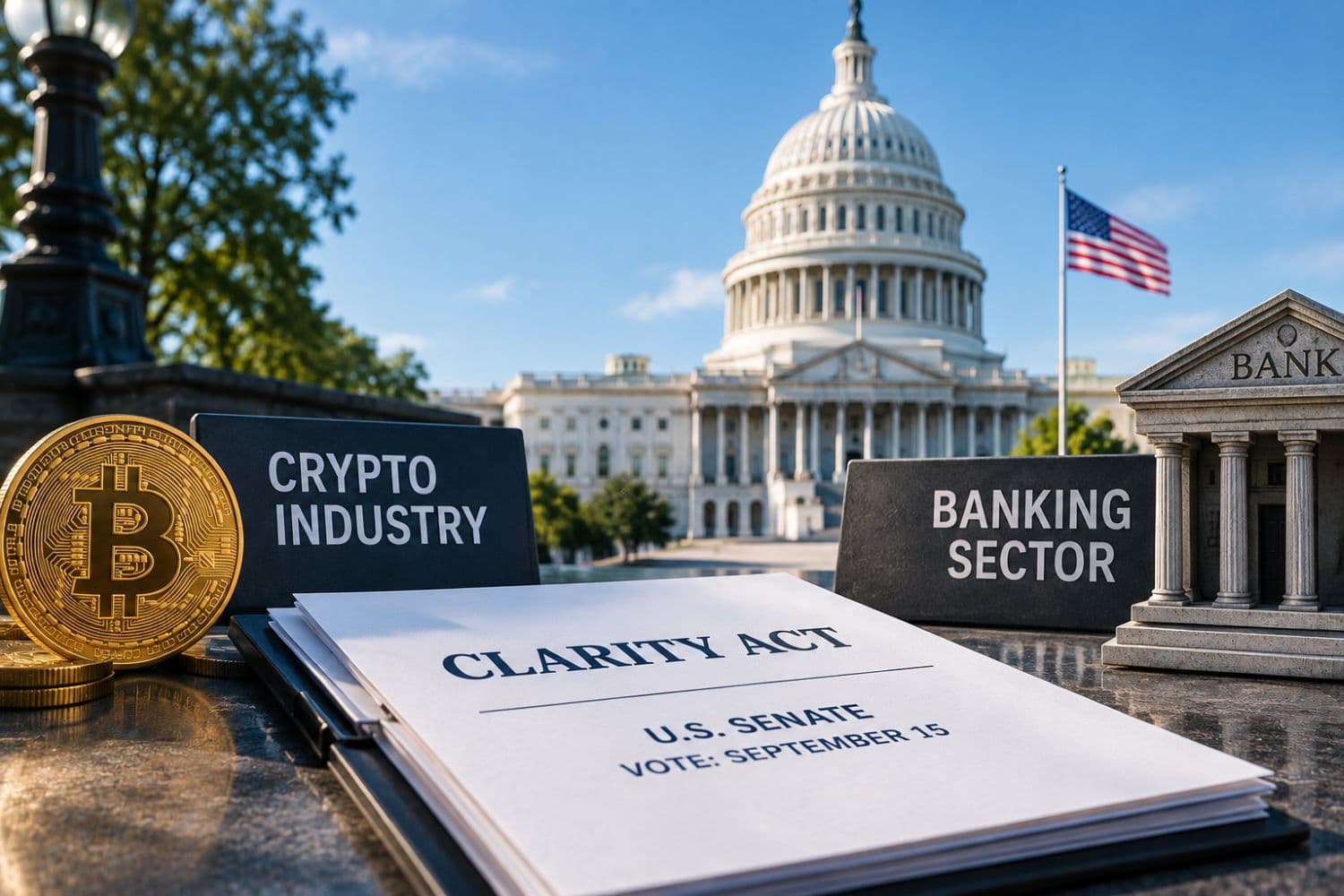
The Ways and Means vote came one day after the Senate failed to advance the broader CLARITY Act in a procedural vote.
The Senate measure received 49 votes in favor and 50 against on September 15, falling short of the 60 votes required to advance. The legislation seeks to establish a broader regulatory framework for digital assets, rather than focusing primarily on taxation.
The two developments leave separate tracks of U.S. crypto legislation at different stages: the House tax framework has cleared committee, while the Senate's broader market-structure legislation remains stalled following its procedural vote.
The House is expected to leave Washington after the current session ahead of the November elections, meaning further consideration of H.R. 10357 could come during the post-election lame-duck period.
Attention is also expected to turn to the Senate Finance Committee, which has been examining digital asset tax legislation.
The Digital Asset Tax Certainty Act must still be considered by the full House and would need to pass the Senate before it could reach the president.

Disclaimer of Warranty
The information provided in this article is for general informational purposes only. We make no warranties about the completeness, reliability, and accuracy of this information. Read full disclaimer

Editor's Picks

As U.S. Crypto Legislation Stalls, Circle Launches Its Own Financial Network

Walid Abou Zaki

Sep 16, 2026

9 min

Stablecoin Yield Fight Helps Derail CLARITY Act in Senate
Walid Abou Zaki
Sep 15, 2026
8 min

Why Zondacrypto’s Collapse Would Unfold Differently in the UAE
Walid Abou Zaki
Aug 28, 2026
8 min
Read More Articles

In the Same Space

Bitcoin ETFs Lose $288.7M in Fresh Wave of Investor Selling
News Desk
Sep 16, 2026
2 min

Bitcoin Takes Hit as Iran Rising Tensions Send Oil Above $100
News Desk
Sep 14, 2026
6 min
Stablecoin Yield Fight Helps Derail CLARITY Act in Senate
Walid Abou Zaki
Sep 15, 2026
8 min

Kalshi's Bid for Non-Stop Stock Perpetuals Reignites CFTC-SEC Turf War
News Desk
Sep 11, 2026
8 min