Advertisement
Research & Analysis
SMEs in Eastern Europe, the Middle East and Africa are more than twice as likely as the global average to use emerging payment methods, including cryptocurrency and stablecoins, according to Mastercard’s Dreamonomics report.
Share
SMEs in Eastern Europe, the Middle East and Africa are more than twice as likely as the global average to use emerging payment methods, including cryptocurrency and stablecoins, according to Mastercard’s Dreamonomics report.
Small and medium-sized enterprises across Eastern Europe, the Middle East and Africa are increasingly incorporating emerging payment methods into their businesses as they adopt new digital tools while placing greater emphasis on stability and protection from cyber threats, according to Mastercard’s latest research.
The findings come from Mastercard’s inaugural Dreamonomics report, based on a survey of more than 6,000 SMEs across 18 countries conducted by Hypothesis on behalf of Mastercard. The research examines how small businesses are approaching growth, digital adoption, payments, customer relationships and cybersecurity.
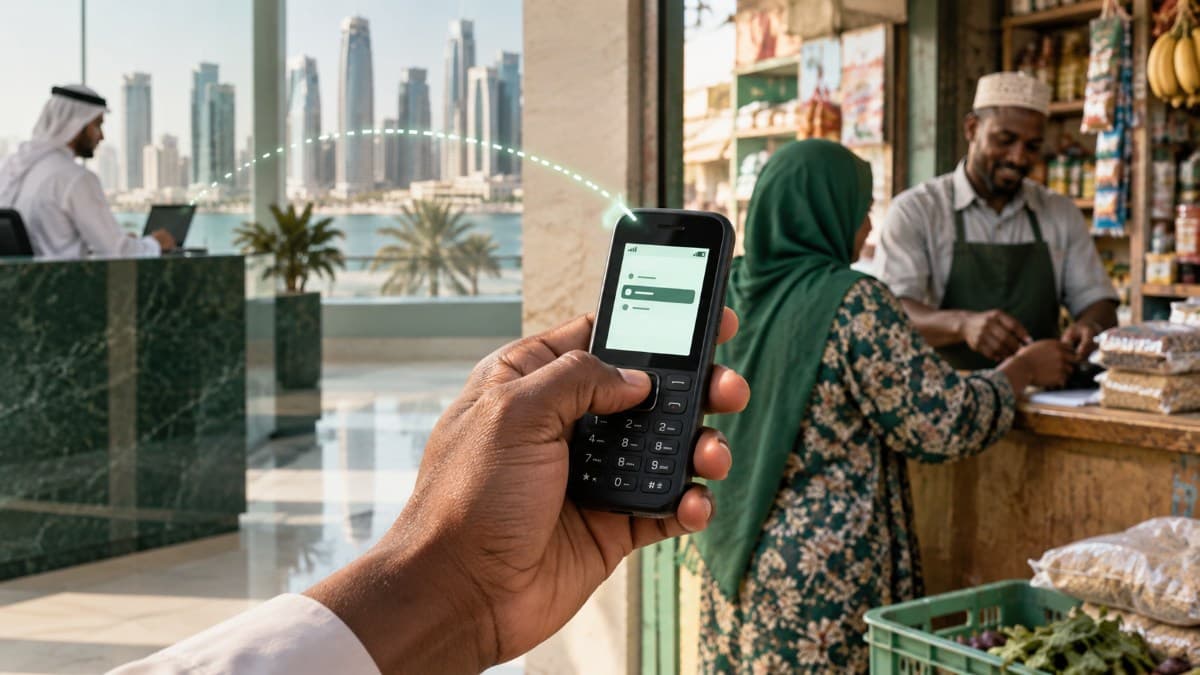
Among its regional findings, Mastercard said SMEs in the Middle East and Africa are more than twice as likely as the global average to use emerging payment methods alongside cards and bank transfers, including cryptocurrency and stablecoins.
Across the region, 15% of SMEs use cryptocurrency and 8% use stablecoins, according to the research.
The figures place digital assets within a broader shift in SME payment behavior, rather than treating cryptocurrency or stablecoins as standalone financial products.
Mastercard’s findings indicate that SMEs are not necessarily replacing traditional payment channels with emerging ones.
Instead, cryptocurrency and stablecoins are being used alongside cards and bank transfers, giving businesses a broader mix of ways to make and receive payments.
That distinction is important for understanding the finding. The survey measures SMEs’ reported use of emerging payment methods; it does not measure transaction volumes or establish how frequently businesses use cryptocurrency or stablecoins.
The research also does not suggest that adoption is uniform across the region. EEMEA covers a diverse group of markets with different payment systems, regulatory frameworks and levels of digital-asset development.
For the UAE, the findings are particularly relevant as businesses operate within a market that has been expanding its digital-payment and virtual-asset infrastructure. Mastercard’s separate August SME Confidence Index found that 83% of UAE business decision-makers said digital and online payments are important to helping their businesses grow faster and more efficiently.
Digital-asset payments are only one part of the technology shift identified by Dreamonomics.
Seventy-seven percent of EEMEA SMEs said they are excited about AI’s potential, compared with 70% globally, according to Mastercard.
The strongest interest is not limited to productivity. Forty-nine percent of EEMEA SMEs identified fraud and security protection as an area where AI could have an impact, compared with 41% globally.
The region is already using AI and machine-learning tools at a significant rate. Mastercard reported that 43% of SMEs in the Middle East and Africa use AI or machine-learning tools to automate workflows.
This puts AI adoption alongside digital payments as part of a wider effort by SMEs to automate operations and manage increasingly digital businesses.
The increased use of digital payments and AI also comes with a greater focus on cybersecurity.
Seventy-eight percent of EEMEA SMEs said protection from cyber threats is a priority, while 42% said they already use cybersecurity tools, the highest share among the regions surveyed, Mastercard said.
Globally, the research found that 71% of SMEs consider cyber protection a priority, but only 37% currently use cybersecurity tools.
The regional gap suggests that cybersecurity is becoming closely tied to digital adoption as businesses add more software, payment methods and connected systems to their operations.
Despite the region’s stronger appetite for new technology, EEMEA SMEs are not uniformly focused on rapid expansion.
Mastercard found that 59% of SMEs in EEMEA prioritize stability and predictability over fast growth, compared with 68% globally.
At the same time, 54% of EEMEA SMEs would rather build deeper customer relationships than reach as many customers as possible.
The global findings reinforce the same theme. Across the 18 markets surveyed, 68% of SMEs prioritize stability and predictability over fast growth, 54% actively avoid unnecessary financial risk and 61% prefer deepening customer relationships over maximizing customer reach.
That tension — between adopting new technology and maintaining control — is central to the Dreamonomics findings.
SMEs are adding payment methods and digital tools, but the research suggests they also want technology that makes businesses easier to manage rather than simply adding more complexity.
The global survey found that SMEs already use five digital business tools on average, while 89% want to adopt more. Meanwhile, 78% said integrated tools are critical to their businesses.
For payment providers and financial institutions, the findings point to a growing demand for infrastructure that connects payments with other parts of SME operations.
Mastercard said the research shows that small businesses are looking for growth that is more predictable, protected and easier to manage.
For the digital-asset sector, the findings provide another indication that cryptocurrency and stablecoins are entering the operational toolkit of businesses, particularly in markets where SMEs are already adopting multiple digital payment and financial technologies.
The research does not measure the value or frequency of those transactions, but it shows that digital assets are increasingly appearing alongside conventional payment methods in the SME landscape across EEMEA.

Disclaimer of Warranty
The information provided in this article is for general informational purposes only. We make no warranties about the completeness, reliability, and accuracy of this information. Read full disclaimer

Editor's Picks
In the Same Space

ADGM Puts DLT Foundation Audits and Disclosure in Focus

Walid Abou Zaki

Sep 23, 2026

7 min

EU Crypto Regulation Faces a Major Reset as Commission Reviews MiCA
News Desk
Sep 22, 2026
3 min

CoinMENA Becomes First Digital Asset Platform Live in Jordan’s Regulatory Sandbox
Anna K.
Sep 21, 2026
3 min

VARA Approves Alya Marrakchi as Managing Director of GC Exchange FZE
Chantal Assi
Sep 21, 2026
4 min