Advertisement
Stablecoins & Payments
Share
IMF Deputy Managing Director Dan Katz warned at the University of Cape Town that local currency stablecoins operating on shared blockchain infrastructure could inadvertently accelerate dollar-backed stablecoin adoption by simplifying foreign exchange conversion, posing risks to monetary sovereignty and capital flow oversight.
Local currency stablecoins may not necessarily strengthen domestic currencies in the digital economy. Instead, they could make access to U.S. dollar-backed stablecoins easier, according to a senior official at the International Monetary Fund (IMF).
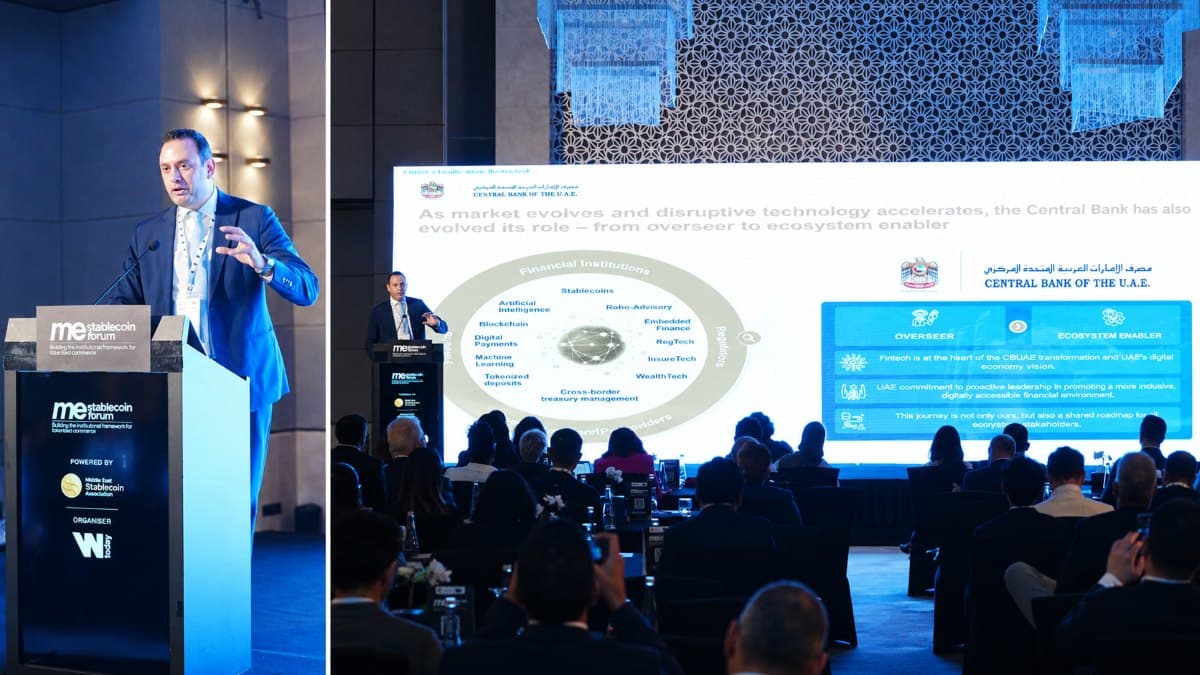
Speaking at the University of Cape Town on August 7, Dan Katz, Deputy Managing Director at the IMF, warned that regulators should consider how blockchain-based payment systems could reshape demand for foreign currencies as stablecoins become more widely adopted.
His remarks come as policymakers around the world explore the role of stablecoins in modern payment systems while weighing their potential impact on monetary sovereignty and capital flows.
According to Katz, local currency stablecoins and dollar-backed stablecoins operating on the same blockchain infrastructure could significantly simplify foreign exchange transactions.
Rather than relying solely on banks or traditional foreign exchange providers, users could exchange between different stablecoins through decentralized exchanges (DEXs), liquidity pools, or peer-to-peer transactions.
As a result, local stablecoins could unintentionally make dollar-denominated stablecoins more accessible, potentially accelerating their adoption rather than limiting their use.
Katz stressed, however, that the IMF is not presenting this outcome as inevitable, but rather as a risk policymakers should carefully evaluate.
The IMF's assessment reflects the current composition of the global stablecoin market, which remains overwhelmingly tied to the U.S. dollar.
Katz noted that the total stablecoin market capitalization has remained around $300 billion over the past year after nearly tripling between 2021 and 2025.
Approximately 99% of all stablecoins are denominated in U.S. dollars, giving dollar-backed tokens significant advantages in liquidity, market acceptance, and integration across trading platforms, payment networks, and international financial markets.
By comparison, stablecoins linked to local currencies continue to face strong competition from these established network effects, even when governments or private companies introduce them as digital alternatives to national currencies.
Katz pointed to South Africa as an early example of this evolving dynamic.
While both rand-backed and dollar-backed stablecoins have so far seen relatively limited adoption within the country, he cautioned against drawing definitive conclusions from current trends.
At the same time, data from the South African Reserve Bank's Financial Stability Review indicates growing activity involving dollar-backed stablecoins.
Trading volumes for dollar-denominated stablecoins on domestic exchanges increased from less than 4 billion rand in 2022 to approximately 80 billion rand during the first ten months of 2025.
Meanwhile, South African authorities continue reviewing the country's digital money framework, including potential retail applications for a central bank digital currency (CBDC) alongside regulation of privately issued digital assets.
The IMF's concern extends beyond stablecoin adoption itself to the way blockchain technology could transform foreign exchange markets.
If multiple stablecoins operate on shared blockchain infrastructure, users holding local currency stablecoins may no longer need to access traditional banks or licensed foreign exchange providers to obtain dollar-denominated assets.
Instead, decentralized exchanges and liquidity pools could facilitate direct trading pairs between local and dollar-backed stablecoins, while peer-to-peer markets provide an additional conversion channel.
According to Katz, this model could shift a portion of foreign exchange activity away from financial institutions that traditionally serve as key regulatory checkpoints.
That shift could create additional challenges for regulators.
Banks and licensed currency dealers are typically responsible for reporting transactions, enforcing foreign exchange regulations, and implementing capital control measures.
Transactions conducted through self-custodied blockchain wallets, however, may prove more difficult for authorities to monitor than those processed through regulated financial institutions.
As a result, easier conversion between stablecoins could broaden access to foreign currencies while reducing some governments' ability to oversee capital movements or enforce exchange controls using traditional regulatory mechanisms.
The IMF's observations align with previous research published by the Bank for International Settlements (BIS).
A BIS study examining four U.S. dollar-backed stablecoins against 27 fiat currencies found that more than 70% of cumulative net inflows into those stablecoins originated from non-dollar currencies.
Researchers also identified correlations between rising stablecoin demand, currency depreciation, and pricing differences between conventional foreign exchange markets and blockchain-based trading venues.
The IMF's warning highlights a growing policy dilemma facing emerging economies as they explore local stablecoin initiatives.
Issuing a digital token pegged to a national currency may not, on its own, strengthen demand for that currency. If local and dollar-backed stablecoins become easily interchangeable through shared blockchain infrastructure, users may find it increasingly simple to shift from domestic currencies into digital dollars, particularly in economies facing inflation or persistent currency weakness.
The long-term competition among stablecoins, therefore, is likely to extend beyond issuance alone. Liquidity, interoperability, network adoption, and regulatory oversight may ultimately determine whether local currency stablecoins can compete with dollar-backed alternatives while allowing authorities to preserve effective tools for monitoring capital flows without hindering innovation in digital payments.

Disclaimer of Warranty
The information provided in this article is for general informational purposes only. We make no warranties about the completeness, reliability, and accuracy of this information. Read full disclaimer

Editor's Picks
In the Same Space
SoFi Becomes First National Bank to Launch Stablecoin Settlement

News Desk

Sep 23, 2026

4 min
CFTC Chair Calls for ‘Mass Tokenization’ of Financial Markets
News Desk
Sep 23, 2026
4 min

Why Are Apple and Google Recruiting for Blockchain and Stablecoin Roles?
News Desk
Sep 21, 2026
7 min
Deutsche Bank Moves Into Institutional Crypto Custody With Bitcoin, Ether and Stablecoins
News Desk
Sep 17, 2026
4 min