Advertisement
Regulation & Policy
Share
The CFTC updated its guidance on tokenized assets and blockchain-based recordkeeping, clarifying that registered firms may invest customer funds in tokenized assets under Regulation 1.25 and use distributed ledger technology for compliance records, provided the tokens preserve the legal and economic rights of the underlying assets.
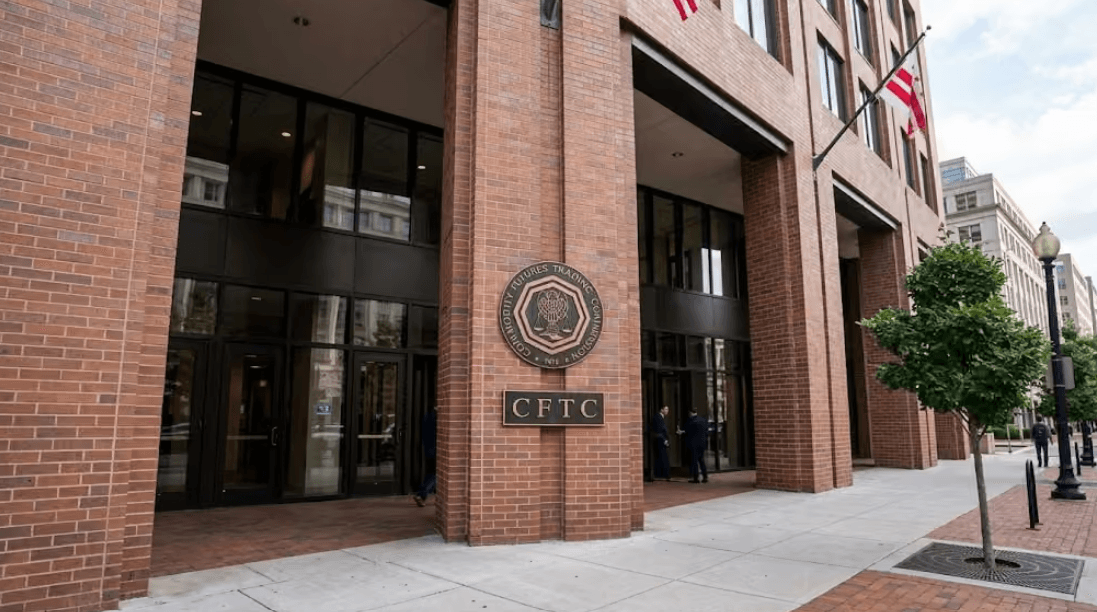
The US Commodity Futures Trading Commission (CFTC) has updated its guidance on tokenized assets and the use of blockchain technology for regulatory recordkeeping, providing greater clarity on how registered crypto-related firms can use blockchain-based assets and systems within existing rules.
The update was published in a Thursday notice through the agency’s frequently asked questions covering crypto assets and blockchain activities. The revised guidance builds on the CFTC’s framework first introduced in March and addresses both tokenized investments and blockchain-based recordkeeping.
Under the updated guidance, eligible firms may invest customer funds in tokenized versions of assets that already satisfy Regulation 1.25 requirements. However, the tokenized asset must provide holders with legal and economic rights that are the same as, or functionally equivalent to, those provided by the asset in its traditional form.
The clarification could make it easier for regulated firms to incorporate tokenized versions of conventional assets into their existing activities.
The CFTC’s position means that an asset does not necessarily lose its eligibility simply because it has been represented on a blockchain. Instead, the focus is on whether the token preserves the underlying asset’s legal and economic characteristics.
The agency also indicated that it would not object to regulated entities using blockchain-based systems to maintain required records under the updated framework.
This gives firms a clearer basis for using distributed ledger technology not only to represent assets, but also to support compliance and recordkeeping processes.
The recordkeeping portion of the guidance adds another potential use case for blockchain within regulated financial markets.
Instead of automatically requiring a separate off-chain record simply because information is stored on a blockchain, the updated approach allows firms to rely on blockchain-based records, provided they continue to meet applicable regulatory requirements.
For institutions using public or permissionless blockchains, access to the records remains essential. Firms must ensure that information can still be retrieved and provided to the CFTC when required, including during network disruptions or other situations that could interfere with access to blockchain data.
The clarification could therefore reduce duplication between onchain records and traditional internal systems, while maintaining regulators’ ability to review transaction and compliance data.
CFTC Chair Michael Selig said the changes form part of the agency’s broader effort to provide regulatory clarity for the crypto industry.
The latest update follows the CFTC’s earlier work on tokenized collateral and blockchain-based financial infrastructure. By refining the treatment of tokenized assets under existing requirements, the agency is creating clearer conditions for regulated firms considering blockchain-based financial products.
The approach also reflects a broader shift toward integrating digital asset technology into traditional financial markets rather than treating blockchain-based activity as entirely separate from established financial infrastructure.
The guidance comes shortly after the US Senate failed to advance the Digital Asset Market Clarity Act, known as the CLARITY Act.
The legislation was expected to establish clearer rules for the US digital asset market and provide greater definition around the respective regulatory roles of the CFTC and Securities and Exchange Commission (SEC).
With the legislation failing to move forward, comprehensive crypto market-structure legislation could take longer to pass. This has increased attention on regulators’ ability to advance crypto-related policies through existing authorities and agency rulemaking.
The CFTC has already submitted a broader crypto market regulation plan to the White House for review, adding to expectations that regulatory agencies will continue developing their own frameworks while Congress works on legislation.
The CFTC is not the only US regulator pursuing greater clarity for digital assets.
SEC Chair Paul Atkins said before the CLARITY Act vote that the agency was prepared to propose additional crypto-related rules even without congressional action.
The SEC also proposed rules in August covering certain investment contracts involving crypto assets, further demonstrating that regulators are continuing to develop their own approaches to the sector.
The parallel moves by the CFTC and SEC suggest that regulatory development is continuing despite the absence of a broader congressional market-structure framework.
The CFTC’s updated guidance is significant because it addresses practical questions facing financial institutions exploring tokenization.
Rather than focusing solely on whether an asset is digital, the framework considers whether the token preserves the rights associated with the underlying asset and whether existing regulatory requirements remain satisfied. This approach could support wider experimentation with tokenized versions of traditional financial assets within regulated markets.
At the same time, the blockchain recordkeeping provisions show that distributed ledger technology is being considered not only as a method for issuing and transferring assets, but also as part of the compliance infrastructure supporting financial markets.
The latest CFTC update does not replace the need for comprehensive legislation, but it provides regulated firms with more specific guidance on how tokenized assets and blockchain systems can fit within existing rules.
Its significance lies in connecting tokenization with established financial-market infrastructure rather than treating it solely as a crypto-specific development. As regulators continue to address these applications through guidance and rulemaking, the US framework for blockchain-based finance is gradually becoming more defined.
The remaining question is how quickly these regulatory clarifications will translate into actual institutional adoption. The CFTC has addressed important questions around eligible tokenized assets and recordkeeping, but broader adoption will still depend on legal certainty, risk controls and the eventual direction of US market-structure legislation.

Disclaimer of Warranty
The information provided in this article is for general informational purposes only. We make no warranties about the completeness, reliability, and accuracy of this information. Read full disclaimer

Editor's Picks
In the Same Space

Stablecoin Yield Fight Helps Derail CLARITY Act in Senate

Walid Abou Zaki

Sep 15, 2026

8 min

Crypto's Biggest CEOs Turn on Each Other as CLARITY Act Stalls
News Desk
Sep 21, 2026
5 min
Binance Launches Tokenized U.S. Stocks and ETFs in UAE With bStocks
News Desk
Sep 21, 2026
4 min

X Bridges Social Media and Crypto Trading With New Cashtags
News Desk
Sep 16, 2026
5 min