Advertisement
Companies & Deals
The 20-year, 191 MW agreement shows how AI demand is creating a new market for power and data-center capacity built around Bitcoin mining.
Share
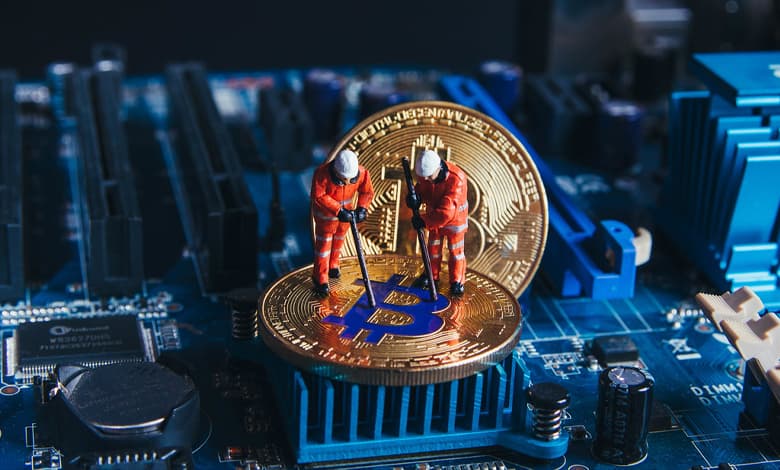
Riot Platforms has signed a 20-year, $9.1 billion agreement to supply 191 megawatts of computing capacity from its Rockdale, Texas campus to Anthropic, repurposing Bitcoin mining infrastructure for AI compute demand.
Riot Platforms is turning an asset built for Bitcoin mining into something the artificial intelligence industry may value even more: long-term computing capacity.
The Bitcoin miner has signed a 20-year agreement to supply 191 megawatts of computing capacity from its Rockdale, Texas campus to Anthropic, the company behind Claude, in a deal expected to generate $9.1 billion in revenue through June 2048. The agreement could ultimately be worth as much as $16.1 billion if Anthropic exercises two five-year extensions.
The deal, reported by people familiar with the matter, puts a number on a broader shift underway across the crypto infrastructure industry: Bitcoin miners are increasingly treating their power, land and data-center infrastructure as assets that can be repurposed for AI compute.
Riot disclosed the agreement on Monday without naming Anthropic, describing its counterparty only as a "leading frontier AI" company. Anthropic's identity was subsequently confirmed by people familiar with the matter. Neither company immediately commented.
The significance of the agreement goes beyond the size of the contract.
Bitcoin mining and AI data centers have a common requirement that is becoming increasingly scarce: large amounts of electricity connected to suitable infrastructure.
Riot's Rockdale campus was developed in the context of Bitcoin mining, where economics depend heavily on access to inexpensive power and large-scale computing infrastructure. AI companies now face a different but increasingly urgent version of the same constraint as demand for model training and inference continues to grow.
Anthropic has been securing computing capacity aggressively. It recently agreed to a $10 billion deal with infrastructure startup Volta Infra Holdings and committed to purchase nearly $45 billion of computing capacity from Elon Musk's xAI in May.
The Riot agreement therefore illustrates an emerging market in which AI companies are not simply buying chips or cloud services. They are securing access to the underlying physical infrastructure required to turn those chips into usable compute.
Riot's contract runs through June 2048 and is expected to generate $9.1 billion in revenue. With the extension options, the total value could reach $16.1 billion.
The economics were immediately reflected in the market. Riot shares jumped roughly 25% to $24.40 in late trading following the announcement.
Riot is not alone in making the transition.
The company has been expanding beyond Bitcoin mining and developing its data-center business, while other mining companies are similarly exploring AI and high-performance computing as alternative sources of revenue.
That creates an important change in how Bitcoin-mining infrastructure can be valued.
For years, the primary question for a large mining facility was whether it could generate sufficient returns from Bitcoin production. Increasingly, operators can evaluate the same infrastructure against a second market: whether an AI company will pay more for access to its power and computing capacity than a miner can earn from using it for Bitcoin.
That does not necessarily mean Bitcoin mining is disappearing. Instead, it introduces a new option value into mining infrastructure.
A facility with substantial power capacity, grid connectivity, land and data-center capabilities can potentially serve multiple computing markets.
Riot's own corporate history illustrates how quickly that underlying infrastructure thesis can change. The company was once known as Bioptix and operated in the biotech-equipment industry before shifting dramatically into Bitcoin mining. It is now positioning part of that crypto-era infrastructure for the AI economy.
The Riot-Anthropic deal also highlights a less visible competition underneath the AI boom.
The race for AI computing is increasingly becoming a race for power and the infrastructure needed to deliver it.
Riot says the 191 MW covered by the agreement is roughly equivalent to the instantaneous power consumption of 143,000 homes. Securing that amount of capacity for two decades gives Anthropic something increasingly difficult to obtain: predictable access to a large power-backed computing footprint.
For Bitcoin miners, this creates a potentially powerful strategic shift.
Mining companies spent years acquiring power capacity and building large-scale facilities because Bitcoin mining rewarded access to cheap electricity and scalable infrastructure. AI is now creating another customer base for some of those same assets.
The result is a convergence between two industries that were previously viewed as separate.
Bitcoin miners built around digital scarcity are now monetizing physical scarcity.
The scarce asset is no longer simply the computing power used to produce Bitcoin. It is the combination of electricity, grid access, land, cooling, data-center construction and the ability to bring all of them online at scale.
That shift could also change how investors assess crypto mining companies.
If a mining operator can secure long-term contracts with AI companies, its revenue base becomes less directly tied to Bitcoin's price and mining economics. Data-center contracts can potentially provide more predictable cash flows while allowing miners to monetize infrastructure that would otherwise remain tied to crypto-market cycles.
Riot's second-quarter results already benefited from its data-center business, suggesting that the transition is beginning to show up in financial performance rather than remaining a strategic concept.
The question for the industry is therefore no longer simply how much Bitcoin a miner can produce.
It is what else its infrastructure can power.
Anthropic's agreement with Riot suggests that the answer may increasingly be AI.
And if that trend continues, one of the more consequential legacies of the Bitcoin mining boom may not be the additional Bitcoin it produced, but the energy and computing infrastructure it helped build for the next generation of digital economies.

Disclaimer of Warranty
The information provided in this article is for general informational purposes only. We make no warranties about the completeness, reliability, and accuracy of this information. Read full disclaimer

Editor's Picks
In the Same Space

CoinMENA Becomes First Digital Asset Platform Live in Jordan’s Regulatory Sandbox

Anna K.

Sep 21, 2026

3 min

VARA Approves Alya Marrakchi as Managing Director of GC Exchange FZE
Chantal Assi
Sep 21, 2026
4 min
Binance Launches Tokenized U.S. Stocks and ETFs in UAE With bStocks
News Desk
Sep 21, 2026
4 min
X Bridges Social Media and Crypto Trading With New Cashtags
News Desk
Sep 16, 2026
5 min