Advertisement
Opinion
Share

CE
Regional Managing Director – Middle East and Global Head of Family Offices • Apex Group
Apex Group argues that tokenization's next critical phase is building the asset-servicing infrastructure, covering administration, reconciliation, governance and lifecycle management, that institutional capital requires before committing at scale.
The tokenization debate has moved on. The question is no longer whether assets can be issued on-chain. That has been demonstrated repeatedly across money market funds, private credit vehicles, real estate and sukuk structures. The question now is whether the industry can build the operational machinery that allows tokenized assets to function at institutional scale: administered, governed, reported, reconciled and serviced with the same rigor investors expect of any regulated financial product.
This is the unglamorous part of the transition. It is also the part that will determine whether tokenization becomes financial infrastructure or remains a series of well-publicized pilots.
The shift is measurable. In Apex Group's recent global study of 100 senior fund management executives, Tokenization Gaining Altitude, half of respondents said their organization has already deployed tokenization in some form, and among those still running pilots, 45 percent expect broader operational deployment within one to two years. Deutsche Bank Research estimates that tokenized real-world assets, excluding stablecoins, could reach between US$1.5 trillion and US$2 trillion by 2030 under conservative assumptions.
Yet most projects to date have been issuance-led. A sponsor selects an asset, structures a token, completes a placement, and announces a milestone. What happens next, the daily life of that instrument over five, seven or ten years, has received far less attention. This is precisely where institutional capital focuses its diligence.
An allocator considering a tokenized fund does not ask whether the token exists. They ask who calculates the NAV and how on-chain and traditional holdings are reconciled. They ask who maintains the investor record when ownership can move on-chain, and how that record remains authoritative for legal and tax purposes. They ask how distributions, redemptions and corporate actions are processed across the life of the vehicle, and who is accountable when something breaks. These are asset-servicing questions, and for much of the market the servicing layer has lagged the issuance layer by several years.
The instinctive response is to digitize existing processes: take what fund administrators and transfer agents already do and bolt a blockchain interface onto it. This will not be enough. Parts of the traditional servicing model need to be redesigned around a fundamentally different record-keeping architecture, not merely given a digital front end.
Fund administration illustrates the distinction. Tokenized structures do not remove the administrator; they change what administration means. NAV production must ingest on-chain data alongside custody and accounting feeds. Reconciliation must span two record-keeping worlds, the chain and the books, with clear precedence rules for resolving discrepancies.
Investor records change even more fundamentally. In traditional markets, the transfer agent is the register. In tokenized markets, the chain records movement, but the legal register that determines ownership in the eyes of a court, a regulator or a tax authority still requires a responsible party. The emerging model is not the elimination of the transfer agent but its transformation. Permissioned token standards such as ERC-3643 link ownership to verified on-chain identity, embed eligibility and transfer restrictions directly into the token, and allow issuers or transfer agents to recover and reassign tokens where required. Compliance shifts from a periodic check to a condition of settlement. That is a redesign, not a digitization.
Lifecycle servicing follows the same pattern. Distributions, capital calls, redemptions and reporting must reconcile on-chain activity with audited financials, not one or the other. It is telling that when executives in our study were asked where regulation most urgently needs harmonization, safekeeping and custody requirements and record-keeping rules for distributed ledgers topped the list, each cited by 46 percent. The market's open questions are servicing questions.
There is a further practical reality: very few institutions can build this capability alone. In our research, 44 percent of fund manufacturers and managers rely on third-party providers for most of their tokenization requirements, and a further 25 percent outsource entirely. Strikingly, that reliance does not diminish with scale. The scarce resource is not technology but hybrid expertise, people who combine distributed ledger fluency with an understanding of regulation, custody, governance, and capital markets operations. Over half of firms planning to hire describe sourcing that profile as challenging.
The practical end state, therefore, is not two parallel operating models, one for traditional assets and one for digital, but a single servicing spine that treats tokenized and conventional holdings as different formats of the same underlying obligation: one administration process, one governance framework, one reporting stack. It is the same conviction that led Apex Group to bring tokenization technology in-house through Tokeny and connect it to fund administration, transfer agency and compliance as one operating model.
The test of any servicing thesis is whether it is already running, not whether it is planned. At Apex Group, three tokenized funds are now live on our platform, administered, reconciled and reported through the same operating framework as conventional holdings with enhanced digital workflow. In Abu Dhabi, FundRock, our fund management company, supports tokenized funds within the ADGM framework, demonstrating that a regulated management company, an administrator and a tokenization layer can operate as one structure under one supervisor.
We have now extended that spine to the subscription itself. One of our clients is already accepting investor subscription payments in stablecoins through an end-to-end solution, so that the cash leg of a fund investment can settle with the same speed and programmability as the units being issued. As a member of the Middle East Stablecoin Association, we see the institutionalization of stablecoins and tokenization advancing across the board, from issuer standards to reserve requirements to settlement use cases, and the subscription process is where that maturity meets the fund lifecycle.
The live fund deployments are not pilots. They are operating cases, and they matter precisely because they answer the questions allocators actually ask.
The demand side is often underestimated, particularly in the Gulf. Our study found high-net-worth investors are the most receptive audience for tokenized products, cited by 63 percent of respondents, and the leading strategic driver of tokenization globally is broadening investor access, named by 42 percent as their primary rationale.
In the Middle East, that demand has a distinct character. Family offices have become institutional actors in their own right, moving from passive allocation into direct deals, co-investment and fund sponsorship. This capital is genuinely open to tokenized structures where they solve real problems: fractionalizing illiquid holdings, streamlining subscription and redemption, enabling cross-border distribution with embedded compliance. But capital that has professionalized its own governance expects the same of the products it buys. The regulatory frameworks established across the UAE - through ADGM's FSRA and the DIFC's DFSA for digital securities and tokenized fund structures, and Dubai's VARA for the licensing and supervision of virtual asset service providers, including custodians - help make institutional participation possible.
Every financial innovation that has endured, from mutual funds to ETFs to private market platforms, followed the same arc: a period of experimentation, followed by the patient construction of the operational and regulatory machinery that made it boring, reliable and scalable. Tokenization is entering that second phase now. The winners will not be decided by who issued the first token, but by who built the infrastructure that lets tokenized markets run every day, at scale, under regulation, without drama.
The pilots proved the concept. The infrastructure will prove the market.
This contribution is part of UNLOCK Leadership. The views expressed are those of the author and do not necessarily reflect the editorial position of Unlock Blockchain.

Disclaimer of Warranty
The information provided in this article is for general informational purposes only. We make no warranties about the completeness, reliability, and accuracy of this information. Read full disclaimer

Editor's Picks
In the Same Space
The Gulf to Tokenize $500 Billion in Assets by 2030. Who Gets Them On-Chain?

Anna K.

Sep 30, 2026

6 min
VARA Tightens Proof-of-Reserves Audit Standards for Dubai VASPs
News Desk
Oct 7, 2026
4 min

Coinbase Completes Deribit Integration, Expanding Global Crypto Derivatives Access
News Desk
Oct 7, 2026
3 min
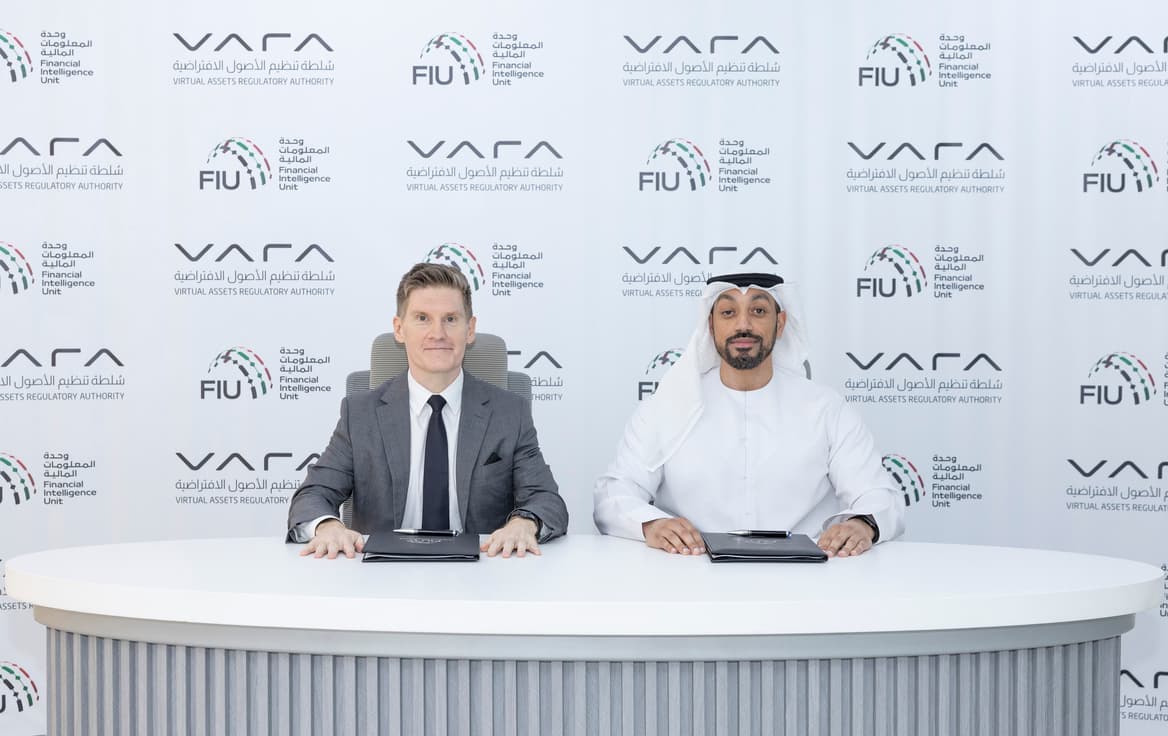
UAE FIU and VARA Join Forces to Crack Down on Virtual Asset Crime
News Desk
Oct 5, 2026
3 min