Advertisement
Tokenization & RWA
Share

WA
CEO & Editor-in-Chief


OKX and ICE's 50-50 joint venture OKXICE has filed with the SEC to launch a 24/7 tokenized stock trading platform covering more than 60 equities, using permissioned Uniswap v4 liquidity pools on OKX's X Layer blockchain with stablecoins as the payment instrument and self-custodial wallets for access.
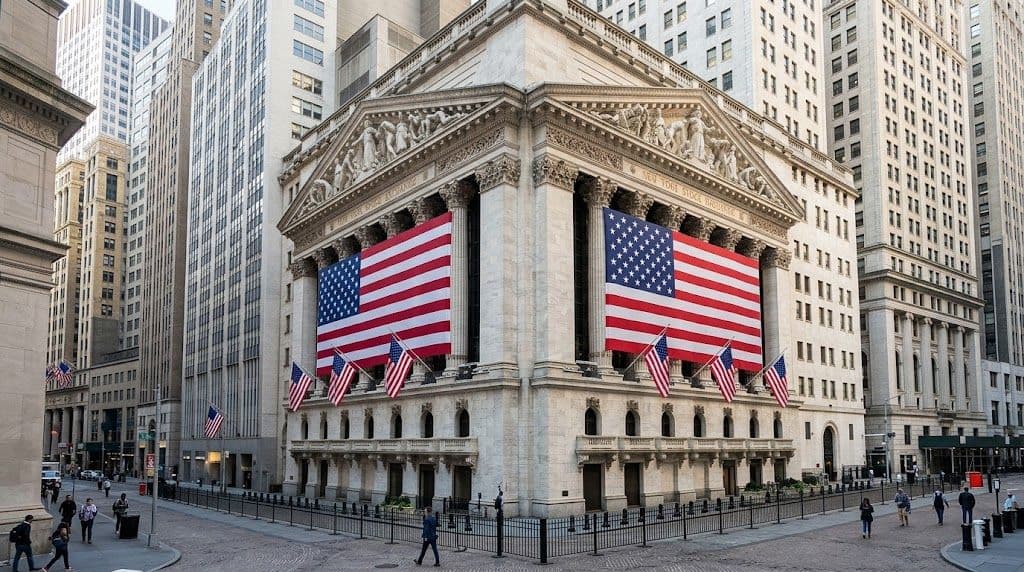
OKXICE, the joint venture between OKX and Intercontinental Exchange, the owner of the New York Stock Exchange, has filed to launch a platform for 24/7 tokenized stock trading in the United States, giving a proposed operating model to the growing connection between traditional equities and onchain finance.
The venture filed with the U.S. Securities and Exchange Commission on October 4, according to Reuters’ October 5 report.
Its public notice outlines trading in more than 60 stock symbols, including Apple, Nvidia, Microsoft and Tesla. The proposed venue would use permissioned Uniswap v4 liquidity pools on OKX’s X Layer blockchain, with stock tokens paired against USDC, USDG or USDT and accessed through verified, self-custodial wallets.
The combination is significant because it brings a traditional investment, digital money and an onchain wallet into the same proposed trading experience. It gives the filing a wider financial story: how platforms are connecting markets and functions that investors have historically accessed through separate services.
For OKX, the proposal illustrates the direction of a modern financial platform where traditional finance, digital assets and onchain markets become increasingly connected. ICE supplies the link to established market infrastructure, while stablecoins and wallets provide the proposed payment and access mechanisms.
The filing comes seven months after ICE announced a minority investment in OKX at a $25 billion valuation. The agreement included a seat on OKX’s board, although the investment amount and ownership percentage were not disclosed.
The partnership outlined a two-way connection. ICE planned to license OKX’s spot cryptocurrency prices for U.S.-regulated futures, while OKX would provide access to ICE futures and NYSE tokenized equities markets, subject to regulatory approval.
ICE Chairman and CEO Jeffrey Sprecher said the relationship would “expand global retail access to ICE’s pre-eminent regulated markets.”
The investment tied a traditional market operator to a platform with established digital-asset technology and distribution. The proposed equities venue now provides a specific example of how that relationship could develop.
OKX’s own explanation of the partnership highlighted a reported global customer base of more than 120 million accounts. That reach offers a distribution opportunity for traditional financial instruments, although eligibility remains subject to the permissions and conditions of each product.
Unlockcovered ICE’s investment on March 10, examining its implications for financial infrastructure and tokenized-market access.
The ownership arrangements should be distinguished: ICE’s minority investment in the OKX group is separate from OKXICE, which the public notice identifies as a 50–50 venture between ICE and OKC USA Holding.
The relationship has already produced live commodity products. Following plans reported by Unlock in May, OKX confirmed in July that perpetual futures referencing licensed ICE Brent and WTI benchmarks were live.
Those contracts provide commodity-price exposure. The proposed tokenized stock trading venue would connect investors to a different product: securities entitlements backed by underlying company shares.
Under the third-party tokenization model described in the notice, shares would be held one-for-one through an SEC-registered broker-dealer, with each token representing a security entitlement to a share.
The SEC framework requires equivalent shareholder rights, including dividends and voting rights, and excludes instruments offering only synthetic exposure.
For the investor, the underlying activity remains familiar: gaining an investment interest in a listed company. The proposed interface and trading arrangements change.
Stablecoins become the payment instrument for an equity transaction. A self-custodial wallet becomes an interface for holding the stock token and authorizing trades. Liquidity pools supply the onchain trading mechanism.
That is the point at which the convergence becomes tangible. Traditional securities rights remain connected to the investment, while technology associated with digital-asset markets supports the experience around it.
For financial platforms, this suggests a role increasingly defined by what they connect: investments, payment instruments and access to different markets. The OKX–ICE proposal provides a concrete case through which to examine that development.
It remains a proposed model. It does not establish that all OKX products already operate within a unified portfolio or share the same regulatory permissions.
The proposed venue relies on the SEC’s Innovation Exemption, introduced on September 17. The temporary framework allows eligible venues to use permissioned automated market makers and liquidity pools, subject to conditions.
These include limits on stock symbols and trading volumes, issuer notification and objection rights, and trading pauses when the underlying stock is halted on its primary listing exchange. The exemptions expire five years after publication.
The filing does not establish a live launch. The public notice states that the venue is not SEC-registered for activities under the exemption and that the regulator has not assessed the merits or accuracy of its disclosures.
The rollout will also need to demonstrate dependable liquidity and pricing beyond the underlying markets’ regular trading hours.
For UAE investors, the question is whether—and when—they could access the proposed OKX–ICE venue. The filing does not confirm UAE eligibility or establish that this venue would be offered through OKX UAE.
The next milestones are a launch date, confirmation of access and the practical performance of the venue. Those developments will show how this proposed connection between equities, digital money and wallets translates into an everyday financial experience.

Disclaimer of Warranty
The information provided in this article is for general informational purposes only. We make no warranties about the completeness, reliability, and accuracy of this information. Read full disclaimer

Editor's Picks

When Assets Move—or Stop—Without Consent: The Limits of Crypto Wallet Control

Walid Abou Zaki

Sep 29, 2026

6 min

Where Do the Dollars Behind the UAE’s Crypto Economy Sit?
Anna K.
Sep 21, 2026
9 min

As U.S. Crypto Legislation Stalls, Circle Launches Its Own Financial Network
Walid Abou Zaki
Sep 16, 2026
9 min
Read More Articles

In the Same Space
CFTC Chair Calls for ‘Mass Tokenization’ of Financial Markets
News Desk
Sep 23, 2026
4 min

UAE Tokenized Deposits Are Moving Faster Than Stablecoins
Walid Abou Zaki
Oct 6, 2026
10 min

Cboe and S&P Dow Jones Put Tokenized Options on the Table Under New 25-Year Agreement
News Desk
Sep 30, 2026
5 min

ARK Invest’s $1.3B Fund Heads to Ethereum Through Tokenization
News Desk
Sep 25, 2026
3 min