Advertisement
Tokenization & RWA
Share
BNY is moving its transfer agency operations onchain to create a unified fund ownership record, initially supporting tokenized fund structures including a first fully native U.K.-regulated tokenized fund with Baillie Gifford.
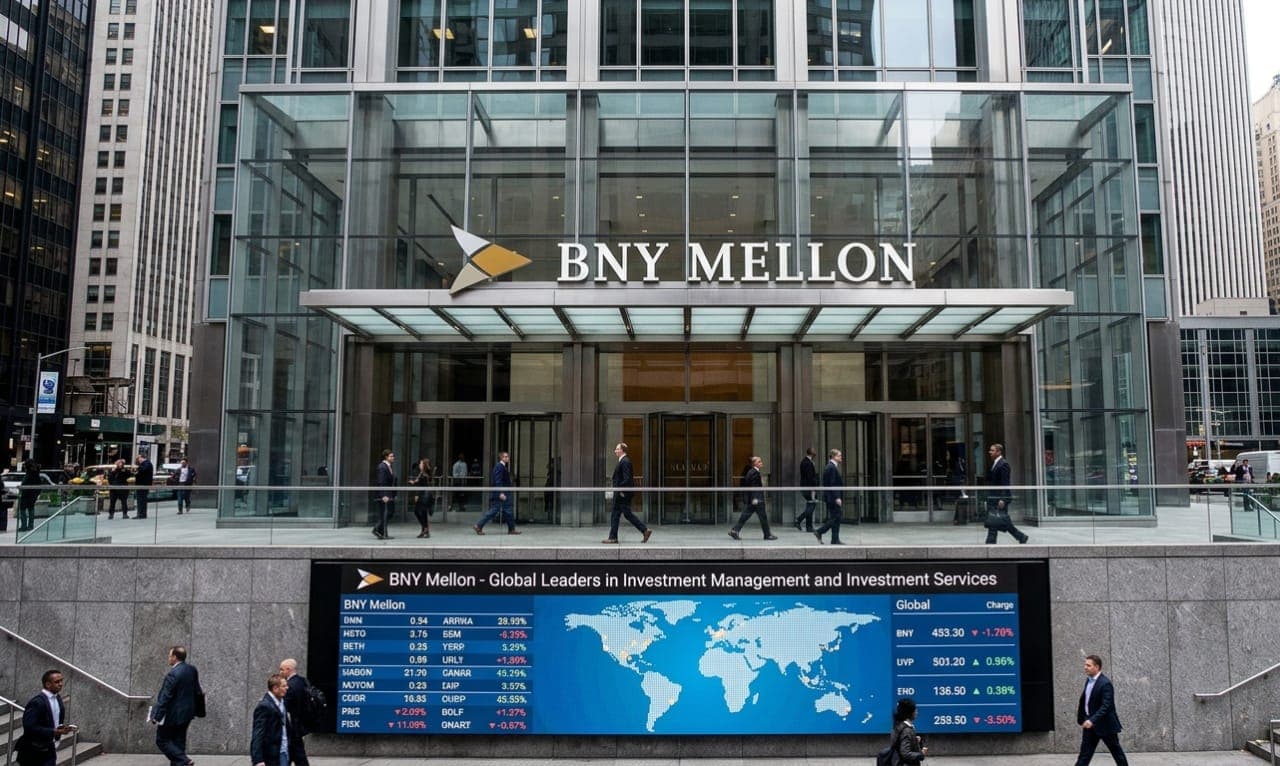
Bank of New York Mellon (BNY) is moving one of its core fund administration functions onto blockchain as Wall Street accelerates efforts to build infrastructure for tokenized financial markets.
The move will see BNY transition parts of its transfer agency operations — the business responsible for maintaining ownership records of investment funds — to an onchain system designed to create a unified record of fund ownership and reduce reliance on multiple intermediaries.
“We think of BNY as modernizing a function that sits behind every single fund transaction by bringing the books and records onchain,” Carolyn Weinberg, BNY’s chief product and innovation officer, told the Financial Times.
BNY, one of the world’s largest asset servicing institutions, oversees more than $59 trillion in assets under custody and administration and services approximately $8.6 trillion in assets across 7.6 million accounts. The bank said blockchain-based record keeping could streamline processes by creating a single source of ownership data across the fund lifecycle.
The initiative reflects a broader shift among traditional financial institutions: rather than replacing existing financial infrastructure, blockchain is increasingly being integrated into specific operational layers where it can improve efficiency, transparency, and settlement processes.
BNY’s blockchain initiative will initially support tokenized fund structures, with Scottish investment firm Baillie Gifford expected to use the service for what the companies describe as the first fully native U.K.-regulated tokenized fund.
The service could also support future tokenized products from major asset managers, including BlackRock and BNY’s Dreyfus money-market and cash-management business.
Tokenized funds have gained momentum among institutional investors in recent years, particularly in the money-market sector. Products launched by firms such as BlackRock and Franklin Templeton represent traditional investment vehicles — including short-term debt and cash instruments — issued through blockchain-based ownership structures.
The development signals that tokenization is moving beyond pilot programs and toward integration with established fund infrastructure.
BNY’s approach highlights an important distinction in the evolution of institutional blockchain adoption.
The bank is not positioning blockchain as a replacement for traditional markets. Emily Portney, BNY’s global head of asset servicing, noted that trillions of dollars in funds will continue operating on traditional systems for years.
Instead, blockchain is being deployed where financial institutions see measurable operational advantages, particularly in record keeping, reconciliation, and ownership tracking.
The current fund administration system often relies on multiple parties maintaining separate records, creating additional reconciliation requirements. A shared blockchain ledger could reduce these inefficiencies by providing a synchronized ownership record.
However, challenges remain. Blockchain-based financial infrastructure introduces new risks, including smart contract vulnerabilities and security concerns related to interoperability between different networks.
BNY’s move comes as major financial institutions increasingly explore blockchain-based infrastructure for deposits, securities, and settlement.
Several large U.S. banks, including JPMorgan, Citi, and Bank of America, are reportedly developing a shared tokenized deposit network aimed at modernizing payment infrastructure and responding to the growing role of stablecoins in financial markets.
The developments reflect a broader transition: Wall Street’s blockchain strategy is increasingly focused on rebuilding financial infrastructure rather than creating standalone crypto products.
For institutions managing trillions of dollars, the value proposition is not simply issuing assets onchain. It is creating more efficient systems for moving, recording, and settling ownership.
BNY’s decision demonstrates that blockchain adoption among traditional finance players is entering a new phase — one where the technology becomes embedded quietly behind existing markets rather than operating as a separate financial ecosystem.

Disclaimer of Warranty
The information provided in this article is for general informational purposes only. We make no warranties about the completeness, reliability, and accuracy of this information. Read full disclaimer

Editor's Picks

Why Zondacrypto’s Collapse Would Unfold Differently in the UAE

Walid Abou Zaki

Aug 28, 2026

8 min

The Missing Orchestration Layer Holding Back Institutional Digital Assets
Julian Sawyer
Aug 18, 2026
5 min

Beyond Crypto Access: How ARP Digital Is Building the UAE’s Digital Capital Infrastructure
Anna K.
Aug 17, 2026
8 min
Read More Articles

In the Same Space

Nasdaq Invests $100M to Advance Tokenized Stock Markets
News Desk
Sep 11, 2026
5 min

Wall Street’s Stablecoin Push Gets Bigger as 21 Banks Join Forces
News Desk
Sep 2, 2026
3 min

ESMA Targets Prediction Markets: Polymarket and Kalshi Face EU Scrutiny Over Authorization
News Desk
Sep 11, 2026
4 min

Glamsterdam Upgrade Set for Oct. 6 Debut on Ethereum's Sepolia Testnet
News Desk
Sep 11, 2026
6 min