Advertisement
Tokenization & RWA
Share
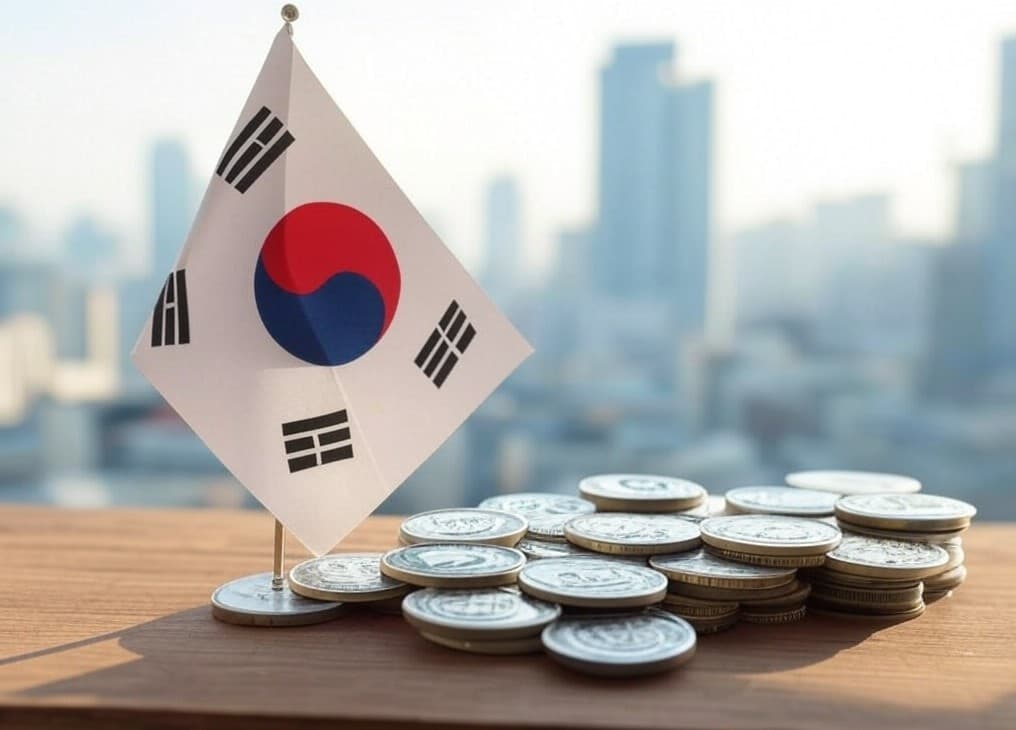
South Korea's Financial Services Commission has unveiled a phased framework to tokenize stocks, bonds, and funds on blockchain, launching with institutional and fractional investment products in February 2027 and ultimately targeting full on-chain settlement via stablecoins.
South Korea is preparing to expand blockchain technology across its traditional financial markets, with the Financial Services Commission (FSC) unveiling a phased framework for issuing and trading tokenized stocks, bonds and funds.
Announced on September 4, the framework will initially cover a limited range of financial products when related legislation takes effect in February 2027. The scope will then broaden gradually, with the long-term objective of using stablecoins for settlement and bringing the full transaction-to-payment process on-chain.
The policy was presented during the third meeting of the Public-Private Joint Token Securities Council. Under the proposed system, securities such as stocks and bonds can be recorded and managed on a distributed ledger rather than through conventional electronic systems.
The underlying financial asset remains unchanged. The key difference lies in how ownership and transactions are recorded: paper-based securities are physical, assets registered through conventional electronic networks are electronic securities, while those recorded on a blockchain are classified as token securities.
The initial stage will allow privately placed money market funds (MMFs) and bonds aimed at institutional investors to be issued as tokens.
Unlisted shares will also be eligible for digitalization through trust structures. In addition, publicly offered fractional investment products covering assets such as music copyrights and real estate will be brought into the token securities framework.
These products enable investors to gain exposure to assets through smaller investment units rather than purchasing an entire underlying asset.
Securities firms and other eligible issuers will be responsible for developing their own distributed ledger systems and linking them with the Korea Securities Depository.
The FSC opted for a gradual transition rather than moving the entire existing electronic securities infrastructure onto blockchain technology at once. According to the regulator, a full-scale migration could create substantial development costs as well as operational and technological risks.
The second stage is expected to extend tokenization to publicly offered securities accessible to retail investors.
The third phase would introduce stablecoins and other settlement tools, potentially allowing tokenized securities transactions and fund settlements to be completed instantly on-chain.
The FSC has not yet provided fixed launch dates for these later stages. Their implementation will depend on the performance and stability of the initial phase, the progress of private-sector infrastructure and the development of legislation governing stablecoins.
The new framework also introduces additional safeguards for retail investors participating in fractional investment products.
Individual subscription limits and allocation rules will be introduced to prevent excessive concentration among specific investors. The FSC's example sets the maximum individual subscription at the lower of 30 million won, or roughly $22,000, or 5% of the total issuance amount.
Investors purchasing token securities through OTC exchanges will also face an annual net purchase limit of 100 million won, or approximately $74,000, per exchange.
South Korea does not plan to create a separate securities license specifically for token securities.
Instead, existing securities firms and approved OTC exchange operators will be able to conduct token securities activities within the limits of their existing authorizations. This approach integrates tokenized assets into the established financial regulatory structure rather than creating an entirely separate market.
The FSC also plans to revise the rules governing how fractional investment products can be structured.
Products combining multiple assets will be permitted when they involve the same asset category and satisfy specific requirements, including restrictions designed to prevent distressed assets from being mixed into the structure.
Assets linked to uncertain future cash flows, including future revenue streams, could also qualify as underlying assets if their legal ownership relationships are clearly defined and adequate investor safeguards are in place.
South Korea's initiative comes as tokenized equities continue to expand internationally. As of September 3, the number of addresses holding tokenized stocks had climbed to a record approximately 2.6 million.
Markets outside South Korea are already offering blockchain-based products tied to U.S. stocks and exchange-traded funds through crypto exchanges and on-chain financial platforms, highlighting the growing convergence between traditional securities markets and blockchain infrastructure.
The FSC's broader objective is to create adigital capital market in which securities issuance, trading, clearing, settlement and the exercise of investor rights can operate within an integrated digital framework.
Draft subordinate regulations under the Capital Markets Act and Electronic Securities Act are expected to be released for legislative notice at the end of September, followed by a public consultation period.
South Korea's framework is significant because it moves token securities beyond their earlier role in niche fractional investment products and places them closer to the core of traditional capital markets. The decision to start with a limited group of assets before expanding toward retail securities and stablecoin-based settlement also suggests that regulators are prioritizing controlled adoption over a rapid transition. If the model succeeds, South Korea could demonstrate how blockchain can be integrated into regulated financial infrastructure without creating a parallel market, potentially encouraging other Asian financial centers to accelerate their own tokenization strategies.

Disclaimer of Warranty
The information provided in this article is for general informational purposes only. We make no warranties about the completeness, reliability, and accuracy of this information. Read full disclaimer

Editor's Picks
In the Same Space
$10 Trillion RWA Market in Sight as Morgan Stanley Delays Tokenized Stock Trading

News Desk

Oct 13, 2026

3 min
Bitcoin Reclaims $83,000 Amid Global Tech Sell-Off
News Desk
Oct 13, 2026
6 min
South Korea Moves to Block 27 Crypto Sites, Including KuCoin and MEXC
News Desk
Oct 13, 2026
3 min
Tokenized Stocks Hit a Wall as Corporate Resistance Grows, What's Happening?
News Desk
Oct 19, 2026
5 min