Advertisement
Regulation & Policy
Share
Eight additional US-listed companies, including Broadcom, Verizon, and UnitedHealth, have objected to OKXICE's plans to tokenize their shares on a blockchain-based trading platform, bringing total objecting issuers to nine and exposing a key gap between regulatory permission and issuer willingness.
A growing number of US-listed companies are objecting to plans to bring their shares onto blockchain-based trading platforms, raising questions about issuer participation in a new regulatory framework designed to facilitate tokenized equity trading.
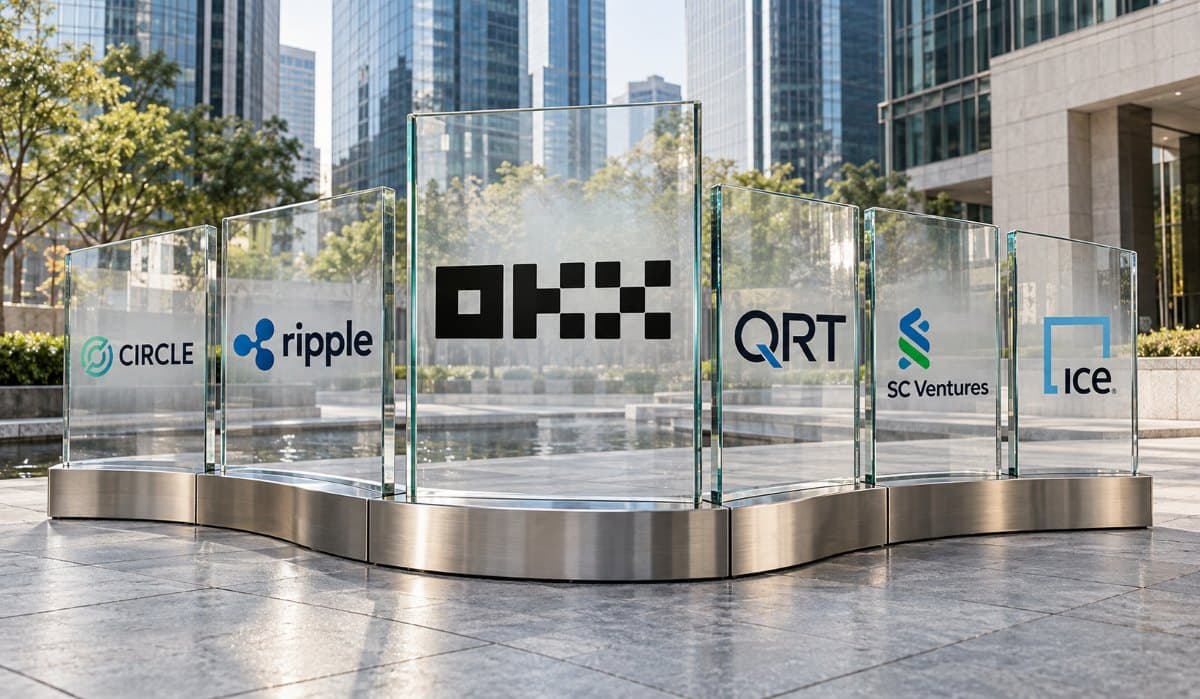
Broadcom, Verizon and UnitedHealth are among the companies that have raised objections, alongside five other issuers named in a public notice published on October 15 by OKXICE, a joint venture between cryptocurrency exchange OKX and Intercontinental Exchange (ICE), the parent company of the New York Stock Exchange.
The notice lists eight newly identified objections from Broadcom (AVGO), Verizon (VZ), UnitedHealth (UNH), AppLovin (APP), Applied Digital (APLD), Rocket Lab (RKLB), CoreWeave (CRWV) and Applied Optoelectronics (AAOI).
Their inclusion brings the total number of objecting issuers identified in the notice to nine, including AI chipmaker Cerebras Systems (CBRS), which had previously stated its opposition to being included. The latest filing did not disclose the specific grounds for the objections or when the individual notices were submitted.
The pushback highlights a potential obstacle for platforms seeking to bring conventional equities onto blockchain infrastructure: regulatory permission and technical readiness may not be enough if the companies behind the underlying shares are unwilling to participate.
Nasdaq has separately indicated that it does not intend to tokenize its own shares under the new framework, according to a frequently asked questions section on its website.
A Nasdaq spokesperson also told The Wall Street Journal that the exchange does not want its stock traded on a platform that fails to display the best available prices in real time or contribute trading data to the consolidated tape, which aggregates information from equity markets.
Nasdaq was not among the nine issuers identified in the OKXICE notice. Its position nevertheless highlights concerns about how tokenized equity platforms would handle price discovery, market data and reporting obligations.
These issues could become particularly important if tokenized shares trade outside conventional exchange hours or rely on liquidity pools rather than established exchange order books. The challenge is to expand trading access without weakening the transparency and investor protections associated with traditional equity markets.
OKXICE announced on October 5 that it had notified the US Securities and Exchange Commission (SEC) of plans to launch a platform initially targeting shares in 63 US-listed companies. Andrew Cuomo, the former New York governor and co-chair of the venture, announced the initiative on X.
The proposed service is designed to operate under an SEC innovation exemption granted on September 17 for a five-year period. The framework allows eligible platforms to offer US equities in tokenized form, using automated market makers and liquidity pools.
Under the proposed model, tokenized equities would provide digital representations of conventional shares recorded on a blockchain. OKXICE plans to support trading around the clock, using liquidity pools associated with Uniswap v4 on OKX’s XLayer network and stablecoins to settle transactions.
A registered broker would hold the underlying shares, with one conventional share backing each issued digital asset. According to the model described in the notice, token holders would receive rights comparable to those of traditional shareholders, including dividend and voting rights.
The structure is intended to connect conventional equity ownership with blockchain-based trading and settlement. However, the practical implementation of those rights and the platform’s ability to meet market transparency expectations remain important considerations for potential participants.
The objections are consistent with findings from analysts at TD Securities led by Reed Nuckolls, the firm's vice president of US equity market structure.
According to a report cited by CoinDesk, discussions with dozens of issuers revealed limited enthusiasm for tokenizing shares, apart from a small group of companies with ties to the cryptocurrency industry.
The analysts also said some companies contacted TD Securities to express serious concerns after reviewing the framework. Some, they added, had not been aware of the initiative when it was first announced.
One concern is the framework’s reliance on temporary exemptions rather than permanent rules. A future SEC administration could change its approach, making it more difficult for companies and market participants to justify long-term investments in the infrastructure needed to support tokenized equities.
The analysts also pointed to uncertainty arising from overseas platforms that can continue offering products designed to track stock performance without necessarily operating under the same US exemption requirements.
That creates a complicated competitive landscape for platforms investing in regulated infrastructure. Companies may hesitate to participate if the rules remain uncertain or if competing products can reach customers under different regulatory arrangements.
The objections suggest that the expansion of tokenized stock trading will depend on more than technological capabilities or regulatory authorization. Issuer participation, reliable market data, transparent pricing and clear shareholder rights will also influence whether the model gains traction.
For OKXICE, the challenge is to demonstrate that round-the-clock trading and blockchain-based settlement can deliver meaningful benefits without compromising the protections and transparency expected in conventional equity markets.
The five-year exemption provides a defined period in which the model can be developed, but uncertainty over its longer-term regulatory treatment could complicate adoption.
If issuer resistance persists, the rollout of tokenized equities may prove more difficult than the underlying technology suggests. The initiative’s prospects will depend on whether platforms can address companies’ concerns and establish a framework that both regulators and equity issuers are prepared to support.

Disclaimer of Warranty
The information provided in this article is for general informational purposes only. We make no warranties about the completeness, reliability, and accuracy of this information. Read full disclaimer

Editor's Picks
In the Same Space

Greece Proposes 10% Crypto Gains Tax as Digital Assets Enter Tax Framework

News Desk

Oct 8, 2026

5 min

OKX–ICE Files for Tokenized Stock Trading as Traditional and Onchain Markets Converge
Walid Abou Zaki
Oct 6, 2026
5 min
Perpetuals Targets Tokenized US Stocks Under SEC’s New Trading Framework
News Desk
Oct 15, 2026
3 min

Philippines’ Largest Crypto Exchange Faces License Threat Over Gambling Links
News Desk
Oct 14, 2026
3 min