Advertisement
Regulation & Policy
Share
The SEC has scheduled an August 14 meeting to consider proposing a tailored regulatory pathway for crypto capital raises, advancing Chairman Paul Atkins' 'Regulation Crypto' agenda as the Senate failed to advance the Digital Asset Market Clarity Act before its August recess.
The U.S. Securities and Exchange Commission is preparing to take a significant step toward formalizing how crypto businesses can raise capital in the United States, with the agency set to consider a proposed rule establishing a tailored pathway for certain digital asset offerings.
The SEC has scheduled a special meeting for August 14 to consider opening the proposal for public comment. The agency announced the meeting Monday night with unusually short notice, although the rulemaking has been on its agenda for weeks.
The proposal is part of SEC Chairman Paul Atkins' broader “Regulation Crypto” agenda and would represent the agency's first formal rulemaking aimed at creating a more durable regulatory framework for crypto businesses.
The timing is notable. The SEC is moving toward formal rules just days after the Senate failed to advance key votes on the Digital Asset Market Clarity Act before its August recess, leaving Congress' broader effort to establish a statutory framework for U.S. crypto markets unresolved.
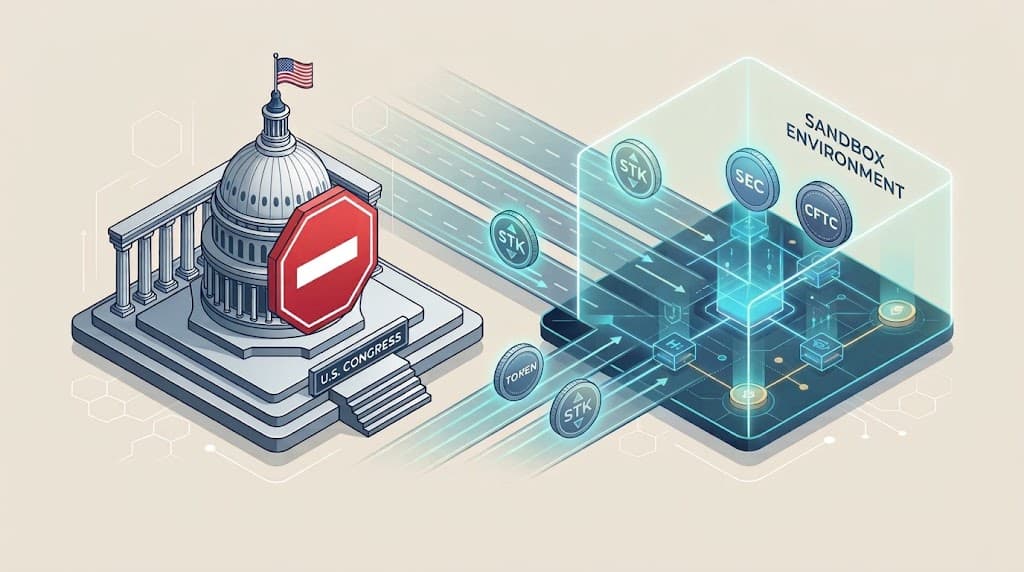
The proposed rule is expected to establish a tailored offering regime for certain crypto-related investment contracts.
Under the framework being considered, eligible crypto businesses could receive a regulatory pathway to raise capital for projects without triggering the full range of SEC registration requirements that would otherwise apply.
The proposal is also expected to address an eventual exit from SEC oversight when a project is no longer being actively managed by the business behind it.
That would address two longstanding questions for crypto issuers: how a project can legally raise capital at an early stage, and when the resulting digital assets can move beyond the securities framework as the underlying network or project becomes sufficiently independent.
The SEC has not yet finalized the framework, and the precise conditions will only become clear once the proposal is formally released.
The timing puts the SEC's initiative in sharper focus.
The Senate failed last week to begin key votes on the Digital Asset Market Clarity Act, the legislation intended to establish a broader statutory framework for digital asset markets in the United States.
That leaves the SEC pursuing regulatory clarity through its own rulemaking authority while Congress remains divided over legislation.
TD Cowen analyst Jaret Seiberg described the proposal as the first of several SEC rulemakings expected to provide greater regulatory certainty for crypto assets following the Senate's failure to advance the market-structure bill before the August recess.
The distinction between the two approaches matters.
Congressional legislation could establish rules that apply across the market and provide a statutory foundation for the SEC and Commodity Futures Trading Commission. An SEC rule, by contrast, would operate within the agency's existing authority and could provide a more targeted framework without waiting for Congress to resolve the broader market-structure debate.
The proposed rule would also mark a shift in the SEC's approach under Atkins.
The agency has already issued a series of statements and other policy initiatives intended to clarify how existing securities laws apply to digital assets. Those measures can provide immediate guidance, but they do not carry the same durability as formally adopted rules.
A completed rulemaking would be more difficult to reverse and would provide market participants with a clearer regulatory framework than a succession of staff positions or interpretive statements.
That makes Friday's meeting an important procedural step, rather than the final adoption of the framework.
If the commission votes to release the proposal, it would enter a public comment period that could run for several months. The SEC would then need to review comments, potentially revise the proposal and conduct the remaining steps required before a final rule could take effect.
In other words, the SEC is beginning a rulemaking process, not delivering an immediate regulatory safe harbor.
The initiative would add another piece to the SEC's broader effort to establish clearer boundaries for digital assets.
Earlier this year, the SEC and CFTC jointly advanced a crypto asset taxonomy intended to clarify how different digital assets should be treated and which regulatory framework may apply to them.
The SEC is also continuing work on its approach to tokenized securities, another priority frequently highlighted by Atkins.
Together, those initiatives suggest a regulatory strategy built around defining the perimeter of the digital asset market while creating more specific pathways for businesses operating within it.
But the agency has continued to emphasize that congressional legislation remains important.
The proposed issuance regime therefore should not be viewed as a substitute for the CLARITY Act. A formal SEC rule could address one part of the market—particularly how certain crypto projects raise capital—while leaving broader questions around market structure, jurisdiction and the division of authority between the SEC and CFTC to Congress.
The significance of Friday's meeting is therefore less about whether the SEC immediately changes the rules for crypto businesses and more about whether the agency begins converting its crypto policy agenda into durable regulation.
For crypto companies, that could eventually mean a clearer route from fundraising to operating a blockchain project without remaining indefinitely inside the securities framework.
For investors, it could establish more predictable rules around the legal status of digital asset offerings.
And for the U.S. market, it would represent a move away from relying primarily on enforcement actions, staff guidance and policy statements toward a formal rulemaking process.
The proposal still has a long way to go before becoming law.
But with Congress stalled, the SEC is moving ahead with one of the clearest attempts yet to build a formal regulatory pathway for crypto issuance within the existing U.S. securities framework.

Disclaimer of Warranty
The information provided in this article is for general informational purposes only. We make no warranties about the completeness, reliability, and accuracy of this information. Read full disclaimer

Editor's Picks
In the Same Space

Bitcoin ETFs Lose $288.7M in Fresh Wave of Investor Selling

News Desk

Sep 16, 2026

2 min
Stablecoin Yield Fight Helps Derail CLARITY Act in Senate
Walid Abou Zaki
Sep 15, 2026
8 min

Kraken Parent Payward Plans Onchain Perpetuals on Hyperliquid for U.S. Clients
News Desk
Sep 17, 2026
4 min

Lunar Ark Secures VARA In-Principle Approval for Virtual Asset Brokerage
News Desk
Sep 17, 2026
2 min