Advertisement
Tokenization Infrastructure
Tokenized Treasuries Move From Investment Product to Market Infrastructure
Share
WA
CEO & Editor-in-Chief


OKX, BlackRock and Standard Chartered have launched a joint framework that brings tokenized real-world assets closer to the core of institutional market infrastructure.
The framework allows OKX VIP and institutional clients to use BlackRock’s BUIDL, a tokenized short-term U.S. Treasury fund, as yield-bearing collateral for trading. More importantly, it allows clients to post BUIDL while the asset is held off-exchange in regulated custody at Standard Chartered, enabling them to trade on OKX Middle East without moving collateral directly onto the exchange.
This is not just another tokenization announcement. It marks a shift in how tokenized Treasuries may be used by institutions. BUIDL is no longer positioned only as a blockchain-based fund offering exposure to short-term U.S. dollar yield. Through this framework, it becomes part of collateral, margining, custody, and liquidity workflows.
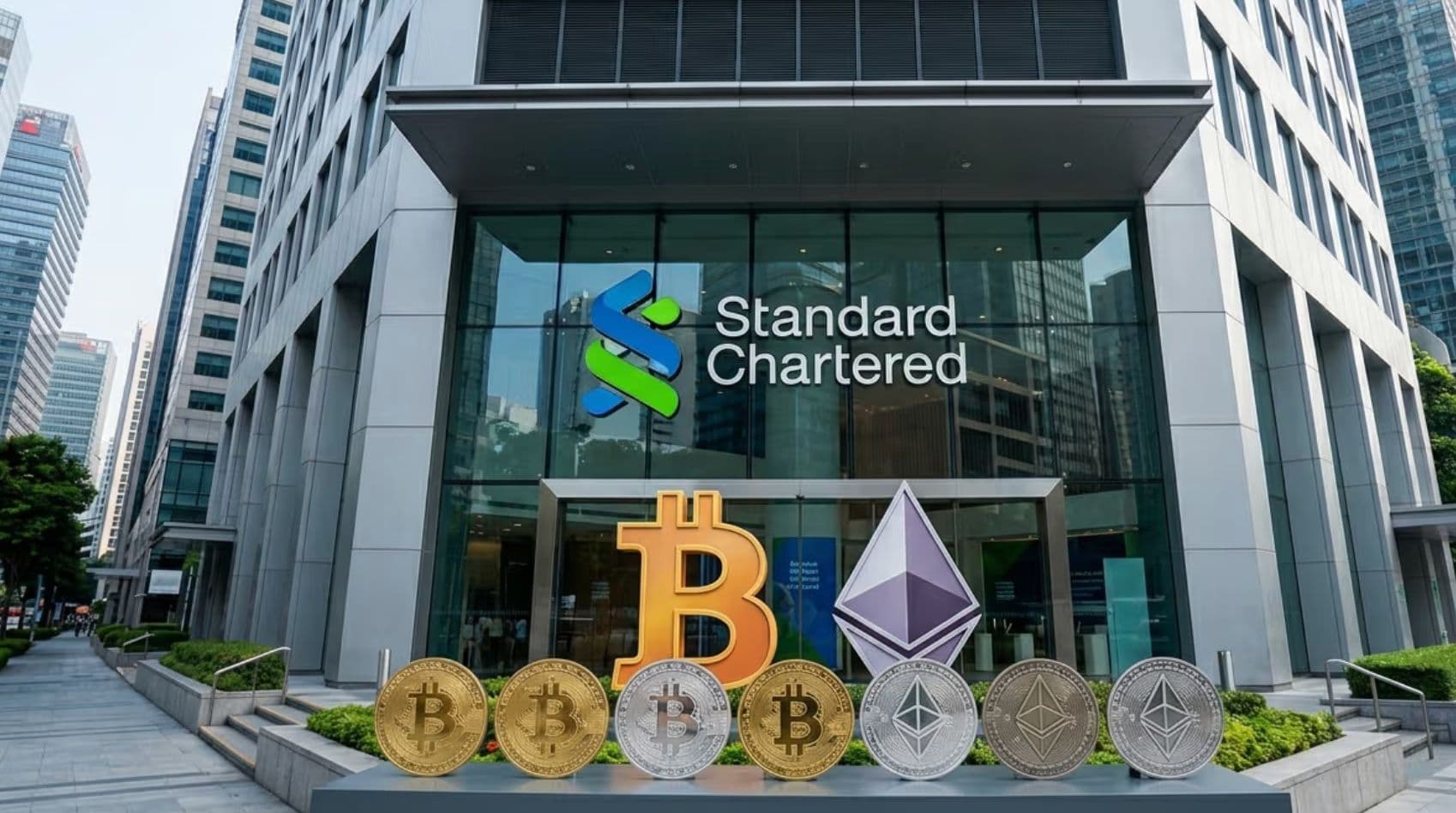
The new framework brings together three important layers of institutional finance: BlackRock’s tokenized Treasury product, Standard Chartered’s regulated custody, and OKX’s institutional trading infrastructure.
According to the announcement, this is the first time a globally systemically important bank has acted as custodian in such an off-exchange tokenized collateral arrangement. That detail is central to the story. Institutional adoption of digital assets has often been slowed by concerns around counterparty exposure, asset segregation, custody protection, and exchange risk.
By placing Standard Chartered in the custody role, the framework gives institutions a more familiar structure. Clients can keep BUIDL in regulated custody while using it as collateral for trading on OKX. This creates a model where the asset does not need to sit directly with the exchange in order to support market activity.
For institutions, that distinction matters. It suggests that tokenized assets can be integrated into trading workflows without forcing clients to compromise on custody standards.
The most important element of the announcement is the transformation of BUIDL into usable collateral.
In traditional and digital asset markets, collateral is often necessary but inefficient. Institutions must allocate capital to support trading activity, yet that capital may become idle when posted as margin. By allowing BUIDL to be used as collateral, OKX, BlackRock and Standard Chartered are introducing a structure where collateral can remain productive.
Star Xu, Founder and Chief Executive Officer of OKX, also captured the core idea behind the announcement, saying on X: “When real-world assets go onchain, capital starts to work by default. Great to see this partnership with BlackRock and Standard Chartered.”
That comment reflects the broader significance of the framework. The value is not only that BUIDL is tokenized, but that it can now be used as a yield-bearing asset inside institutional collateral and trading workflows.
BUIDL invests in cash, U.S. Treasury bills, and repurchase agreements, with yield distributed on-chain. Its use as collateral means institutions may be able to maintain exposure to short-term Treasury yield while supporting trading activity on OKX.
This changes the role of tokenized real-world assets. Instead of being treated only as investment products, they can begin to function as operational tools inside institutional markets.
Standard Chartered’s role is one of the strongest parts of the announcement because it directly addresses institutional concerns around exchange exposure.
Under the framework, BUIDL can be safeguarded by Standard Chartered while clients continue to trade on OKX. The announcement says this allows trading collateral to remain segregated from OKX’s assets, while giving clients the ability to trade without transferring custody.
That structure is particularly relevant after the failures that shaped the crypto market in recent years. Many institutional participants now require clearer separation between trading venues and asset custody. They also look for regulated, bankruptcy-remote, and operationally resilient custody models before committing meaningful capital.
OKX Valued at $25B After ICE Investment as Exchange Moves Toward Financial Infrastructure
4 minThe involvement of a G-SIB custodian gives this framework a level of credibility that purely crypto-native collateral models often struggle to achieve.
For BlackRock, the announcement extends the use case of BUIDL beyond tokenized Treasury exposure.
BUIDL was designed to bring the benefits of tokenization to short-term Treasury products, allowing qualified investors to access U.S. dollar yield through blockchain rails. But the new framework gives the fund a practical role in market activity. It can now support trading, margining, and collateral management.
That is important for the wider RWA market. Tokenization has often been discussed in terms of efficiency, transparency, and access. However, the next phase depends on whether tokenized assets can be used in real institutional workflows.
By becoming accepted collateral within OKX’s infrastructure, BUIDL shows how tokenized financial instruments can move from concept to utility.
Samara Cohen, Global Head of Market Development at BlackRock, said BUIDL was designed to bring the benefits of tokenization to short-term Treasury exposure and allow qualified investors to earn U.S. dollar yields on blockchain rails. She added that the framework with OKX and Standard Chartered allows qualified investors to unlock new opportunities in how they deploy collateral.
Haider Rafique, Global Managing Partner at OKX, said the collaboration highlights the potential of tokenizing real-world assets at scale. He said enabling institutions to deploy BUIDL as on-chain collateral on OKX’s global platform improves capital efficiency and demonstrates how traditional financial instruments can operate in digital markets.
Margaret Harwood-Jones, Global Head of Financing and Securities Services at Standard Chartered, said the bank’s role as custodian reflects its commitment to delivering trusted and innovative solutions as the financial ecosystem evolves. She added that the framework demonstrates how traditional financial institutions and digital market infrastructure can work together to bring tokenized assets safely and efficiently to global investors.
The launch through OKX Middle East also places Dubai inside a broader institutional finance story.
The UAE has been positioning itself as a regulated hub for digital assets, tokenization, stablecoins, and institutional crypto infrastructure. This framework gives that positioning a concrete example. It connects a major digital asset exchange, the world’s largest asset manager, and a global bank in a model designed around custody, collateral, and institutional trading.
For Dubai, the announcement is not only about attracting crypto companies. It is about becoming a place where traditional finance and digital asset infrastructure can meet under regulated frameworks.
That distinction is important. The next phase of digital asset adoption will not be driven only by retail trading or speculative activity. It will depend on whether institutional-grade structures can emerge around custody, collateral, liquidity, and compliance.
The broader implication is that tokenized Treasuries may become a new collateral layer for digital markets.
If institutions can use tokenized Treasury products as collateral while keeping them in regulated custody and earning yield, the economics of digital asset trading begin to change. Capital that was once idle can become productive. Custody risk can be reduced. Trading venues can become more accessible to institutions that require stronger protections.
This does not mean the model will automatically become standard across the market. The real test will be adoption, scale, liquidity, operational reliability, and whether similar frameworks expand to other tokenized funds and asset classes.
Still, the direction is clear. Tokenized RWAs are moving beyond issuance. They are being tested inside the machinery of institutional finance.
With OKX, BlackRock and Standard Chartered now connecting BUIDL to collateral workflows, the question is whether tokenized Treasuries are beginning to form the foundation of a broader on-chain collateral market.

Disclaimer of Warranty
The information provided in this article is for general informational purposes only. We make no warranties about the completeness, reliability, and accuracy of this information. Read full disclaimer

Editor's Picks
In the Same Space
J.P. Morgan Brings Tokenized Money Market Funds to Solana

News Desk

Oct 23, 2026

3 min

Bitcoin ETFs Reverse Outflows With $1B in Three-Day Inflows
News Desk
Oct 22, 2026
7 min
Börse Stuttgart Secures DLT License for Seturion Settlement Platform
News Desk
Oct 21, 2026
3 min
Schwab Enables Crypto Transfers After Completing Bitcoin and Ether Trading Launch
News Desk
Oct 16, 2026
4 min