Advertisement
Regulation & Policy
Share

WA
CEO & Editor-in-Chief


ESMA has warned that prediction-market products structured as binary event contracts may already fall under EU rules on binary options, derivatives, or national gambling law, signalling that regulatory branding strategies are no longer sufficient. Cases involving Kalshi, Polymarket, and ADI Predictstreet illustrate how the same product can simultaneously attract financial, gambling, and market-integrity scrutiny across multiple jurisdictions.
Prediction markets are entering a new phase of regulatory scrutiny.
For years, the sector has presented itself as a smarter way to understand the future. Platforms describe themselves as information markets, forecasting tools, collective intelligence systems or event-contract venues. The language is modern. The user experience is clean. The technology may be crypto-native, on-chain or connected to regulated financial infrastructure.
But regulators are now looking beyond the branding.
TheEuropean Securities and Markets Authority (ESMA) has warned firms that products marketed as “event contracts” or prediction markets may still fall under existing rules on binary options, derivatives or national gambling laws. The message is simple: calling a product a prediction market does not automatically place it outside the regulatory perimeter.
That warning was expected. Prediction markets may provide useful signals about what users believe will happen next, but many of them also behave like betting products. A user takes a position on whether an event will happen. The outcome is usually binary. The payout depends on being right or wrong. In some cases, the event is political. In others, it is financial, cultural, corporate, geopolitical or related to sport.
This does not mean every prediction market is legally gambling. But it does mean the category sits in an uncomfortable space between forecasting, speculation, derivatives and betting. ESMA’s statement suggests that regulators are no longer willing to let platforms define the category by marketing language alone.
ESMA’s statement focused on event contracts whose financial outcome is binary: a fixed payout or no payout at all, depending on a yes-or-no answer to a future event.
That structure matters. In Europe, binary options have long been treated as high-risk products for retail investors. National authorities have imposed restrictions on their marketing, distribution and sale to retail clients. ESMA is now reminding firms that some prediction-market products may fall within those existing measures if they qualify as financial instruments.
The regulator also noted that event contracts may qualify as bets under national gambling legislation. That is the key point. The same product may be seen differently depending on the event, the payout structure, the user base and the jurisdiction.
A prediction market on an interest-rate decision may look like a financial derivative. A prediction market on a football match may look like betting. A market on an election may raise political integrity questions. A market on confidential business information may create insider-trading risk.
This is why prediction markets are difficult to regulate. They do not fit cleanly into one box.
In the United States, Kalshi has become the clearest example of the jurisdictional conflict.
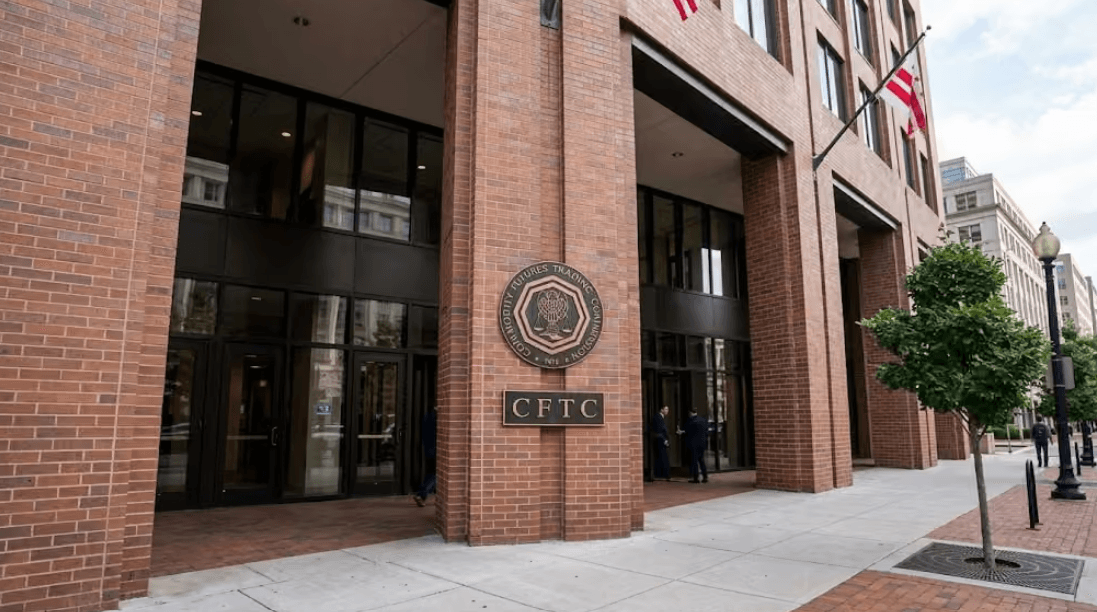
Kalshi argues that its event contracts are federally regulated financial products under the oversight of the Commodity Futures Trading Commission (CFTC). Several state authorities see things differently, especially when the contracts involve sports outcomes.
The dispute has already reached courts. In Michigan, a judge temporarily blocked Kalshi from allowing residents to place sports-event bets after the state attorney general accused the company of violating gaming laws. Similar conflicts have appeared in other states, while Kalshi continues to argue that CFTC oversight should pre-empt state gambling rules.
This conflict is central to the prediction-market story. If a product is treated as a federally regulated event contract, it belongs in one legal category. If it is treated as unlicensed sports betting, it belongs in another.
The same economic activity can therefore be framed as a financial market by one authority and as gambling by another.
That is not sustainable over the long term.
Polymarket highlights a different problem: insider information.
In April, the CFTC charged a U.S. Army service member with insider trading in event contracts linked to Nicolás Maduro, alleging that he used classified or sensitive nonpublic information about a U.S. operation to trade on Polymarket.
In May, the CFTC charged a Google employee with insider trading in search-result-related event contracts, alleging that he used sensitive nonpublic information related to Google’s official Year in Search list to trade on Polymarket with near-perfect accuracy.
These cases are important because they move the discussion beyond gambling. Prediction markets can create a direct financial incentive to trade on information that was never meant to be public.
That risk is not theoretical. It can apply to military operations, corporate data, court decisions, elections, regulatory approvals, sports injuries, product launches or central bank decisions.
In traditional financial markets, insider trading rules exist because confidential information can distort market fairness. Prediction markets create similar concerns, but across a much wider range of real-world events.
This is why the argument that prediction markets simply produce better information is incomplete. They may generate information, but they can also reward the misuse of information.
The regulatory debate is not limited to the United States or Europe. ADI Predictstreet brings the issue closer to the MENA region.
ADI Predictstreet was named the Official Prediction Market Partner of the FIFA World Cup 2026, creating one of the most visible global use cases for the sector. FIFA presented the partnership as a new form of fan engagement, allowing users to forecast match outcomes, tournament statistics, standout players and key moments.
The product is also tied to digital-asset infrastructure. ADI Predictstreet is built on ADI Chain’s institutional blockchain infrastructure and is linked to the Abu Dhabi digital-asset ecosystem through Finstreet and ADI Foundation. That gives the story regional relevance.
But the regulatory home of the prediction-market activity is Gibraltar, not the UAE. Predict Street Limited is licensed by the Government of Gibraltar, and industry coverage describes the license as a betting-intermediary license under Gibraltar’s gambling framework.
This point should be handled carefully. It does not prove that such a product could not exist under a UAE framework. But it does show that prediction markets remain a category that many jurisdictions have not yet clearly absorbed into crypto regulation, financial-market regulation or gambling law.
Gibraltar is also outside MiCA. That matters because ADI Predictstreet’s model does not sit inside the EU’s crypto-asset framework. Instead, it reflects a different approach: placing prediction markets inside a gambling-style licensing structure while using blockchain infrastructure for operation and settlement.
For the MENA market, this is the important question: if prediction markets are built on institutional digital-asset infrastructure but licensed as betting products elsewhere, how should regional regulators classify them?
The prediction-market sector is trying to create a new category. It wants to be seen as more sophisticated than gambling, more open than traditional derivatives markets, and more useful than simple betting platforms.
There is some truth in that argument. Prediction markets can aggregate expectations and produce signals that may be useful for researchers, traders, institutions and the public. But that does not eliminate the regulatory questions.
If users are risking money on binary outcomes, regulators will ask whether the product resembles betting or binary options.
If the event is financial, regulators will ask whether it is a derivative.
If retail users are involved, regulators will ask whether investor protection rules apply.
If the event can be influenced by insiders, regulators will ask whether market-integrity rules are sufficient.
If the market is distributed across borders, regulators will ask whose license actually matters.
This is the moment prediction markets are now entering.
ESMA’s warning does not end the prediction-market story. It starts the next phase.
The sector is moving too quickly, and the use cases are becoming too visible. Kalshi is testing the line between federal derivatives regulation and state gambling law. Polymarket has exposed insider-trading concerns. ADI Predictstreet has taken prediction markets into global sports engagement through FIFA, while operating from Gibraltar under a gambling-linked framework.
Together, these cases show that prediction markets are no longer niche experiments.
They are becoming mass-market products, institutional infrastructure plays, sports-engagement tools and crypto-adjacent trading venues at the same time.
That combination is exactly why regulators are moving.
The real question is not whether prediction markets are innovative. They clearly are. The question is whether innovation is enough to avoid rules that already exist for gambling, derivatives, binary options and insider trading.
For regulators, the answer appears to be no.
Prediction markets may continue to grow, but the era of expanding without clearer rules is ending.

Disclaimer of Warranty
The information provided in this article is for general informational purposes only. We make no warranties about the completeness, reliability, and accuracy of this information. Read full disclaimer

Editor's Picks

When Assets Move—or Stop—Without Consent: The Limits of Crypto Wallet Control

Walid Abou Zaki

Sep 29, 2026

6 min

Where Do the Dollars Behind the UAE’s Crypto Economy Sit?
Anna K.
Sep 21, 2026
9 min

As U.S. Crypto Legislation Stalls, Circle Launches Its Own Financial Network
Walid Abou Zaki
Sep 16, 2026
9 min
Read More Articles

In the Same Space

IMF Clears $139 Million Disbursement to El Salvador After Bitcoin Breach
News Desk
Oct 2, 2026
4 min

EBA Urges EU to Regulate Crypto Lending and DeFi Under MiCA
News Desk
Sep 25, 2026
4 min

ADGM Puts DLT Foundation Audits and Disclosure in Focus
Walid Abou Zaki
Sep 23, 2026
7 min

ECB Seeks Changes to MiCA Stablecoin Reserve Rules
News Desk
Sep 23, 2026
3 min