Advertisement
Regulation & Policy
Share
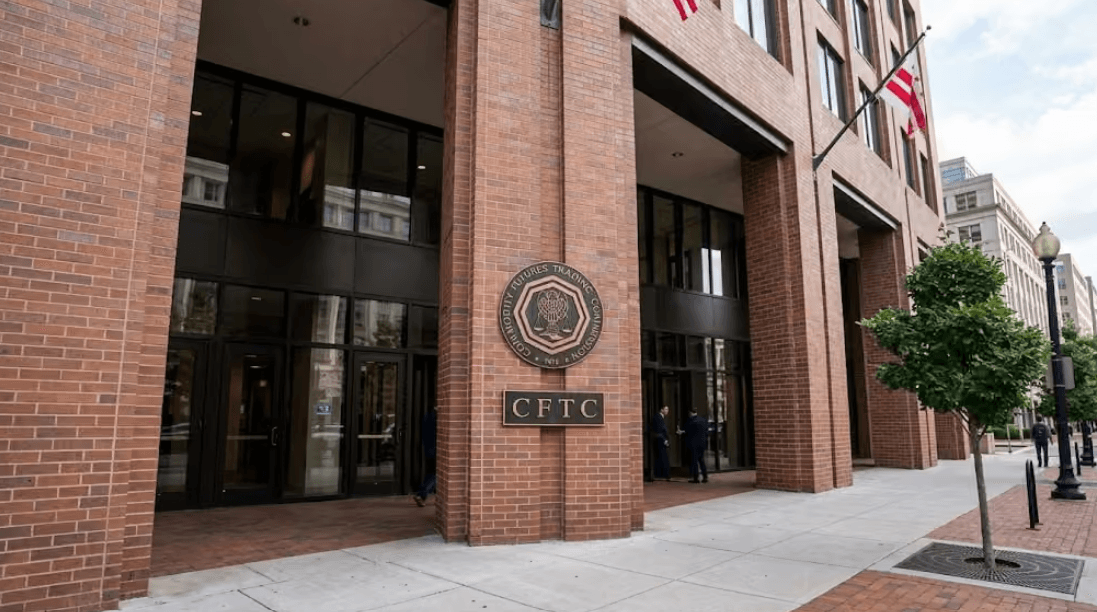
The CFTC invoked emergency authority to order KalshiEX to continue operating under the Commodity Exchange Act after New York Attorney General Letitia James filed a lawsuit seeking a nationwide ban on its event contracts and more than $36 billion in damages, escalating a federal-state jurisdictional dispute over derivatives regulation.
The U.S. Commodity Futures Trading Commission (CFTC) has invoked its emergency authority to require KalshiEX, LLC to continue operating in accordance with the Commodity Exchange Act (CEA), escalating a broader dispute over whether state gaming laws can be used to restrict federally regulated event-contract markets.
The CFTC said KalshiEX notified the agency of a market emergency after New York Attorney General Letitia James filed a lawsuit against the exchange on July 31.
New York is seeking a temporary restraining order that would prevent KalshiEX from offering event contracts nationwide, alongside a claim for more than $36 billion in damages.
The CFTC's intervention puts the federal derivatives regulator directly at the center of the dispute, as states increasingly challenge the operation of event-contract platforms that fall under federal derivatives oversight.
The CFTC said its action is based on its responsibility under the CEA to maintain a uniform national market for derivatives transactions and safeguard the resilience and orderly operation of those markets.
The agency also pointed to its mandate to maintain competitive, fair and efficient markets while protecting the price-discovery process in centralized derivatives markets.
According to the CFTC, disruptions to federally regulated derivatives markets could undermine those objectives.
The agency therefore ordered KalshiEX to continue operating in compliance with the CEA's Core Principles while the dispute proceeds.
CFTC Chairman Michael S. Selig argued that event-contract exchanges should not be subject to different state gaming regimes when they operate as federally regulated financial markets across state lines.
The agency's position is that a transaction matched between participants in different states and cleared through a centralized clearinghouse falls within the federal derivatives framework rather than a state-by-state gaming regime.
New York's lawsuit is part of a wider confrontation between state authorities and federally regulated event-contract exchanges.
The CFTC said states have pursued enforcement actions against CFTC-regulated designated contract markets (DCMs) in both state and federal courts.
In response, the commission said it has filed lawsuits against Arizona, Connecticut, Illinois, Kentucky, Minnesota, New Mexico, New York, Rhode Island and Wisconsin.
The CFTC has also filed amicus briefs in federal appellate proceedings in the Sixth and Ninth Circuits and before the Supreme Judicial Court of Massachusetts.
The expanding litigation highlights a fundamental regulatory question: when an event contract is offered through a federally regulated derivatives exchange, can a state independently restrict it under its gambling or gaming laws?
The CFTC is increasingly taking the position that states cannot impose a parallel regulatory regime on interstate derivatives markets overseen by the federal government.
The fight has implications beyond Kalshi.
Event contracts have expanded rapidly into areas including politics, sports, economics and other real-world events, creating products that can resemble traditional financial derivatives while also attracting scrutiny from state gambling authorities.
For exchanges operating under federal derivatives regulation, the outcome of the jurisdictional dispute could determine how broadly they can offer those contracts across the United States.
For states, the issue is whether federally regulated status prevents them from applying their own laws when they believe particular contracts amount to gambling or otherwise fall within state regulatory authority.
The CFTC's latest action does not resolve that underlying legal dispute. Instead, it reinforces the federal regulator's position that maintaining a unified derivatives market requires federally regulated exchanges to remain operational while the jurisdictional questions are litigated.
For Kalshi, that means the immediate regulatory battle has moved beyond whether individual event contracts comply with particular state laws. It is increasingly becoming a test of where federal derivatives jurisdiction ends and state authority begins.

Disclaimer of Warranty
The information provided in this article is for general informational purposes only. We make no warranties about the completeness, reliability, and accuracy of this information. Read full disclaimer

Editor's Picks
In the Same Space

Lunar Ark Secures VARA In-Principle Approval for Virtual Asset Brokerage

News Desk

Sep 17, 2026

2 min
Stablecoin Yield Fight Helps Derail CLARITY Act in Senate
Walid Abou Zaki
Sep 15, 2026
8 min

ARK Invest’s $1.3B Fund Heads to Ethereum Through Tokenization
News Desk
Sep 25, 2026
3 min

KelpDAO Files Suit Against LayerZero Over 2026’s Largest Exploit
News Desk
Sep 25, 2026
6 min