Advertisement
Infrastructure & Scaling
Share
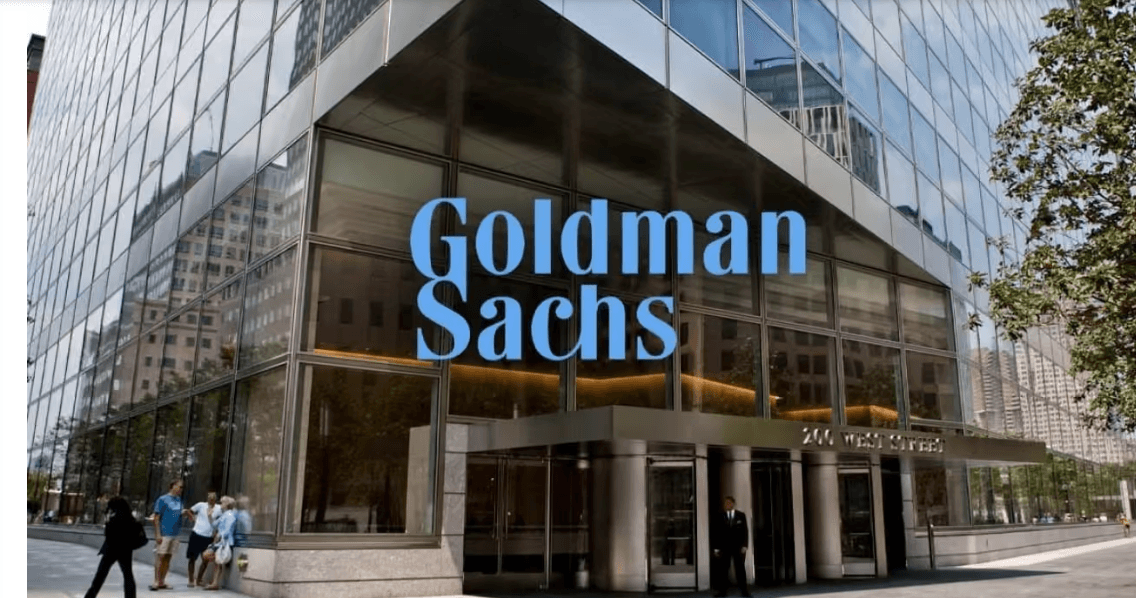
Goldman Sachs is making its $100 billion FTIXX Treasury fund available to institutional digital-asset firms through the Lynq settlement network, with trades executed by SEC-registered broker-dealer tZERO Securities, without tokenizing the fund itself.
Goldman Sachs is bringing its roughly $100 billion Treasury fund into the institutional digital-asset market through a new distribution channel, connecting an established traditional investment product to crypto-market infrastructure without tokenizing the fund itself.
The fund, Goldman Sachs Financial Square Treasury Instruments Fund (FTIXX), will be offered through Lynq, a settlement network used by institutional digital-asset firms. Trades will be handled by SEC-registered broker-dealer tZERO Securities, according to CoinDesk.
The arrangement gives eligible institutional clients a way to put cash into the Treasury fund between digital-asset trades, allowing the money to generate yield until it is needed again.
FTIXX remains a conventional Treasury fund. Unlike tokenized products such as BlackRock’s BUIDL or Franklin Templeton’s BENJI, Goldman is not creating an onchain version of the fund.
Instead, Lynq is providing another distribution and settlement channel for an existing financial product.
That distinction matters because the development does not depend on creating a new blockchain-based security. The underlying fund structure remains unchanged, while its access is being integrated into a workflow already used by digital-asset institutions.
Lynq CEO Jerald David told CoinDesk that clients were looking for another treasury asset with a different yield profile that could be accessed within the network.
Lynq counts institutional digital-asset firms including B2C2, Wintermute, Galaxy Digital, FalconX, Crypto.com and Fireblocks among its clients, according to CoinDesk.
The network itself operates on a private, permissioned Avalanche Layer 1 blockchain. CoinDesk reported that more than 30 institutional digital-asset firms are onboarded, with more than $89 million in assets on the network.
Goldman’s latest move follows an earlier push into tokenized money-market funds.
In July 2025, Goldman Sachs and BNY Mellon announced a blockchain-based system for tokenizing money-market-fund shares. Investors could subscribe through BNY’s LiquidityDirect platform, with the shares tokenized through BNY’s digital-assets platform and mirrored on Goldman’s GS DAP platform.
That initiative focused on creating digital representations of fund shares and eventually using them for functions such as collateral management and more seamless transferability.
The FTIXX arrangement takes a different route.
The fund is not being changed; the infrastructure around its distribution is.
That puts Goldman’s latest move alongside a broader institutional shift toward connecting traditional financial products with digital-asset market infrastructure, rather than treating blockchain-based finance as a completely separate market.
The development also fits Goldman Sachs’ wider exploration of blockchain and digital assets.
In January, Goldman Sachs CEO David Solomon said the bank had large internal teams, including senior leadership, examining how blockchain-based technologies could enhance its core business operations. Goldman’s GS DAP platform and its work with BNY Mellon on tokenized money-market funds were among the initiatives forming part of that strategy.
The latest FTIXX distribution model shows another way that strategy can develop: traditional financial products can reach digital-asset firms through institutional blockchain infrastructure without necessarily being converted into tokens.
This creates a middle ground between conventional finance and fully tokenized markets.
Goldman’s move comes as other parts of U.S. financial-market infrastructure are also moving toward blockchain-based settlement and asset representation.
In July, the Depository Trust & Clearing Corporation (DTCC) conducted production transactions involving tokenized securities with more than 30 institutions, including Goldman Sachs. Its initiative is designed to bring tokenized representations of securities into established market infrastructure.
That is different from Lynq’s FTIXX model, but the developments point to the same broader trend: institutional digital-asset infrastructure is increasingly being built around existing financial products, market participants and settlement processes.
For Goldman, the latest step is therefore less about putting a $100 billion fund on a blockchain than about making a traditional Treasury product accessible within the workflows of digital-asset institutions.
The result is a model in which the asset can remain traditional while the distribution and settlement layer becomes increasingly digital.

Disclaimer of Warranty
The information provided in this article is for general informational purposes only. We make no warranties about the completeness, reliability, and accuracy of this information. Read full disclaimer

Editor's Picks
In the Same Space

Buterin Outlines Ethereum’s Shift to a “Cryptographic World Computer”

News Desk

Sep 28, 2026

5 min
Glamsterdam Test Date Set: Can Ethereum Stop Fake-ID Block Hackers?
News Desk
Sep 18, 2026
3 min

Abu Dhabi and South Korea Forge New Financial Links Around Digital Assets and Stablecoins
Chantal Assi
Sep 22, 2026
6 min

Saudi Arabia Exits China-Linked mBridge CBDC Project
News Desk
Sep 22, 2026
4 min