Advertisement
Tokenization & RWA
Share
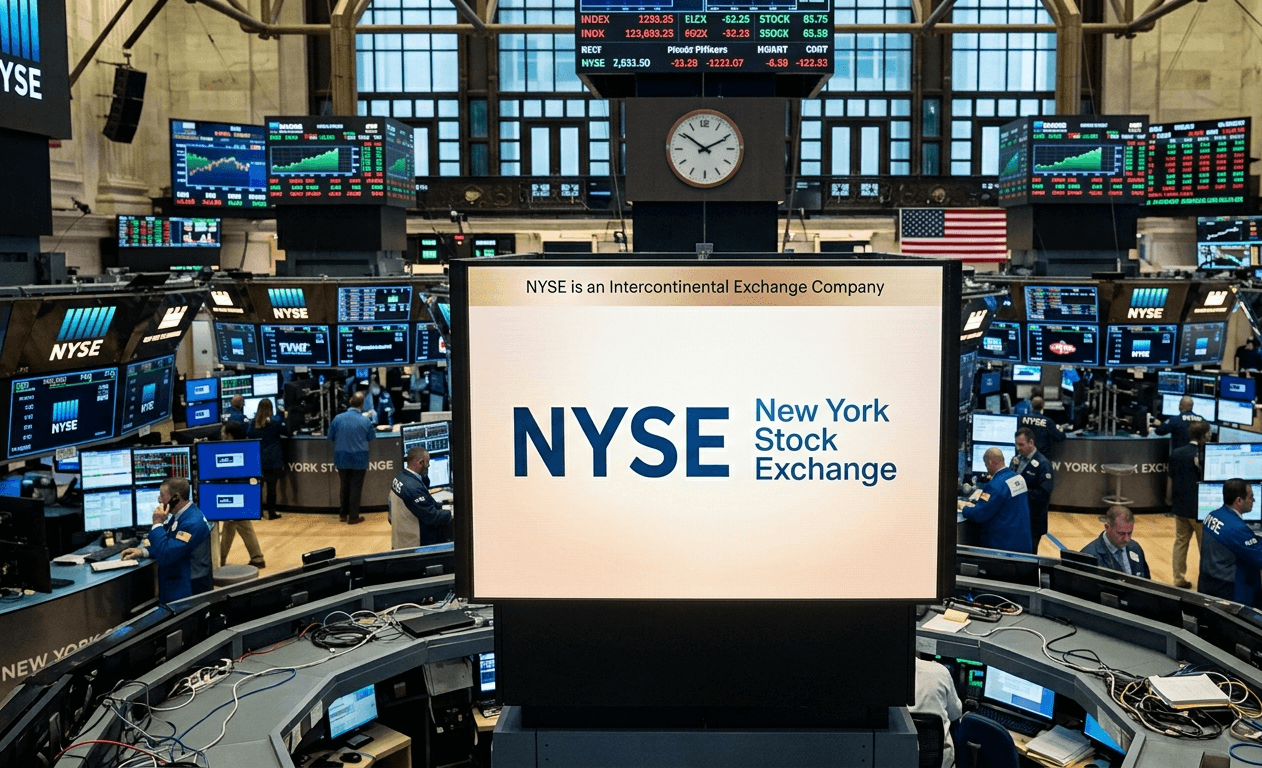
NYSE has joined DTCC's tokenized securities pilot, participating in live production transactions on July 15 alongside more than 30 institutions including BlackRock, Goldman Sachs, and JPMorgan, as the exchange advances blockchain-based settlement within regulated U.S. capital markets.
The New York Stock Exchange is expanding its blockchain strategy by helping test tokenized securities settlement, signaling a broader shift toward integrating digital assets into traditional capital markets.
The New York Stock Exchange (NYSE) is continuing to build the infrastructure needed to support blockchain-based settlement for tokenized securities, as the exchange moves beyond early plans for a dedicated digital trading platform and into live market testing.
Speaking at the National Assembly Seminar in Seoul, NYSE President Lynn Martin confirmed that the exchange participated in the Depository Trust & Clearing Corporation's (DTCC) tokenization initiative launched in July, marking another step toward integrating blockchain technology into regulated U.S. capital markets.
The update follows NYSE's announcement earlier this year outlining plans for a blockchain-powered trading platform and reflects growing industry efforts to modernize securities trading and post-trade operations.
NYSE parent company Intercontinental Exchange (ICE) first unveiled plans for a standalone digital securities platform in January.
The proposed platform is designed to combine NYSE's Pillar matching engine with blockchain-based post-trade infrastructure, creating an environment capable of supporting digital securities alongside traditional financial assets.
According to ICE, the platform is expected to offer several features that are difficult to achieve through conventional market infrastructure, including 24/7 trading, instant settlement, fractional share ownership, U.S. dollar-denominated order books, and stablecoin funding.
Subject to regulatory approval, the platform would support both tokenized versions of existing securities and securities issued natively on blockchain networks. Investors would retain the same ownership rights, including dividend payments and corporate governance privileges, as holders of traditional securities.
The system is also being designed to operate across multiple blockchain networks for settlement and custody, reflecting a flexible approach to digital asset infrastructure.
Martin said NYSE views the financial industry as entering a pivotal stage where traditional finance and decentralized technologies are increasingly converging.
As part of that transition, the exchange joined DTCC's tokenized securities pilot program, which moved beyond laboratory testing into live production transactions during July.
DTCC separately confirmed that NYSE participated alongside more than 30 financial institutions and digital asset firms in production transactions conducted on July 15.
Participants included BlackRock, Goldman Sachs, JPMorgan, Nasdaq, Circle, Ondo Finance, Citadel Securities, and Vanguard, highlighting growing institutional interest in blockchain-based market infrastructure.
According to DTCC, the July program converted securities held within its custody system into blockchain-based digital representations that were used in live production transactions.
The pilot covered a range of post-trade activities, including delivery-versus-payment settlement, Treasury and repurchase (repo) transactions, securities lending, collateral pledging, equity transfers, and central counterparty margin processing.
The transactions were processed using DTCC's private Besu blockchain alongside the Canton Network, allowing participants to evaluate blockchain infrastructure across multiple settlement workflows.
Unlike previous proof-of-concept projects, the initiative operated within DTCC's production environment after the U.S. Securities and Exchange Commission (SEC) granted the clearinghouse a three-year no-action letter in December 2025 permitting the tokenization program under specified conditions.
DTCC plans to expand the initiative further with the launch of a broader tokenization service scheduled for October.
Alongside its infrastructure efforts, NYSE has also introduced regulatory changes to accommodate tokenized securities.
In April, the exchange submitted a rule filing to the SEC allowing eligible securities to trade as blockchain-based digital tokens under DTCC's pilot program.
The filing became effective immediately under SEC procedures.
Under the proposed framework, tokenized securities can trade alongside their traditional counterparts within the same order book, provided they share the same CUSIP identifier and carry identical ownership rights.
Eligible assets include securities within the Russell 1000 Index as well as exchange-traded funds tracking major market benchmarks. The digital representation of an asset would not affect order priority or existing market mechanics.
While both initiatives focus on blockchain, they serve different purposes.
The DTCC pilot continues to settle transactions under the current T+1 settlement cycle.
By contrast, NYSE's proposed standalone digital exchange aims to introduce real-time settlement and around-the-clock trading, representing a more comprehensive modernization of market infrastructure.
The digital platform remains subject to regulatory approval before it can become operational.
NYSE has also begun assembling the infrastructure needed to support its long-term digital asset strategy.
In March, ICE announced a partnership with Securitize, appointing the company as the first qualified digital transfer agent for issuers seeking to issue blockchain-native securities on the planned platform.
Subject to regulatory approvals, Securitize Markets is also expected to participate as a broker-dealer.
The next major milestone is expected in October, when DTCC launches its expanded tokenization service following the successful completion of July's production transactions.
Under NYSE's April rule filing, exchange members will receive at least 30 days' notice before tokenized securities begin trading through the DTCC pilot framework.
The coordinated efforts by NYSE and DTCC suggest that tokenized securities are gradually moving beyond experimental projects toward practical integration within the infrastructure of U.S. capital markets. Rather than creating an entirely separate financial ecosystem, the focus is increasingly shifting toward using blockchain technology to improve trading, settlement, custody, and post-trade operations within the existing regulatory framework.
If these initiatives succeed in delivering faster settlement, greater operational efficiency, and lower post-trade costs while maintaining investor protections, blockchain infrastructure could become a foundational component of next-generation capital markets rather than a parallel alternative to traditional finance.

Disclaimer of Warranty
The information provided in this article is for general informational purposes only. We make no warranties about the completeness, reliability, and accuracy of this information. Read full disclaimer

Editor's Picks
In the Same Space

Abu Dhabi and South Korea Forge New Financial Links Around Digital Assets and Stablecoins

Chantal Assi

Sep 22, 2026

6 min

MFTA Report: ADGM Expands Digital Asset and Staking Regulatory Framework
Chantal Assi
Sep 22, 2026
7 min

ECB Pontes: Central Bank Money vs. Stablecoin Settlement
News Desk
Sep 22, 2026
4 min

Hong Kong Prepares 24/7 CBDC Settlement System for Tokenized Deposits
News Desk
Sep 18, 2026
3 min