
Advertisement
Regulation & Policy
Share
According to the company, the technology will help ensure food safety and transparency for its buyers, which includes restaurants, hotels, meal plan companies and supermarkets, as well as end consumers. Sean Dennis, CEO & co-founder of Seafood Souq, who is a blockchain expert that previously worked with Loyyal stated, "the traditional seafood supply chain is long and complex which gives way to mislabelling problems and a lack of visibility of the companies and individuals behind the product consumers are eating."
He told FoodNavigator Asia: “A global seafood fraud study (Oceana Deceptive Dishes report) found that one in five seafood samples worldwide were mislabelled and an even more concerning factor was over half of these were fish that were deemed unfit for human consumption.” The firm said mislabelling could happen for both intentional and unintentional reasons, but the results were the same; businesses could receive incorrect products of reduced value, not as fresh or even harmful to the end consumers health.
The firm first launched in Dubai back in 2019. Dennis states, " the UAE and specifically Dubai are perfectly located globally as a major hub for the transportation of seafood. Dubai has become the trade link between East and West and North and South, with some much products coming into the region as well as flowing through."
Seafood Souq’s platform sells both local - sea bass, sea bream, hamour, Dibba bay oysters - and international products - Norwegian salmon, Scottish salmon, Maine Lobster.
The company is looking to trade up to 150 tonnes per month by the end of 2020 for its direct from source business. The company is currently trading between 20 and 40 metric tons of seafood per month. “The plan is (to) as quickly as we possibly can reach out to the rest of the UAE and into the GCC, within this year.” The firm is currently looking into Oman and Saudi Arabia.
In addition to increasing the trade volume, the company will be working on several sigitization projects. As mentioned by Dennis in the article, “We are currently working on projects with local supermarkets to supply their fish counters with 100% traceable seafood where the end consumer can scan a QR code to learn about the story of their fish. In addition, we are also digitising a number of physical fish markets which enables consumers to benefit from our supply chain efficiencies and traceability.”
The firm hopes its technology can help build trust in the seafood market in the UAE and Gulf region across the entire supply chain, with blockchain a possible future strategy. He explains, “We’re currently looking into it (blockchain) and have met with a number of partners that would be able to facilitate this, including IBM with their Food Trust platform.”

Disclaimer of Warranty
The information provided in this article is for general informational purposes only. We make no warranties about the completeness, reliability, and accuracy of this information. Read full disclaimer

Editor's Picks
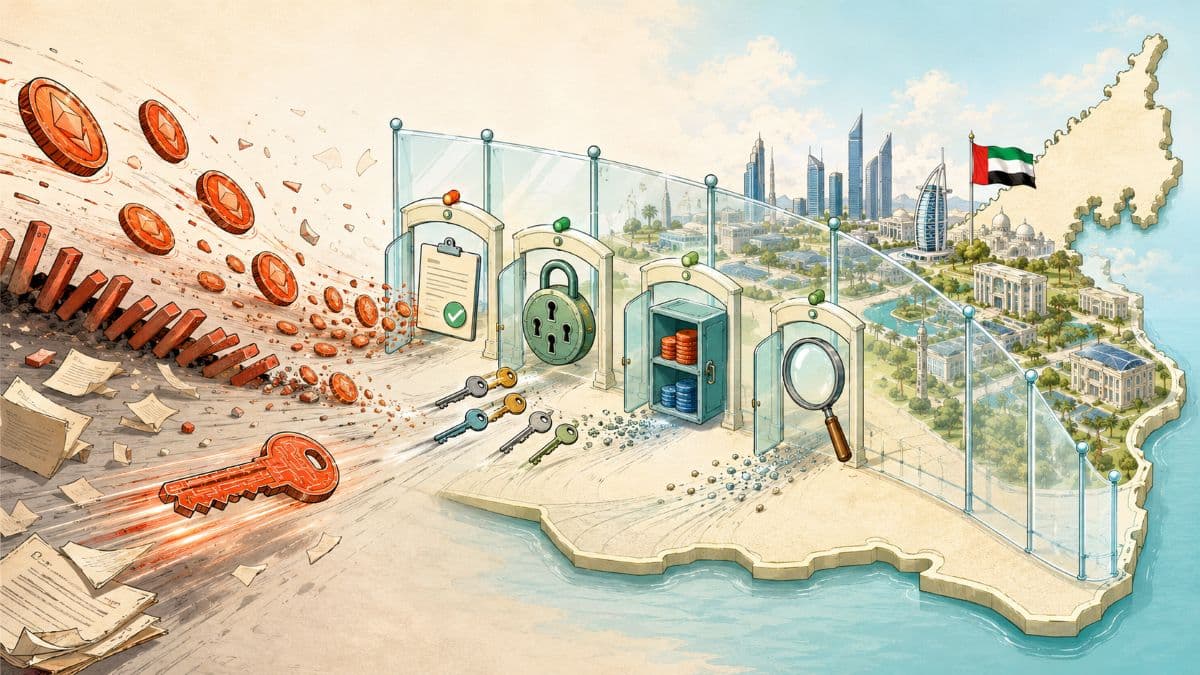
Why Zondacrypto’s Collapse Would Unfold Differently in the UAE

Walid Abou Zaki

Aug 28, 2026

8 min

The Missing Orchestration Layer Holding Back Institutional Digital Assets
Julian Sawyer
Aug 18, 2026
5 min
Beyond Crypto Access: How ARP Digital Is Building the UAE’s Digital Capital Infrastructure
Anna K.
Aug 17, 2026
8 min
Read More Articles

In the Same Space

US and UK Launch Joint Effort to Tackle Crypto Investment Fraud
News Desk
Sep 4, 2026
5 min
CFTC Seeks Dismissal of CME Challenge to Kalshi Bitcoin Perpetuals
News Desk
Sep 3, 2026
4 min

G20 Backs Clearer Digital Asset Rules as Stablecoins Gain Focus
News Desk
Sep 2, 2026
3 min
SEC Moves to Modernize U.S. Markets With 24/7 Trading and Blockchain Rules
News Desk
Sep 2, 2026
3 min