Advertisement
Regulation & Policy
Share
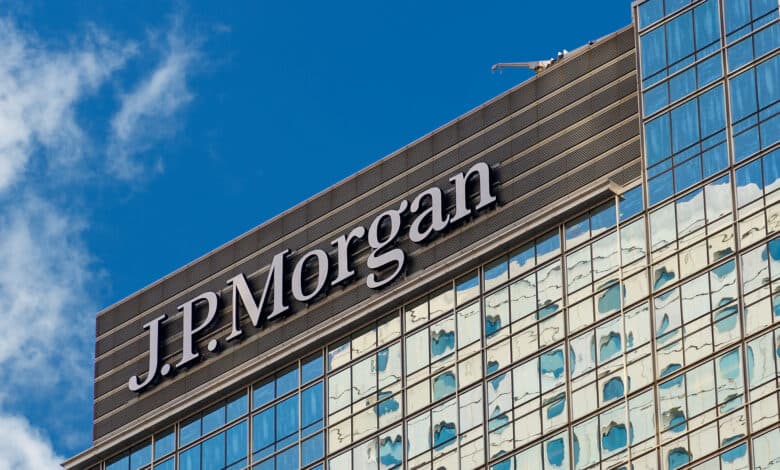
JPMorgan Chase is facing a proposed class action lawsuit from investors who claim the bank enabled a $328 million cryptocurrency Ponzi scheme run by the now-defunct Goliath Ventures.
The lawsuit was filed Tuesday in the U.S. District Court for the Northern District of California, where investors accuse the bank of ignoring suspicious transactions and allowing the firm to use its financial infrastructure to collect funds from thousands of victims.
According to the complaint, Goliath Ventures used banking services provided by JPMorgan to facilitate investor deposits tied to a cryptocurrency investment program that allegedly operated without the required licenses.
The lawsuit claims that JPMorgan should have identified warning signs tied to Goliath’s operations through its Know Your Customer (KYC) compliance obligations.
“Chase, by virtue of its Know Your Customer, actually knew that Goliath was acting as a ‘private equity’ cryptocurrency pool operator investing money for investors, without being licensed at all to sell these investments,” the complaint states.
The case highlights an apparent contradiction noted by investors: despite frequent public criticism of digital assets from Jamie Dimon, the bank allegedly failed to stop fraudulent wire transactions linked to the scheme.
Federal authorities have already taken action against the company’s leadership. The U.S. Attorney’s Office for the Middle District of Florida announced the arrest of Goliath CEO Christopher Delgado on February 24.
Prosecutors allege that Goliath Ventures — previously known as Gen-Z Venture Firm — operated the fraudulent investment scheme from January 2023 through January 2026.
If convicted on all counts, Delgado faces a maximum sentence of 30 years in federal prison.
According to the civil complaint, JPMorgan served as the primary banking institution for Goliath from January 2023 through mid-2025.
Investigators believe the firm raised at least $328 million from more than 2,000 investors during that period.
The lawsuit alleges that approximately $253 million was deposited into a JPMorgan account identified as “0305,” representing nearly two-thirds of all funds collected from investors.
Of that total, roughly $123 million was transferred from the account to cryptocurrency wallets controlled by Goliath at Coinbase.
A separate criminal complaint filed by U.S. authorities also identified accounts held at Bank of America as part of the alleged scheme.
According to the filing, Delgado was a co-signatory on a Bank of America account used by Goliath, identified as the 9136 account, and company directors reportedly told at least one investor that Delgado controlled the account.
Authorities say investor funds were deposited into either the JPMorgan account, the Bank of America account, or transferred directly to cryptocurrency wallets managed by Goliath on Coinbase.
The government alleges that Delgado was the sole signatory on the Coinbase wallets, giving him direct control over the digital assets.
The class action complaint was filed by attorneys from Shaw Lewenz, Sonn Law Group, and Schwartzbaum.
The lead plaintiff, Robby Alan Steele, claims he invested $650,000, including retirement savings, into the scheme.
Attorney Jordan Shaw from Shaw Lewenz said additional legal actions may follow as investigators continue identifying victims and potential parties involved.
“We are being purposeful and precise in who we file against, to be complementary to the receiver and his efforts,” Shaw said. “The goal is not to duplicate efforts, but instead to maximize recovery.”
The case adds to growing legal scrutiny surrounding financial institutions, crypto platforms, and their role in monitoring transactions tied to digital asset investment schemes.

Disclaimer of Warranty
The information provided in this article is for general informational purposes only. We make no warranties about the completeness, reliability, and accuracy of this information. Read full disclaimer

Editor's Picks
In the Same Space

OKX Extends Account-Hacking Protection to US Users

News Desk

Oct 21, 2026

3 min

Coinbase Ireland Fined €3.25M as Safeguarding Failures Draw Second Irish Penalty
News Desk
Oct 23, 2026
4 min

South Korea’s Digital Asset Bill Nears Final Talks as 2027 Crypto Tax Looms
News Desk
Oct 22, 2026
3 min

Robinhood Plans Dubai Launch in 2027 After DFSA Authorization
Walid Abou Zaki
Oct 22, 2026
4 min