Advertisement
Regulation & Policy
Share
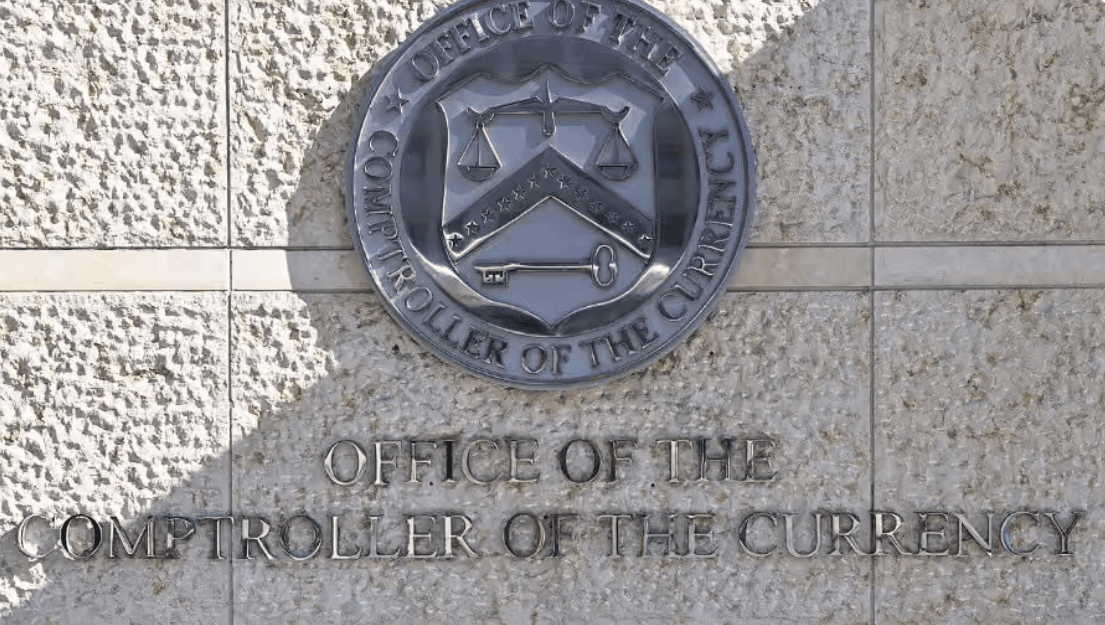
U.S. lawmakers are weighing a proposal that would allow digital asset trading platforms to temporarily freeze funds suspected of being linked to illicit activity. The measure is part of broader efforts by the U.S. Treasury Department to strengthen oversight of cryptocurrency markets and combat financial crime.
The recommendation appears in a Treasury report submitted to Congress under the framework of the Guiding and Establishing National Innovation for U.S. Stablecoins Act, commonly known as the GENIUS Act. The report outlines potential regulatory tools aimed at improving transparency and enabling financial institutions to act more effectively when encountering suspicious transactions involving digital assets.
Under the proposed approach, licensed digital asset service providers could be granted legal protection to voluntarily place temporary holds on funds suspected of being tied to unlawful activities while investigations are underway.
The Treasury report notes that users of digital assets sometimes rely on privacy-enhancing tools such as coin-mixing services to protect financial privacy when transacting on public blockchains. At the same time, authorities argue that platforms must be able to respond quickly when transactions raise red flags.
Granting exchanges the authority to pause questionable transfers before funds are moved or converted across other digital asset services could give investigators more time to review cases and prevent potential misuse of financial networks.
Ari Redbord, global head of policy and government affairs at blockchain analytics firm TRM Labs, said exchanges often detect suspicious funds through blockchain monitoring tools but lack a consistent legal framework to hold those assets.
“Platforms frequently identify questionable activity using blockchain analytics,” Redbord said. “However, there is not always a clear legal structure allowing them to retain those funds long enough for investigators to take appropriate action.”
According to Redbord, a formalized policy could establish defined timelines for freezing assets while law enforcement evaluates potential violations. He added that clearer rules could also strengthen collaboration between government agencies and the private sector in tackling illicit activity.
The discussion comes as Congress debates broader legislation aimed at defining the structure of the cryptocurrency market. Policymakers have been under pressure to create clearer rules for digital asset businesses amid rapid industry growth.
Andrew Rossow, a public affairs attorney and chief executive of AR Media Consulting, said that exchanges currently face a difficult legal position when dealing with suspicious funds.
“Platforms today often have to choose between allowing a transfer to proceed or freezing assets without explicit legal authority,” Rossow said. “Either option can expose them to potential legal risk.”
A dedicated legal framework, he explained, could give exchanges the ability to temporarily hold suspicious assets while regulators and law enforcement assess the situation.
Despite the potential benefits, experts have raised questions about possible legal complications surrounding the proposed powers.
One concern involves how exchanges would disclose frozen assets to users without compromising ongoing investigations. Rossow noted that if an account’s assets are frozen, the platform may need to report the action to the account holder while simultaneously being restricted from revealing that the freeze is related to a suspicious activity report.
Such scenarios could create complex legal gray areas that policymakers would need to address carefully.
Supporters of the proposal say granting exchanges limited authority to freeze suspicious assets could become a practical tool in the fight against fraud and money laundering within digital asset markets.
Redbord argued that the speed at which cryptocurrencies move across global networks makes rapid intervention essential.
“Criminal actors move quickly, and digital assets move even faster,” he said. “Having a clearly defined ability to pause suspicious funds could help close that gap.”
As Congress continues to evaluate the proposal, the debate reflects a broader effort to balance innovation in digital finance with stronger safeguards against illicit activity.

Disclaimer of Warranty
The information provided in this article is for general informational purposes only. We make no warranties about the completeness, reliability, and accuracy of this information. Read full disclaimer

Editor's Picks
In the Same Space
Trump to Address Overseas Crypto Fraud as US Targets Scam Networks

News Desk

Oct 22, 2026

6 min
Fuze Finance Targets US Market With New Modern Treasury Stablecoin Payment Deal
Anna K.
Oct 20, 2026
6 min

Robinhood Plans Dubai Launch in 2027 After DFSA Authorization
Walid Abou Zaki
Oct 22, 2026
4 min

VARA Grants Bybit License for Spot Trading in Dubai
Walid Abou Zaki
Oct 22, 2026
6 min