Advertisement
Policy & Industry
Share
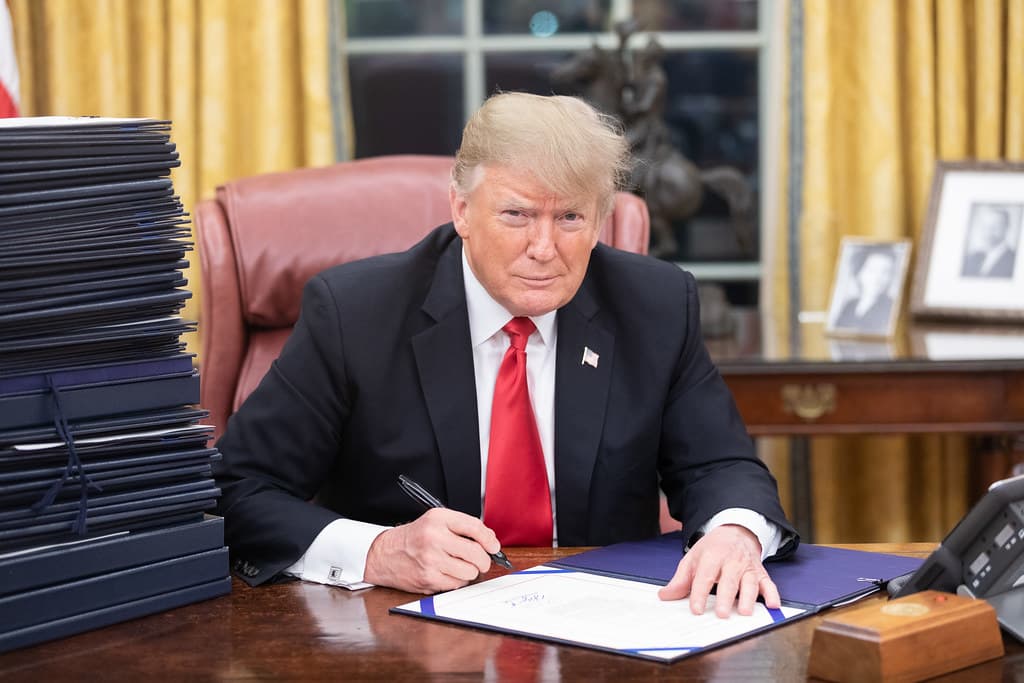
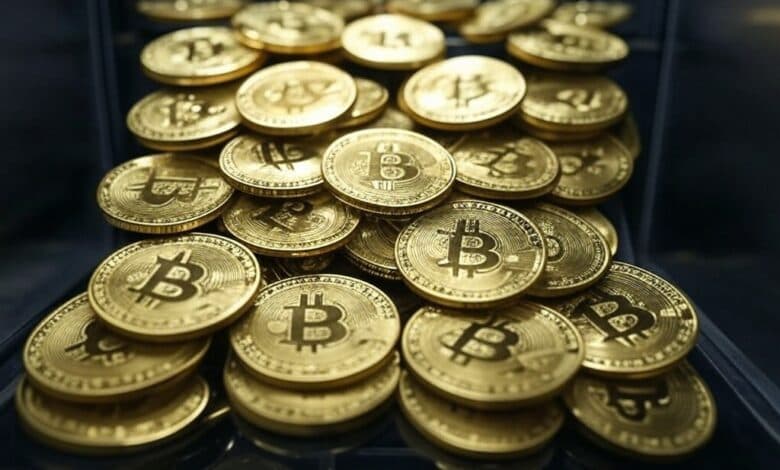
Two Democratic U.S. senators have urged the U.S. Securities and Exchange Commission (SEC) to investigate President Donald Trump's meme coin project, arguing that regulators should examine whether the token facilitated fraud or improper financial gains following its dramatic rise and subsequent collapse.
In a letter sent Monday to SEC Chairman Paul Atkins and first reported by CNN, Senators Elizabeth Warren and Richard Blumenthal called on the agency to determine whether the project violated federal securities laws.
"We are concerned that President Trump's cryptocurrency project may constitute an unlawful fraud," the senators wrote, adding that the SEC should investigate "any unlawful fraud or improper enrichment that this coin may have facilitated."
Trump launched the meme coin just days before taking office in January 2025, marking an unprecedented move by a U.S. president-elect.
The token briefly surged in value, reaching a market capitalization of approximately $9 billion on January 19, 2025, according to publicly available market data. At the time, around 80% of the token supply was reportedly controlled by companies affiliated with the Trump Organization.
Since then, however, the token has lost most of its value. According to CoinMarketCap, its market capitalization has fallen below $400 million, while investors who purchased near its peak have seen losses approaching 97%.
The senators' request comes amid growing concern over the financial impact on retail investors.
Research conducted by blockchain analytics firm Nansen, cited by The New York Times, estimated that nearly one million investors collectively lost approximately $3.8 billion by the end of June as the token's value declined.
In their letter, Warren and Blumenthal argued that the SEC must remain willing to enforce securities laws regardless of political influence.
"The SEC must be prepared to enforce the law even when potential violators are politically powerful individuals," they wrote.
The White House referred media inquiries to the Trump Organization, while the SEC declined to comment on the request.
The lawmakers also questioned whether the project could resemble a fraudulent crypto scheme.
Within the digital asset industry, the term "rug pull" is commonly used to describe projects in which developers artificially inflate a token's value before selling their holdings or abandoning the project, causing prices to collapse.
However, previous blockchain analysis has stopped short of describing Trump's meme coin in those terms.
In January 2025, blockchain intelligence firm TRM Labs concluded that while the project's concentrated insider ownership warranted close monitoring, it did not exhibit the characteristics of an intentional fraud.
Ari Redbord, former U.S. federal prosecutor and Global Head of Policy at TRM Labs, recently told CNN that the firm's earlier assessment remains unchanged.
According to Redbord, the project was not designed as a fraudulent scheme, but the ownership structure created significant risks for later investors.
He noted that a relatively small group of early buyers and project insiders realized substantial gains, while the majority of investors who entered later experienced significant losses.
Redbord also argued that the concentration of approximately 80% of the token supply among a small number of holders amplified those risks, even though the token's decline occurred gradually rather than through a sudden collapse.
Trump has defended his involvement in the project, maintaining that his financial activities comply with applicable laws.
During an interview with CNBC last month, he said he had delegated oversight of his personal financial interests to his sons while serving as president.
Trump also emphasized that he does not personally direct investors to purchase the token, describing himself as a successful businessman whose assets are managed independently during his time in office.
The controversy surrounding Trump's meme coin underscores the broader regulatory challenges facing the rapidly growing meme coin sector, particularly when digital assets become associated with political figures or influential public personalities.
Even if regulators ultimately conclude that no intentional fraud occurred, the case raises questions about ownership concentration, investor protection, and disclosure standards in speculative digital asset markets.
The SEC's response could also become an important test of its willingness to apply securities laws consistently, regardless of the individuals or organizations behind a crypto project, as policymakers continue debating how meme coins should be regulated within the broader digital asset ecosystem.

Disclaimer of Warranty
The information provided in this article is for general informational purposes only. We make no warranties about the completeness, reliability, and accuracy of this information. Read full disclaimer

Editor's Picks

As U.S. Crypto Legislation Stalls, Circle Launches Its Own Financial Network

Walid Abou Zaki

Sep 16, 2026

9 min
Stablecoin Yield Fight Helps Derail CLARITY Act in Senate
Walid Abou Zaki
Sep 15, 2026
8 min

Why Zondacrypto’s Collapse Would Unfold Differently in the UAE
Walid Abou Zaki
Aug 28, 2026
8 min
Read More Articles

In the Same Space
Stablecoin Yield Fight Helps Derail CLARITY Act in Senate
Walid Abou Zaki
Sep 15, 2026
8 min

X Bridges Social Media and Crypto Trading With New Cashtags
News Desk
Sep 16, 2026
5 min
U.S. Bank Moves Its Stablecoin From Testing to Live Cross-Border Payment
News Desk
Sep 10, 2026
3 min
CLARITY Stalled. U.S. Crypto Regulation Didn’t.
Salma Naueihed
Sep 18, 2026
7 min