
Advertisement
Companies & Deals
Share
In a move that places cryptocurrency at the center of U.S. politics, Democratic members of the House Financial Services Committee will hold a hearing on Friday, June 6, to examine what they are calling “Trump’s crypto crimes.” The hearing will also analyze the broader implications of the Republican-led digital asset market structure bill, which may face markup in the coming days.
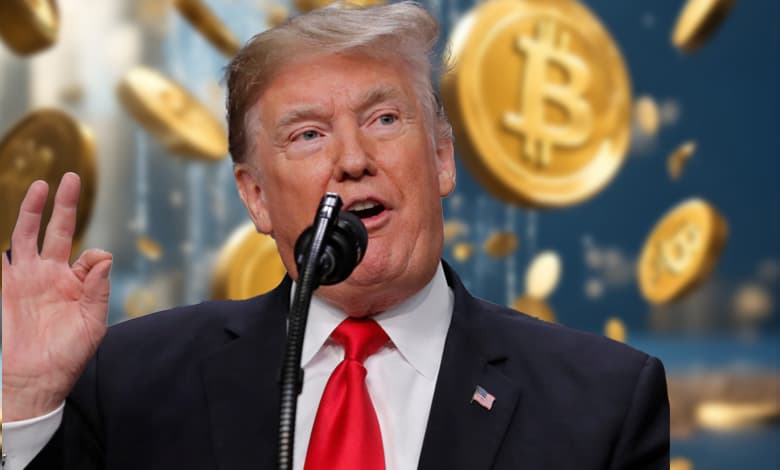
At the heart of the controversy is the Trump-themed memecoin $TRUMP, which surged in value after its launch earlier this year. Though not officially confirmed by the White House, the token is widely believed to be operated by individuals close to President Donald Trump. In April, a high-stakes promotion was announced: the top 220 buyers would be invited to a private gala dinner with the president at his Virginia golf club, while the top 25 would receive access to a VIP reception and a White House tour. The announcement sparked renewed media attention and a 50% price jump for the token.
According to The Washington Post, Trump-affiliated businesses have received approximately $312 million in crypto sales and an additional $43 million in fees since the launch of $TRUMP in January. The lack of transparency around these flows has raised ethical and legal concerns, particularly given the pseudo-anonymous nature of blockchain transactions.
Lawmakers are also expected to focus on the newly launched USD1 stablecoin, issued by World Liberty Financial, a company co-founded by Eric Trump and Zach Witkoff, son of real estate developer and former Trump envoy Steve Witkoff. Public records indicate the Trump family owns a 60% stake in the company and is entitled to 75% of all proceeds from USD1 token sales. Though promoted as a utility-focused dollar-backed stablecoin, the product has drawn criticism for merging financial services with political branding and personal profit.
Senator Elizabeth Warren and other lawmakers have voiced concerns over the use of crypto tools to skirt traditional campaign finance laws. As politically-affiliated tokens and stablecoins rise in popularity, regulators fear the erosion of financial disclosure and accountability.
The hearing also comes as Congress debates the Financial Innovation and Technology for the 21st Century Act (FIT21) — a Republican-backed bill that seeks to overhaul U.S. crypto regulation by expanding the Commodity Futures Trading Commission’s (CFTC) oversight. Critics argue that this could sideline the Securities and Exchange Commission (SEC) and weaken consumer protections.
Congresswoman Maxine Waters (D-CA), the ranking Democrat on the committee, stated that the hearing would give the public “a fuller picture of the implications of Trump’s crypto crimes and explore the consequences of the market structure bill.”
While the hearing may not result in immediate legislative action, it marks a pivotal moment in the U.S. political and regulatory landscape. At stake is not only the future of digital asset oversight, but the broader question of whether a sitting president can operate in the crypto and capital markets with impunity. Whether the outcome leads to reform—or simply formalizes the idea that political power can override accountability in both traditional finance and Web3—remains to be seen.

Disclaimer of Warranty
The information provided in this article is for general informational purposes only. We make no warranties about the completeness, reliability, and accuracy of this information. Read full disclaimer

Editor's Picks
In the Same Space

SpaceX and Tesla Eye a Merger: Could 30,221 BTC Reshape Corporate Bitcoin Holdings?

Chantal Assi

Oct 22, 2026

9 min

Payward Targets EU Banking Expansion With Saldo Deal
News Desk
Oct 15, 2026
3 min

USDU on Solana: Universal Expands Its Institutional Reach
Walid Abou Zaki
Oct 13, 2026
4 min
Trump to Address Overseas Crypto Fraud as US Targets Scam Networks
News Desk
Oct 22, 2026
6 min