Advertisement
Companies & Deals
Share
Kalshi added 3 million users and recorded over $1.2 billion in trading volume on its World Cup winner market during the 2026 FIFA World Cup, making it the largest single market in the platform's history and pushing prediction markets to an estimated 27% share of legal U.S. sports betting activity during the tournament.
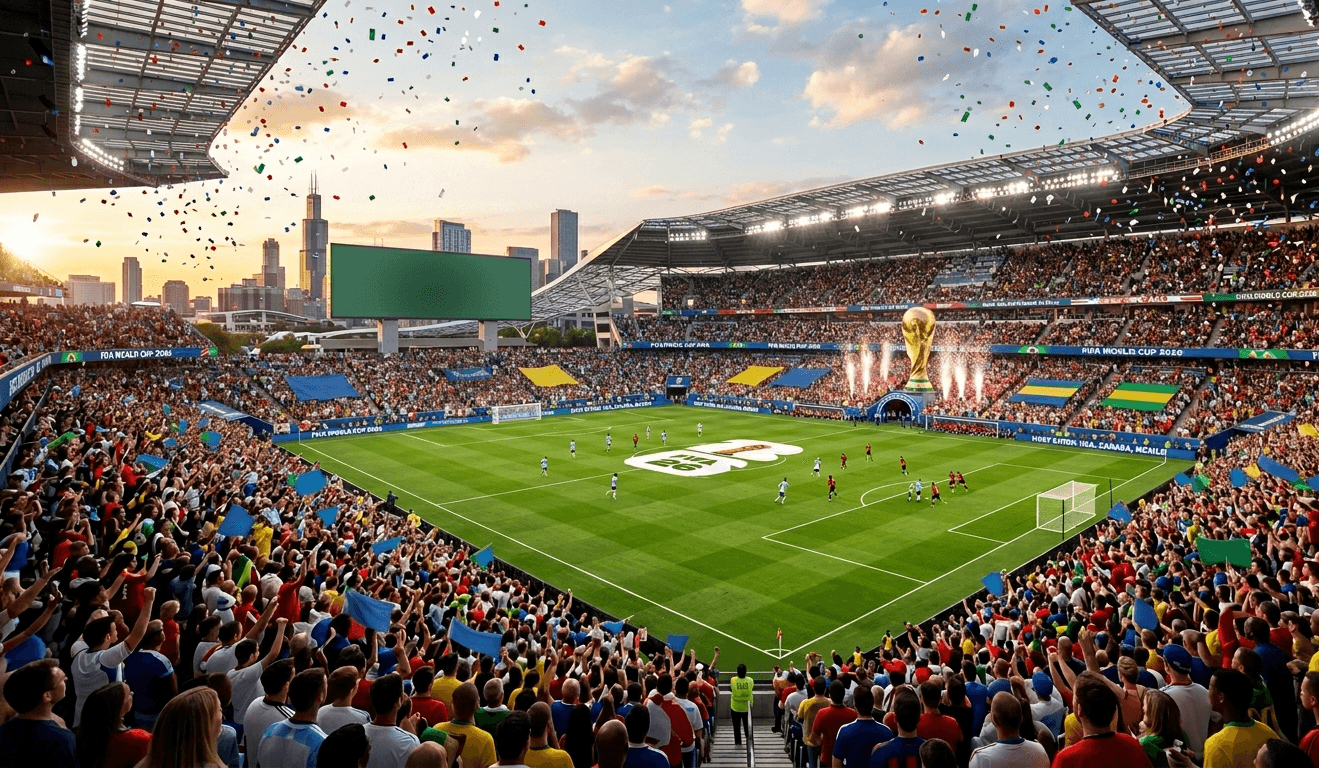
The 2026 FIFA World Cup has become a defining moment for the prediction market industry, driving record user growth and trading volumes while intensifying competition with traditional sportsbooks.
Kalshi revealed that it added three million new users during the tournament, as interest in event-based trading accelerated across the platform. The company also recorded more than $1.2 billion in trading volume on its World Cup winner market alone, making it the largest single market in Kalshi's history. The contract closed after Spain defeated Argentina 1-0 in Sunday's final.
The tournament served as a major catalyst for Kalshi's expansion, helping the platform reach new audiences through a combination of strategic partnerships and high-profile marketing campaigns.
Kalshi partnered with ADI Predictstreet, FIFA's official prediction market sponsor, securing stadium co-branding throughout the competition. The company also collaborated with OpenAI to surface its market odds in ChatGPT searches while launching campaigns featuring football stars Luka Modrić and José Mourinho, alongside a partnership with the Argentina national team.
Kalshi CEO Tarek Mansour said the company's strategy focused on remaining closely tied to real-world events rather than simply maximizing trading activity.
"Our volumes are where the news is at."
The World Cup also highlighted the rapid rise of prediction markets within the broader sports betting landscape.
According to research from H2 Gambling Capital, prediction markets accounted for an estimated 27% of legal U.S. sports betting activity during the World Cup, up sharply from around 9% at the beginning of 2026. Although the comparison is not exact because sportsbooks and prediction markets measure activity differently, the figures illustrate how quickly the sector has expanded.
Kalshi repeatedly surpassed its own trading records throughout the tournament, with daily activity reaching nearly ten times the levels seen earlier this year. Mobile analytics firm Apptopia also reported that Kalshi's app attracted more daily users during the World Cup than both DraftKings and FanDuel, the two largest online sportsbooks in the United States.
The momentum has not gone unnoticed by the traditional betting industry.
Ian Moore, an analyst at Bernstein, said the rapid expansion has increased pressure on established sportsbooks to develop comparable prediction market offerings, describing the sector as "a new opportunity for everyone."
Despite the surge in adoption, prediction markets continue to operate under an evolving regulatory landscape.
Sports event contracts remain the subject of legal disputes between federal authorities and several U.S. states, which argue that the products function as sports betting rather than financial contracts. Earlier this year, the Commodity Futures Trading Commission (CFTC) became involved in litigation against Kentucky over the issue.
Brian Sung, a partner at law firm Haynes Boone, noted that while aggressive marketing campaigns are unlikely to influence court decisions directly, they can shape how regulators and the broader public perceive the industry.
Meanwhile, high-profile traders experienced both the opportunities and risks associated with event markets. One Polymarket trader reportedly lost $11.6 million on World Cup positions earlier this month, while rapper Drake placed a $5 million wager on the Spain-Argentina final.
With the World Cup now concluded, the industry's next challenge will be retaining the millions of new users drawn in by the tournament.
Kalshi has historically experienced lower trading activity between major sporting events, but Mansour expects new markets across politics, economics, weather, and other real-world events to sustain user engagement beyond football.
The broader trend suggests prediction markets are moving beyond their niche origins. Once viewed as experimental platforms operating on the fringes of finance and betting, exchanges such as Kalshi and Polymarket are increasingly competing for the same users as established sportsbooks while expanding into markets tied to elections, macroeconomic events, commodities, and other real-world outcomes.
Whether that growth proves sustainable may depend less on another blockbuster sporting event and more on how successfully the industry can convert World Cup participants into long-term users and navigate the regulatory questions that continue to shape its future.

Disclaimer of Warranty
The information provided in this article is for general informational purposes only. We make no warranties about the completeness, reliability, and accuracy of this information. Read full disclaimer

Editor's Picks
In the Same Space
Payward Targets EU Banking Expansion With Saldo Deal

News Desk

Oct 15, 2026

3 min

UK Names Six Banks to Lead First Digital Government Bond
News Desk
Oct 7, 2026
3 min
Schwab Enables Crypto Transfers After Completing Bitcoin and Ether Trading Launch
News Desk
Oct 16, 2026
4 min

Russia to End P2P Crypto Trading Under New Rules in July 2027
News Desk
Oct 16, 2026
5 min