Advertisement
Regulation & Policy
Share
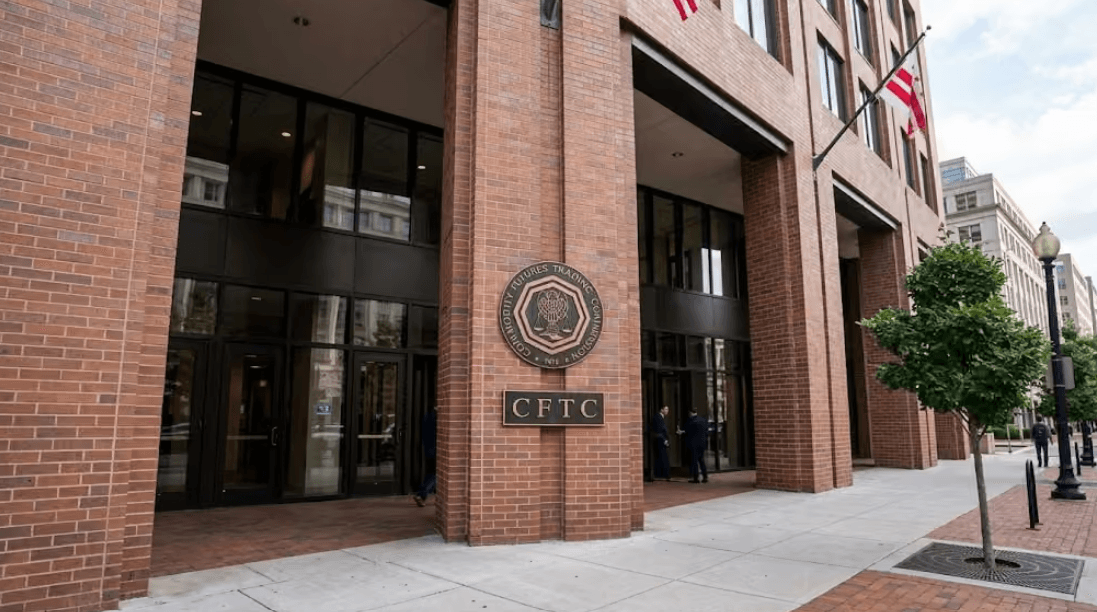
CFTC Chair Michael Selig has stated the agency will advance crypto market structure rules using existing authority, regardless of whether the CLARITY Act passes the Senate, while also exploring derivatives linked to AI computing power.
As the U.S. Senate prepares for a key procedural vote on the CLARITY Act, Commodity Futures Trading Commission Chair Michael Selig has made clear that the agency is not planning to put its crypto regulatory agenda on hold.
Selig said the CFTC has already developed proposals addressing crypto market structure and is prepared to move forward even if Congress fails to pass the CLARITY Act.
According to the CFTC chair, crypto markets will receive a market structure framework regardless of whether the legislation ultimately becomes law. His comments suggest that the agency is prepared to use the regulatory tools already available to it rather than wait indefinitely for lawmakers to reach an agreement.
The CLARITY Act is designed to establish a federal framework for digital assets and provide clearer lines of authority between the CFTC and the Securities and Exchange Commission.
The House version of the bill was passed in July 2025, while the Senate Banking Committee approved its own version in May 2026. However, negotiations are still underway over several unresolved issues, including ethics provisions and stablecoin rewards.
Senate Majority Leader John Thune has scheduled a cloture vote on the motion to proceed for September 15. The procedural step requires at least 60 votes to advance.
Selig's comments also come as the CFTC prepares to launch its Innovation Advisory Committee on August 20.
The committee's first meeting is expected to cover several emerging areas, including digital asset regulation, artificial intelligence in financial markets and prediction markets.
Discussions on crypto are expected to focus on unresolved questions surrounding the federal market structure and customer protections. While the CFTC already oversees crypto derivatives, Congress is still debating the extent of the agency's authority over spot markets for digital commodities.
Meanwhile, the SEC is also working on regulations tailored to the digital asset industry.
Securitize CEO Brett Redfearn said that the agency recently put an innovation exception proposal on hold amid uncertainty surrounding the CLARITY Act vote. However, he expects the proposal to return after September 15, which would place its potential revival after the Senate's procedural vote.
The parallel efforts show that U.S. regulators are continuing to develop their own approaches to digital asset oversight while Congress works toward a broader legislative framework.
Since becoming CFTC chair in December 2025, Selig has adopted a more accommodating approach toward crypto-related financial products.
The agency has already approved perpetual Bitcoin futures, while its regulatory agenda suggests that additional crypto derivatives could become available in the future.
This approach could allow the CFTC to expand the range of regulated crypto products without waiting for Congress to finalize a comprehensive market structure law.
The agency is also turning its attention to another rapidly growing market: artificial intelligence infrastructure.
On August 19, the CFTC published a notice seeking public feedback on derivatives linked to computing power used for AI applications. The initiative forms part of the agency's broader effort to examine emerging commodity markets.
Selig views computing capacity as an increasingly important commodity for the development of the AI industry. In his view, a strong derivatives market for computing resources could become an important part of maintaining U.S. competitiveness in artificial intelligence.
The notice raises questions about market liquidity, potential manipulation, customer protections and the possibility of launching perpetual futures linked to computing capacity. Public comments will be accepted for 60 days following the publication of the notice in the Federal Register.
At the same time, CME Group and Silicon Data are developing contracts tied to the cost of renting high-performance graphics processing units.
The proposed products are expected to track rental prices for Nvidia's H100 and Blackwell B200 chips, which are widely used to support AI workloads. Both products remain under development and will require regulatory review before they can enter the market.
Selig's comments suggest that the future of U.S. crypto regulation may no longer depend entirely on whether Congress can reach an agreement on the CLARITY Act. If negotiations remain stalled, the CFTC appears willing to use its existing authority to introduce parts of a crypto market structure framework independently.
However, regulatory action by individual agencies is unlikely to resolve every issue. Questions surrounding the division of responsibilities between the CFTC and SEC, particularly over spot digital commodity markets, may still require congressional intervention.
At the same time, the CFTC's growing interest in AI-related derivatives shows how quickly the scope of financial regulation is expanding. As computing capacity becomes increasingly valuable, regulators may soon find themselves overseeing new markets where digital assets, financial infrastructure and artificial intelligence intersect.

Disclaimer of Warranty
The information provided in this article is for general informational purposes only. We make no warranties about the completeness, reliability, and accuracy of this information. Read full disclaimer

Editor's Picks

When Assets Move—or Stop—Without Consent: The Limits of Crypto Wallet Control

Walid Abou Zaki

Sep 29, 2026

6 min

Where Do the Dollars Behind the UAE’s Crypto Economy Sit?
Anna K.
Sep 21, 2026
9 min

As U.S. Crypto Legislation Stalls, Circle Launches Its Own Financial Network
Walid Abou Zaki
Sep 16, 2026
9 min
Read More Articles

In the Same Space

IMF Clears $139 Million Disbursement to El Salvador After Bitcoin Breach
News Desk
Oct 2, 2026
4 min

EBA Urges EU to Regulate Crypto Lending and DeFi Under MiCA
News Desk
Sep 25, 2026
4 min

ADGM Puts DLT Foundation Audits and Disclosure in Focus
Walid Abou Zaki
Sep 23, 2026
7 min

ECB Seeks Changes to MiCA Stablecoin Reserve Rules
News Desk
Sep 23, 2026
3 min