Advertisement
Stablecoins & Payments
Share
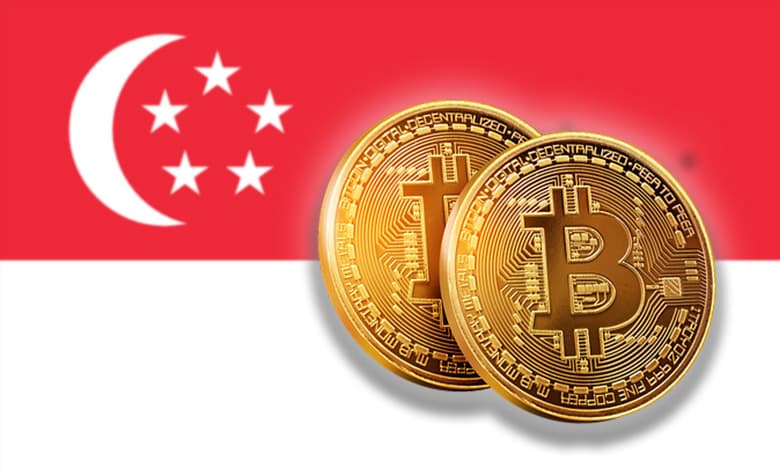
Singapore's MAS has proposed amendments to the Payment Services Act requiring stablecoin issuers to maintain 100% reserve backing and banning them from paying interest or yield to holders, positioning stablecoins strictly as payment instruments.
Singapore’s financial regulator is proposing stricter stablecoin rules, requiring full reserve backing and prohibiting issuers from paying interest or other benefits to holders.
Singapore’s central bank and financial regulator has proposed amendments to the Payment Services Act that would require regulated stablecoin issuers to fully back tokens with reserve assets and prohibit them from paying interest or other yield to holders.
The Monetary Authority of Singapore (MAS) said the proposed framework is intended to strengthen redemption protections while ensuring that stablecoins remain focused on payments rather than functioning as investment or deposit-like products.
Under the proposed rules, issuers would have to maintain reserve assets equal to at least 100% of all stablecoins in circulation at all times. The reserves would need to be held separately from the issuer’s own funds and custodied with licensed financial institutions.
The framework would also require issuers to safeguard reserve assets pending redemption, providing greater protection to holders seeking to redeem Singapore-regulated stablecoins.
The proposed framework would prohibit stablecoin issuers from paying interest or providing other benefits linked to users’ stablecoin holdings.
MAS said stablecoins may be used for payments but should not be offered to the public as investment products or used to generate yield in a manner similar to bank deposits.
The approach is broadly consistent with rules in other major jurisdictions. The U.S. GENIUS Act and the European Union’s Markets in Crypto-Assets (MiCA) framework also prohibit regulated stablecoins from paying interest or yield to holders.
“Trusted and well-regulated stablecoins can serve as a credible settlement asset in tokenized financial markets, while mitigating risks to users and the broader financial system,” said Ho Hern Shin, MAS deputy managing director for financial supervision.
The consultation also proposes limited recognition for a small number of foreign stablecoins governed by comparable overseas regulatory frameworks.
MAS has not yet determined how that recognition would operate in practice. Questions also remain over how responsibilities would be allocated for jointly issued tokens and whether transitional arrangements would apply to existing Singapore-based issuers.
MAS first consulted on its stablecoin regulatory framework in October 2022 and published its response to feedback in August 2023. The latest consultation closes on Oct. 16, while subsidiary legislation will be subject to a separate consultation at a later date. No implementation date has been announced.
Singapore’s proposed approach comes as the UAE is also building a regulated framework for stablecoins, with both jurisdictions placing greater emphasis on reserve backing, regulated issuance and payment or settlement use cases.
The Central Bank of the UAE (CBUAE) established its Payment Token Services Regulation in 2024, creating a licensing and supervisory framework for payment tokens, including stablecoins.
The UAE market has since moved from regulation toward institutional use. In May, Unlock Blockchain reported that DDSC, a UAE dirham-backed payment token licensed by the CBUAE, was used in an AED 110 million transaction on ADI Chain. The transaction highlighted the UAE’s focus on stablecoins as regulated settlement infrastructure rather than purely speculative crypto assets.
Singapore’s proposed rules similarly position stablecoins primarily as payment and settlement instruments, rather than yield-generating products.
The proposed framework comes as regulated stablecoins are being tested within Singapore’s financial infrastructure.
Ripple is exploring the use of its RLUSD stablecoin within a MAS central bank sandbox to test whether stablecoins can help replace manual processes involved in cross-border payments and trade settlement.
The testing forms part of BLOOM, a MAS initiative focused on expanding settlement capabilities for tokenized bank liabilities and regulated stablecoins.
The development also adds to Ripple’s regulated presence in the UAE. Unlock Blockchain previously reported that Ripple received full authorization from the Dubai Financial Services Authority (DFSA) in 2025, while RLUSD was subsequently recognized as an approved crypto token within the Dubai International Financial Centre (DIFC).
As Singapore and the UAE continue developing regulated stablecoin markets, both are increasingly testing how these assets can function as part of regulated payment and tokenized financial infrastructure rather than as yield-bearing alternatives to bank deposits.

Disclaimer of Warranty
The information provided in this article is for general informational purposes only. We make no warranties about the completeness, reliability, and accuracy of this information. Read full disclaimer

Editor's Picks
In the Same Space

Qivalis Secures Dutch Approval for Euro Stablecoin

News Desk

Oct 15, 2026

3 min
Samsung Brings USDC to 82M Galaxy Devices as Stablecoins Move Into Consumer Wallets
News Desk
Oct 8, 2026
5 min
UAE and Morocco Deepen Financial Ties With Payment and CBDC Agreements
News Desk
Oct 9, 2026
5 min
Standard Chartered Extends Crypto Trading to UAE Wealth Clients
News Desk
Oct 14, 2026
3 min