
Advertisement
Funding & Capital
Share
Polymarket is raising ~$1 billion at a $21 billion valuation, led by 1789 Capital—the firm backed by Donald Trump Jr.—which is committing ~$300 million, building on a prior ~$200 million investment made when Polymarket was valued at ~$15 billion.
Polymarket is seeking to raise about $1 billion in a new funding round led by 1789 Capital, the investment firm whose partners include Donald Trump Jr., in a deal that would value the prediction-market platform at approximately $21 billion.
Alexa Henning, a spokesperson for 1789 Capital, confirmed on Monday, August 31, that the firm plans to invest around $300 million in the round. The investment would build on roughly $200 million that 1789 Capital previously put into Polymarket when the company was valued at about $15 billion.
The new financing comes as prediction markets gain momentum in the United States, attracting growing interest from investors, traders and policymakers while simultaneously becoming the center of an increasingly contentious regulatory battle.
Platforms such as Polymarket and Kalshi allow users to trade contracts tied to the outcomes of future events, covering everything from elections and economic indicators to sports and entertainment.
Their rapid expansion has transformed prediction markets from a niche corner of financial technology into a potentially multibillion-dollar industry. But their growth has also raised fundamental questions about whether such contracts should be treated as financial products under federal oversight or as gambling activities subject to state laws.
Trump Jr. has become increasingly involved in the sector. He joined Kalshi as an adviser in 2025 and received shares in the company worth more than $300,000. He has also advised Polymarket and invested in the platform through 1789 Capital.
His involvement has drawn additional attention because the Trump administration has broadly supported the expansion of federally regulated prediction markets.
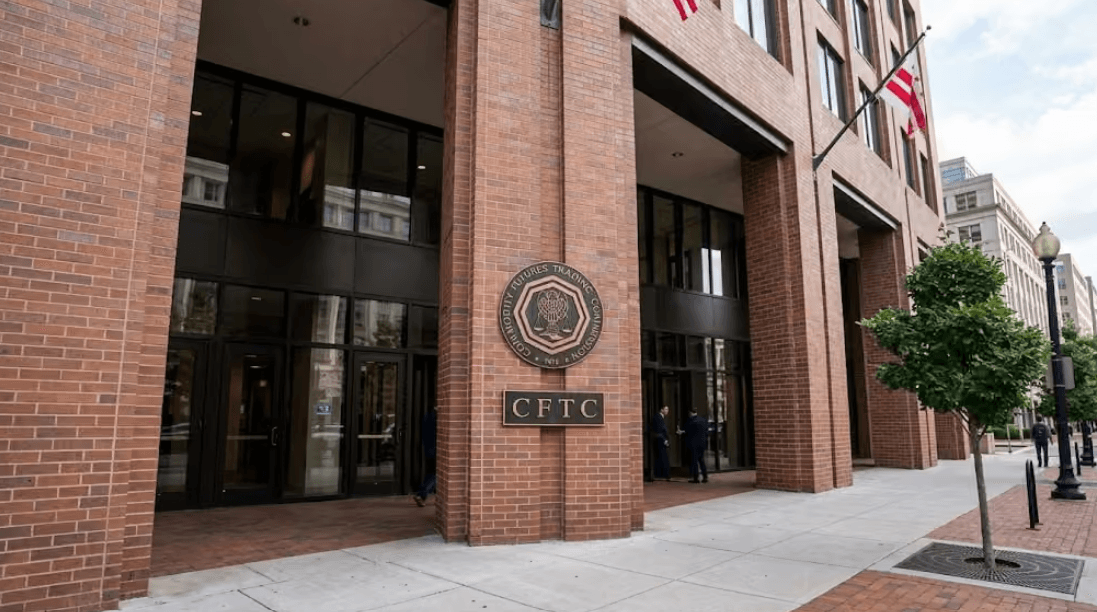
Michael S. Selig, chairman of the Commodity Futures Trading Commission (CFTC), has argued strongly that the federal agency has exclusive authority over prediction markets.
The position has placed the CFTC at odds with several states seeking to impose their own restrictions on event-based contracts. President Donald Trump has publicly backed the federal regulator's position, arguing that maintaining federal authority over prediction markets is important and predicting that the industry will flourish under his administration.
The dispute has created an increasingly complicated regulatory landscape for companies such as Polymarket and Kalshi.
A major development came on August 28, when a US appeals court ruled that Nevada could exercise regulatory authority over Kalshi, including requiring the platform to obtain a gambling license. The court determined that contracts linked to sporting events could fall within activities that states are permitted to regulate.
The decision conflicts with an earlier ruling from the Third Circuit, deepening the legal divide and raising the possibility that the issue could eventually reach the US Supreme Court.
The CFTC, meanwhile, continues to defend its federal jurisdiction over prediction markets, while multiple states pursue legal action against platforms operating in the sector.
At the heart of the dispute is a basic question: are prediction markets financial markets governed by federal commodities law, or gambling platforms that states can regulate under their own laws?
The Polymarket investment also highlights the rapid growth of 1789 Capital itself.
The firm has expanded its portfolio across some of the most closely watched private technology companies, with investments including SpaceX, Anduril, Cerebras and Reflection AI.
Its assets under management have grown dramatically in a relatively short period. According to previous reporting by Bloomberg, 1789 Capital went from managing several hundred million dollars to overseeing more than $3 billion within roughly two years.
That expansion has attracted scrutiny in Washington. US lawmakers have launched inquiries into the firm's rapid increase in value, its investment activity and its relationships with companies that have benefited from government policies or funding.
1789 Capital has denied wrongdoing, while Trump Jr. has maintained that his investments are made in his capacity as a private citizen rather than as a government official.
The latest Polymarket investment is particularly notable because the Trump family has both financial interests in the prediction-market industry and political ties to the regulatory debate surrounding it.
Trump Jr. has direct financial exposure to companies operating in the sector and has previously argued that prediction markets should remain under federal rather than state oversight.
That creates an unusual overlap between investment interests and a policy debate that could materially affect the businesses involved. Polymarket and other prediction-market operators are expanding at the same time that regulators and courts are deciding which rules will govern their activities.
Concerns about market integrity have also intensified.
On August 31, Kalshi permanently banned former US congressman George Santos following an investigation that found reasonable grounds to believe he had engaged in insider trading on the platform. The case adds another layer of scrutiny to an industry already facing questions about market oversight and trading practices.
The proposed financing represents more than another major capital raise for Polymarket. It comes at a pivotal moment for prediction markets, as rapidly rising valuations, political interest and regulatory uncertainty converge.
A valuation of roughly $21 billion would mark a significant increase from Polymarket's previous $15 billion valuation and underscore the growing investor appetite for event-based trading platforms.
But Polymarket's long-term success will depend on more than its ability to attract capital.
The platform and its peers must navigate an unresolved regulatory landscape while demonstrating that prediction markets can maintain market integrity and operate credibly at scale. For Polymarket in particular, the involvement of Trump Jr. and 1789 Capital adds another layer of scrutiny, given the broader political debate over who should regulate the industry.
As prediction markets move closer to the mainstream, their next phase may ultimately be determined as much by courtrooms and regulators as by investors and traders.

Disclaimer of Warranty
The information provided in this article is for general informational purposes only. We make no warranties about the completeness, reliability, and accuracy of this information. Read full disclaimer

Editor's Picks
In the Same Space

Trump Launches $215M Quantum Computing Competition Amid Crypto Risks

News Desk

Oct 9, 2026

6 min
CFTC Unveils Federal Framework for Leveraged Crypto Trading
News Desk
Oct 6, 2026
4 min

JIOUSDT: Bitget Brings Jio’s IPO Into Crypto Trading
Walid Abou Zaki
Oct 16, 2026
7 min

Sberbank Wins Russia Approval to Trade Bitcoin and Crypto
News Desk
Oct 15, 2026
4 min