Advertisement
Tokenization Infrastructure
Share
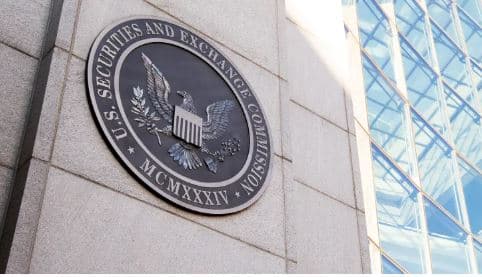
The U.S. Securities and Exchange Commission (SEC) is advancing a series of regulatory changes that could significantly accelerate the growth of tokenized equities, potentially opening the door for crypto platforms to compete directly with traditional stock exchanges and brokerages.
The developments center on two initiatives championed by SEC Chairman Paul Atkins: a proposed "innovation exemption" for digital asset firms and a separate effort to eliminate the long-standing trade-through rule that governs how stock orders are executed in U.S. markets.
Together, the proposals signal a broader shift in how U.S. regulators are approaching blockchain-based financial infrastructure and could reshape the future of equity trading.
Crypto industry participants expect the SEC to introduce an innovation exemption that would allow digital asset firms to test new business models without immediately complying with the full range of securities regulations.
Industry observers believe the exemption could enable crypto companies to offer tokenized versions of publicly traded U.S. stocks. These blockchain-based representations of equities are designed to mirror traditional shares while allowing for faster settlement, 24/7 trading, and potentially lower transaction costs.
Several major crypto firms have already positioned themselves for such a launch. Coinbase, Robinhood, Kraken, and other platforms have expressed interest in expanding tokenized stock offerings, while some already provide similar products outside the United States.
Coinbase this week announced plans to launch tokenized equities internationally, describing the products as fully backed, on-chain representations of underlying shares.
According to legal and regulatory analysts, the innovation exemption could allow crypto firms to perform multiple market functions simultaneously—including trading, clearing, and settlement—without operating under the same framework currently applied to exchanges, broker-dealers, and clearing agencies.
The SEC is also proposing to eliminate the trade-through rule, a cornerstone of U.S. market structure since 2005.
The rule requires trading venues to execute orders at the best available quoted price across all exchanges, helping ensure investors receive optimal pricing. However, critics argue that the requirement creates structural challenges for tokenized equity platforms.
Because tokenized stock markets operate on blockchain infrastructure and may execute transactions independently from traditional exchanges, complying with trade-through requirements could be difficult. Crypto firms would often need to route orders to established exchanges rather than execute trades directly on their own platforms.
Market structure experts have described the proposed repeal as a major development for tokenized equities, arguing it removes one of the most significant barriers preventing blockchain-based stock trading from scaling in the United States.
The proposal would still require firms to seek best execution for customers but would provide greater flexibility regarding how and where trades are completed.
If implemented, the regulatory changes could intensify competition between crypto-native platforms and established financial institutions.
Tokenized equities have long been promoted as a way to modernize capital markets by enabling near-instant settlement and round-the-clock trading. Supporters argue blockchain infrastructure could reduce operational complexity while improving accessibility and market efficiency.
The sector has expanded rapidly over the past year. Data from tokenization trackers show that the market value of tokenized public equities has grown substantially since late 2024, reflecting increasing interest from both crypto firms and traditional financial institutions.
At the same time, established market operators are preparing for a tokenized future rather than resisting it.
The New York Stock Exchange is reportedly exploring blockchain-based infrastructure for tokenized stocks and exchange-traded funds, while Nasdaq has discussed token designs that could give public companies greater control over digitally represented shares. Meanwhile, crypto exchange Bullish recently agreed to acquire transfer agent Equiniti in a multibillion-dollar transaction that could strengthen its position in digital securities markets.
Not everyone supports the SEC's direction.
Critics argue that existing market structure regulations were developed over decades to protect investors and ensure fair competition among trading venues. Some industry participants warn that weakening or removing these rules to accommodate crypto business models could introduce new risks.
Market structure specialists have questioned whether changes such as eliminating the trade-through rule primarily benefit digital asset firms rather than retail investors.
The debate highlights a growing divide between advocates of blockchain-based financial infrastructure and supporters of the current market system, which remains one of the world's largest and most liquid equity markets.
The SEC's latest proposals form part of a broader regulatory shift under the Trump administration.
Since returning to office, President Donald Trump has embraced a more supportive stance toward the digital asset industry. Under Atkins, the SEC has moved away from the enforcement-heavy approach associated with previous leadership and has instead emphasized regulatory flexibility and innovation.
Alongside the innovation exemption, the agency is reportedly considering additional measures that would create pathways for crypto firms to raise capital and launch products under tailored regulatory frameworks.
While both proposals remain subject to public consultation and further regulatory review, they represent some of the clearest indications yet that U.S. regulators are preparing for a future in which tokenized assets become a mainstream component of financial markets.
As crypto firms and traditional exchanges race to build blockchain-based equity infrastructure, the outcome of these regulatory initiatives could determine how quickly tokenized stocks move from a niche product to a core feature of global capital markets.

Disclaimer of Warranty
The information provided in this article is for general informational purposes only. We make no warranties about the completeness, reliability, and accuracy of this information. Read full disclaimer

Editor's Picks

Why Zondacrypto’s Collapse Would Unfold Differently in the UAE

Walid Abou Zaki

Aug 28, 2026

8 min

The Missing Orchestration Layer Holding Back Institutional Digital Assets
Julian Sawyer
Aug 18, 2026
5 min

Beyond Crypto Access: How ARP Digital Is Building the UAE’s Digital Capital Infrastructure
Anna K.
Aug 17, 2026
8 min
Read More Articles

In the Same Space

Bitcoin Takes Hit as Iran Rising Tensions Send Oil Above $100
News Desk
Sep 14, 2026
6 min

EU Puts Crypto Wallets on 24-Hour Breach Clock as Revolut Data Leak Highlights Security Risks
News Desk
Sep 14, 2026
5 min

UAE PASS Digital Vault Set for Shift to Avalanche Infrastructure
Walid Abou Zaki
Sep 14, 2026
6 min
Trump Makes Major Crypto Ethics Concession Before Crypto Senate Vote
News Desk
Sep 14, 2026
3 min