Advertisement
Infrastructure
Share
The NYSE has selected Avalanche, built by Ava Labs, to serve as the core ledger infrastructure for its planned digital securities trading platform, bringing blockchain into clearing and settlement rather than just asset issuance.
The New York Stock Exchange is taking another step towards integrating blockchain technology into traditional financial markets, with Avalanche set to power the underlying infrastructure of its planned digital securities trading platform.
The development highlights a broader shift across Wall Street, where financial institutions are increasingly exploring public blockchain networks not only to create tokenized assets but also to modernize the systems responsible for trading and settling them.
Ava Labs, the company behind the Avalanche blockchain, announced on Monday that its technology would serve as the core ledger infrastructure for the clearinghouse operating the NYSE's forthcoming digital trading platform.
The initiative was first outlined by Intercontinental Exchange (ICE), the NYSE's parent company, as part of its plans to develop a marketplace for digitally represented securities. The proposed platform is intended to support round-the-clock trading, clearing and settlement, subject to regulatory approval.
By selecting Avalanche, the exchange is positioning blockchain technology at the operational heart of the proposed marketplace, potentially allowing tokenized equities to be cleared and settled through an institutional-grade digital infrastructure.
The significance of the NYSE's move lies in the role blockchain is expected to play. Rather than limiting the technology to the issuance of tokenized shares or investment funds, the initiative brings it into the processes that underpin the completion of financial transactions.
Clearing and settlement are essential components of securities markets. They ensure that buyers receive the assets they purchase and sellers receive the corresponding funds. Integrating blockchain into these processes could help streamline transactions, reduce operational friction and enable markets to function beyond conventional trading hours.
Denis Lee, head of digital issuance at the NYSE, indicated that the exchange intends to adopt a flexible technological approach rather than rely on a single blockchain for every function. While the platform is expected to accommodate securities issued across different blockchain networks, its central transaction ledger will need to meet demanding standards for speed, reliability and control over network participation.
Avalanche's founder and Ava Labs chief executive, Emin Gün Sirer, described the agreement as evidence of blockchain's expanding role in financial services. In his view, the technology is moving beyond its initial application in creating digital financial products and increasingly becoming part of the infrastructure that supports established markets.
He also pointed to Avalanche's capacity to facilitate continuous settlement and potentially lower operating costs as relevant advantages for institutional adoption.
The NYSE initiative is part of a growing wave of efforts to bring traditional securities onto blockchain networks. Financial institutions and technology companies are exploring ways to make shares and other investment products digitally transferable, with the longer-term ambition of creating markets that operate with greater flexibility and fewer settlement constraints.
Separately, the NYSE has partnered with Blockchain.com in an initiative aimed at connecting cryptocurrency investors with tokenized equities and exchange-traded funds.
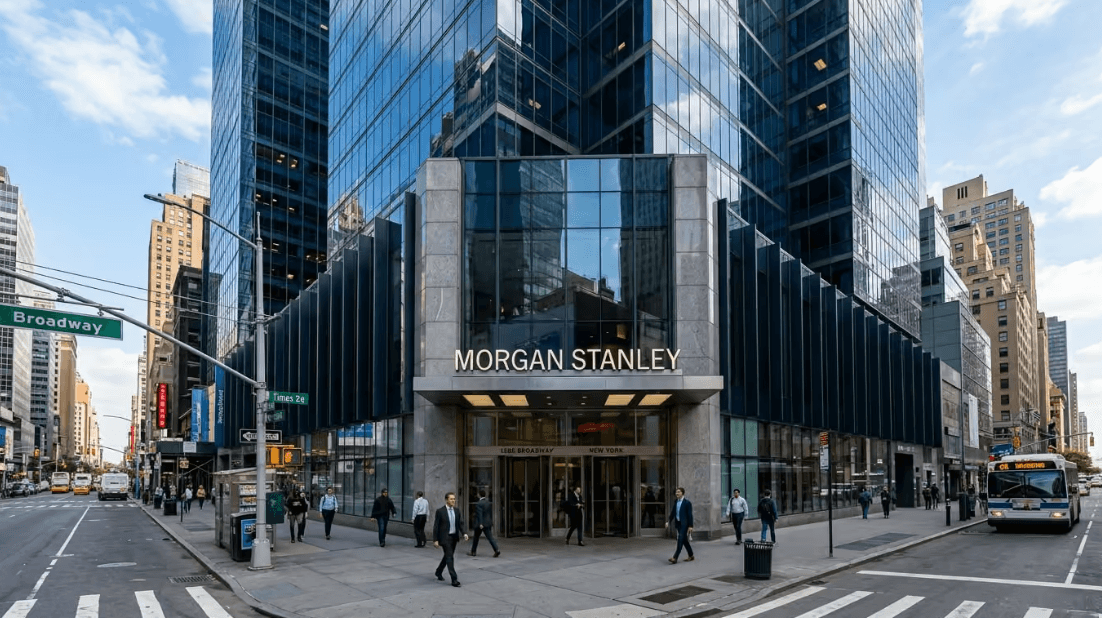
ICE has also been involved in plans with cryptocurrency exchange OKX to develop a platform for trading tokenized stocks around the clock. The initiative has been linked to regulatory relief from the US Securities and Exchange Commission. Meanwhile, Morgan Stanley has begun exploring opportunities in securities tokenization, adding another major financial institution to the field.
Despite the growing institutional interest, the transition is not without obstacles. The proposed OKX-ICE initiative has encountered difficulties securing participation from major publicly listed companies. The seven technology and consumer giants collectively known as the Magnificent Seven, including Apple and Meta, have reportedly declined to make their shares available through the platform. A further 67 companies have also opted not to participate.
Their decisions highlight a central challenge facing the tokenization industry: technological infrastructure can advance rapidly, but the participation of companies whose securities are being represented remains essential to building a functioning market.
Institutional enthusiasm for tokenized equities does not necessarily translate into widespread investor adoption. While the concept promises greater accessibility and potentially more efficient transactions, the market is still developing, with questions surrounding liquidity, price stability and investor participation.
Research by the International Monetary Fund has identified evidence of demand for tokenized stocks, while also drawing attention to persistent market weaknesses, particularly volatility and limited liquidity.
These concerns point to a gap between the capabilities of emerging blockchain infrastructure and the maturity required for tokenized securities to become a mainstream investment option. For institutional investors and issuers, the appeal of a new trading system will ultimately depend not only on its technological performance but also on whether it can support sufficiently deep markets and dependable execution.
The NYSE's decision to use Avalanche reflects an important evolution in the competition surrounding tokenized assets. The focus is increasingly shifting away from the simple conversion of traditional financial instruments into digital tokens and toward the development of the infrastructure needed to support their trading, clearing and settlement.
For the initiative to succeed, technological efficiency will be only one part of the equation. The platform must also demonstrate that it can maintain market liquidity, protect investor interests, operate within regulatory frameworks and earn the confidence of issuers and financial institutions.
The reluctance of numerous companies to participate in the separate OKX-ICE initiative illustrates that technical readiness alone cannot guarantee market acceptance.
Ultimately, the NYSE-Avalanche collaboration will be judged not simply by its ability to bring blockchain into the machinery of traditional finance, but by whether it can deliver a reliable, commercially viable alternative that institutions and investors are willing to use. The next phase of Wall Street's blockchain experiment may therefore depend less on the technology itself and more on the market's willingness to embrace it.

Disclaimer of Warranty
The information provided in this article is for general informational purposes only. We make no warranties about the completeness, reliability, and accuracy of this information. Read full disclaimer

Editor's Picks
Binance After the $6.3B Hack: A Turning Point for the Exchange

Walid Abou Zaki

Nov 2, 2026

10 min
“One Financial System”: What OKX’s New Investors Are Backing
Walid Abou Zaki
Oct 8, 2026
6 min

When Assets Move—or Stop—Without Consent: The Limits of Crypto Wallet Control
Walid Abou Zaki
Sep 29, 2026
6 min
Read More Articles

In the Same Space

Google Cloud Previews Crypto Custody Service for Institutions
News Desk
Oct 29, 2026
4 min
Ethereum Postpones Glamsterdam Hardfork Over Smart Contract Security Risks
News Desk
Nov 6, 2026
3 min
Soter Insure Adds Standard Chartered's SC Ventures and SBI to Series B
News Desk
Nov 5, 2026
4 min

Hong Kong Connects Tokenized Deposits and Central Bank Money in 24/7 Finance Push
News Desk
Nov 2, 2026
5 min