Advertisement
Tokenization & RWA
Share
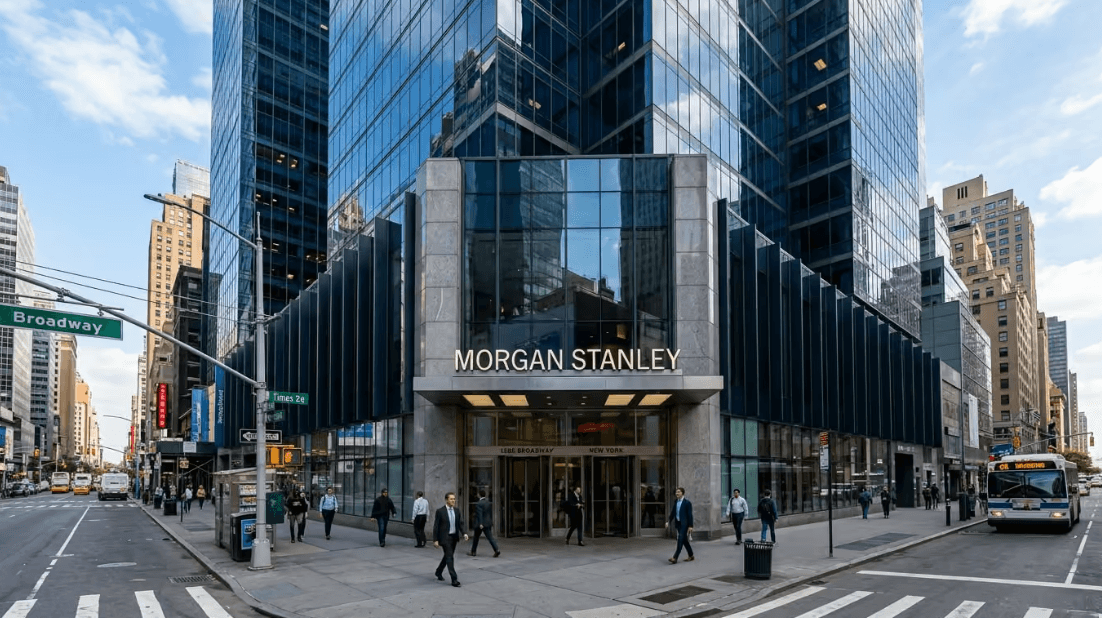
Morgan Stanley has tokenized US equities and Treasury securities through DTCC's new Tokenization Service, becoming one of the first institutions to use the infrastructure after its October 28 launch. The service, backed by an SEC no-action letter, enables eligible DTC participants to create blockchain-based representations of traditional securities while retaining existing custody and ownership arrangements.
Morgan Stanley has begun tokenizing US equities and Treasury securities through the Depository Trust & Clearing Corporation's (DTCC) new Tokenization Service, becoming one of the first financial institutions to use the infrastructure following its launch on October 28.
The bank confirmed the development in a November 3 post on X, saying it had started using DTCC's service to create tokenized representations of traditional financial assets.
Amy Oldenburg, Morgan Stanley's head of digital assets strategy, said the experience would inform the firm's continued development of digital asset capabilities.
The move follows DTCC's launch of its Tokenization Service, which enables eligible financial institutions to convert securities held by its subsidiary, the Depository Trust Company (DTC), into blockchain-based representations that can be transferred across supported networks.
The DTCC Tokenization Service allows eligible institutions to create digital representations, or digital twins, of securities already held in custody by DTC. These tokens can be converted between traditional and tokenized forms and transferred to eligible digital wallets.
According to DTCC, tokenized securities retain the same ownership rights, investor protections and economic entitlements as their traditional counterparts.
The service initially supports eligible securities from the Russell 1000, exchange-traded funds tracking major indices, and US Treasury bills, notes and bonds. Its launch followed a December 2025 no-action letter from the US Securities and Exchange Commission (SEC), which authorized DTC to operate the service under specified conditions for three years.
The infrastructure currently supports the Canton Network and DTCC's private Besu network, with additional blockchain networks expected to be integrated in 2027.
At launch, 20 DTC participants had signed agreements to access the service, including Morgan Stanley, JPMorgan, Citi, Bank of America, Barclays, BNP Paribas, Fidelity Investments, State Street and UBS.
DTCC developed the service with input from more than 150 financial institutions and industry participants. The organization holds more than $114 trillion in assets under custody.
The launch builds on earlier production transactions involving tokenized securities. As Unlock Blockchain previously reported, DTCC and more than 30 financial institutions moved beyond blockchain testing with live tokenized securities transactions, demonstrating how tokenized equities, exchange-traded funds and Treasuries could be transferred and used in financial transactions.
The initiative is designed to connect traditional securities markets with blockchain infrastructure while retaining existing market safeguards and custody arrangements.
By enabling tokenized representations of securities to move across supported networks, DTCC aims to improve collateral mobility, facilitate access to additional liquidity pools and increase capital efficiency.
The ability to transfer tokenized securities between eligible digital wallets can also support more flexible asset management and faster collateral movements compared with processes that rely entirely on traditional infrastructure.
However, the service does not replace the underlying securities or their official custody arrangements. DTC continues to maintain the official ownership records, while the tokens represent securities held within its existing system.
This distinction is central to the regulatory debate surrounding tokenized equities. In its earlier coverage, Unlock Blockchain examined how the US is building tokenized stock infrastructure while questions around ownership, shareholder rights and regulatory oversight remain.
The SEC has also been taking steps to accommodate tokenized securities within existing market structures. In March, the regulator approved a Nasdaq rule change allowing eligible participants to settle certain stock trades in tokenized form through a DTC pilot, while retaining the same trading framework and investor rights as conventional shares.
The DTCC service is currently limited to eligible institutions and approved assets, rather than providing unrestricted access to tokenized shares for retail investors.
Morgan Stanley's participation in the DTCC service forms part of a broader push into tokenized financial products and digital asset infrastructure.
The bank is separately preparing to support tokenized equities through its alternative trading system in the first quarter of 2027, according to reporting by The Block. The initiative was initially targeted for the second half of 2026.
Its use of DTCC's infrastructure provides the bank with practical experience integrating blockchain-based securities representations into established financial market systems.
The development also comes as other major financial institutions advance tokenization initiatives, including JPMorgan, Citi, Bank of America and State Street, all of which have signed agreements to access DTCC's service.
With traditional financial institutions increasingly exploring blockchain-based securities infrastructure, DTCC's initiative represents a step toward integrating tokenized assets into established US capital markets rather than developing entirely separate trading and custody systems.

Disclaimer of Warranty
The information provided in this article is for general informational purposes only. We make no warranties about the completeness, reliability, and accuracy of this information. Read full disclaimer

Editor's Picks

Binance After the $6.3B Hack: A Turning Point for the Exchange

Walid Abou Zaki

Nov 2, 2026

10 min
“One Financial System”: What OKX’s New Investors Are Backing
Walid Abou Zaki
Oct 8, 2026
6 min

When Assets Move—or Stop—Without Consent: The Limits of Crypto Wallet Control
Walid Abou Zaki
Sep 29, 2026
6 min
Read More Articles

In the Same Space
Decentralized or Just in Name? The SEC Clarifies Who Controls Crypto Networks
News Desk
Nov 3, 2026
6 min
SEC Warns Prediction Markets Over Insider Trading and Market Manipulation
News Desk
Oct 30, 2026
5 min
CFTC Takes Prediction Market Fight to Utah
News Desk
Oct 28, 2026
4 min
Crypto Bets $176M on Who Shapes US Digital Asset Rules
News Desk
Oct 28, 2026
4 min