Advertisement
Tokenization & RWA
Share
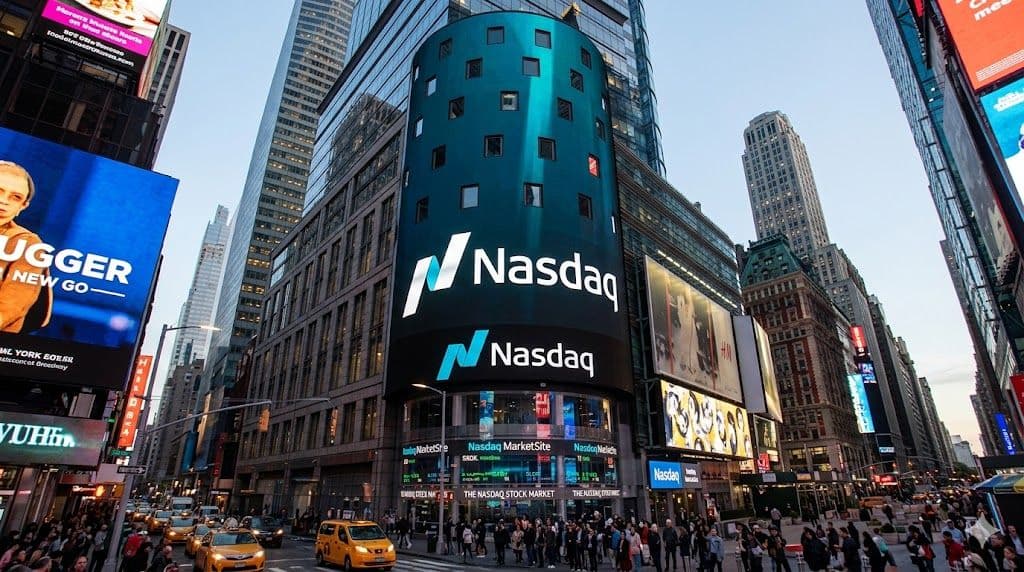
The U.S. Securities and Exchange Commission has approved a Nasdaq rule change that will allow certain stock trades to be settled in tokenized form, creating one of the clearest pathways yet for blockchain-based infrastructure to be used inside the U.S. public equities market.
Approved on Wednesday, the rule change will enable eligible participants in a pilot program run by the Depository Trust Company (DTC) — a subsidiary of the Depository Trust & Clearing Corporation (DTCC) — to opt to have equity trades settled in tokenized form, according to a SEC filing.
While the move does not create a new venue for public trading of blockchain-native equities, it represents a significant step toward integrating tokenized settlement into existing U.S. market structure.
Under the approved framework, participants in the pilot will be able to choose tokenized settlement for stock trades while still trading through the same market structure used for conventional equities.
According to the filing:
tokenized shares will share the same order book
tokenized trades will retain the same execution priority as traditional shares
tokenized shares must provide investors with the same rights and privileges as regularly traded equities
That means the tokenized form is being treated as a settlement-layer representation of the same underlying security, rather than as a separate class of asset.
This distinction is important because it preserves the legal and economic characteristics of the original stock while testing how blockchain-based settlement can operate within regulated public markets.
The approval is one of the most concrete examples yet of how U.S. regulators are beginning to accommodate tokenization within traditional financial infrastructure.
Until now, most tokenized stock offerings have largely existed outside the United States, typically through crypto-native platforms offering synthetic or tokenized exposure to publicly listed companies such as Tesla and Apple for non-U.S. users.
By contrast, Nasdaq’s approved rule change introduces tokenized functionality directly into the infrastructure of a major U.S. exchange and its post-trade environment.
That makes the development notable not because it immediately changes how retail investors buy stocks, but because it begins testing how regulated equity settlement could eventually move onto blockchain rails.
The move comes as the SEC under Chairman Paul Atkins has begun advancing a broader crypto-related rulemaking agenda, including work on a proposed innovation exemption that could support future onchain securities models.
At the same time, the agency has continued to stress that tokenized securities remain subject to existing securities laws.
That balance — openness to innovation, but within current legal boundaries — is increasingly defining the SEC’s approach under Atkins.
On Tuesday, Atkins said the SEC plans to seek public comment in the coming weeks on several issues tied to future rulemaking, including the innovation exemption.
“I really feel strongly that we need to have that firm foundation, give people certitude, attract people back here to the United States, work on innovative products for investors and to make our financial system more efficient and less risky,” Atkins said.
The comments suggest the SEC is trying to create a more predictable environment for tokenized finance without abandoning the existing investor protection framework that governs public securities markets.
Wednesday’s approval also builds on broader momentum from both crypto firms and traditional financial institutions pushing for tokenized securities infrastructure.
In December, the SEC approved a DTCC pilot to tokenize certain assets on approved blockchains, laying the groundwork for the current Nasdaq-linked development.
Separately, the New York Stock Exchange has said it is exploring platforms for trading and settling tokenized securities, including the possibility of extended trading hours.
Together, those developments point to a growing trend: rather than launching fully separate crypto-native stock markets, major incumbents appear increasingly focused on embedding tokenization into existing exchange, clearing, and settlement systems.
That could prove to be the more realistic path for adoption in the U.S., where regulated market structure remains tightly controlled.
Despite the momentum, tokenized securities continue to face resistance from some traditional finance groups, which have argued that stronger regulatory safeguards are needed before blockchain-based securities infrastructure can scale.
Critics have raised concerns around market integrity, operational resilience, investor protections, legal finality of settlement, and cross-platform interoperability.
Those concerns are likely to remain central as regulators consider broader frameworks for onchain securities and tokenized market infrastructure.
The SEC’s approval does not mean U.S. equities are suddenly trading fully onchain.
But it does mark a meaningful shift: tokenized representations of traditional stocks are now being allowed to plug into the settlement workflow of a major U.S. exchange under a regulated pilot framework.
That is a practical, infrastructure-level milestone.
If expanded, it could help shape the next phase of market modernization — one where blockchain is used not to replace public markets, but to upgrade how securities are issued, transferred, and settled.
For the tokenization sector, that may be more important than any isolated crypto-native stock product: it signals that the U.S. regulatory system is beginning to test how core capital markets infrastructure can move onchain.

Disclaimer of Warranty
The information provided in this article is for general informational purposes only. We make no warranties about the completeness, reliability, and accuracy of this information. Read full disclaimer

Editor's Picks

Why Zondacrypto’s Collapse Would Unfold Differently in the UAE

Walid Abou Zaki

Aug 28, 2026

8 min

The Missing Orchestration Layer Holding Back Institutional Digital Assets
Julian Sawyer
Aug 18, 2026
5 min

Beyond Crypto Access: How ARP Digital Is Building the UAE’s Digital Capital Infrastructure
Anna K.
Aug 17, 2026
8 min
Read More Articles

In the Same Space

UK Weighs Exemption for Tokenized Gold as London Pushes Into Digital Markets
News Desk
Sep 14, 2026
6 min

FAB and Citi Complete 24/7 USD Payments With Tokenized Deposits Through Swift
News Desk
Sep 2, 2026
4 min

Kalshi's Bid for Non-Stop Stock Perpetuals Reignites CFTC-SEC Turf War
News Desk
Sep 11, 2026
8 min

SEC Seeks to Allow Blockchain as Official Ledger for Tokenized Securities
News Desk
Sep 11, 2026
7 min