Advertisement
Tokenization Infrastructure
Share
Hong Kong's HKMA has expanded its EnsembleTX pilot to enable 24/7 settlement of tokenized deposits using tokenized central bank money, moving beyond the constraints of the conventional RTGS system with 12 banks and 20 industry participants involved.
Hong Kong is taking another step towards round-the-clock digital financial markets, expanding its EnsembleTX pilot to enable real-value transactions involving tokenized deposits to settle 24 hours a day, seven days a week, using tokenized central bank money.
The Hong Kong Monetary Authority (HKMA) announced the development on November 2, marking an important expansion of the initiative beyond the operating hours of conventional banking settlement systems. The upgrade allows participating banks to settle transactions continuously, potentially making digital asset markets and institutional treasury operations more flexible.
The project currently involves 12 participating banks and 20 industry leaders. Under the previous arrangement, interbank settlement relied on Hong Kong’s Real Time Gross Settlement (RTGS) system. The latest development introduces around-the-clock settlement capabilities, allowing transactions to be completed outside traditional banking hours.
The expanded infrastructure is designed to support transactions involving corporate treasury management and tokenized investment products, with central bank money serving as the settlement asset for payments between banks. This could help financial institutions manage liquidity more efficiently while reducing their dependence on fixed settlement windows.
The HKMA launched the EnsembleTX pilot in November 2025 to test real-value transactions involving tokenized deposits and digital assets within a controlled environment.
Initial experiments focused on tokenized money market fund transactions, alongside institutional requirements related to liquidity and treasury management. The initiative is now broadening its scope as Hong Kong looks to establish a more practical settlement infrastructure for digital financial assets.
The HKMA also confirmed that it had completed secondary-market trading trials involving tokenized Exchange Fund Bills. These experiments are intended to improve the efficiency of trading and repurchase transactions involving the securities.
Another planned development is the inclusion of regulated stablecoins in future trials. This could allow stablecoins to be used in settlement processes involving tokenized financial assets, although the authority has not announced a timeline for that phase.
The expansion is significant because it brings different forms of digital money and tokenized financial instruments closer to a shared settlement environment. Rather than treating tokenization as a way to digitize individual assets, the project is testing the infrastructure needed to support transactions across the broader financial system.
The EnsembleTX expansion comes alongside other developments aimed at bringing regulated stablecoins into Hong Kong’s financial system.
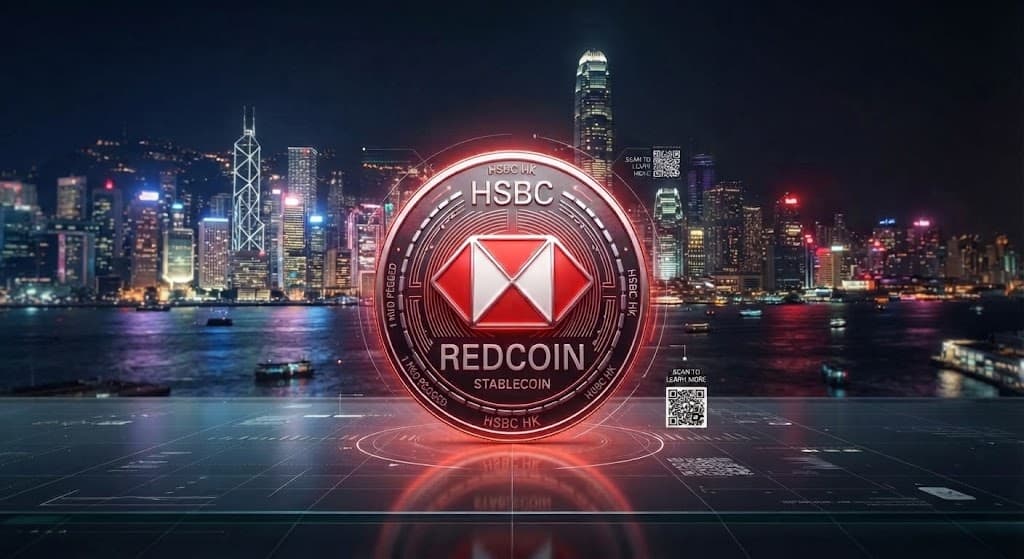
On October 23, HSBC launched its Hong Kong dollar-linked stablecoin, HSBC RedCoin, through its PayMe platform, making it available to more than 3.3 million users.
The stablecoin supports peer-to-peer transfers and payments at participating merchants. HSBC has also outlined plans to support purchases of tokenized investment products using the asset in the future.
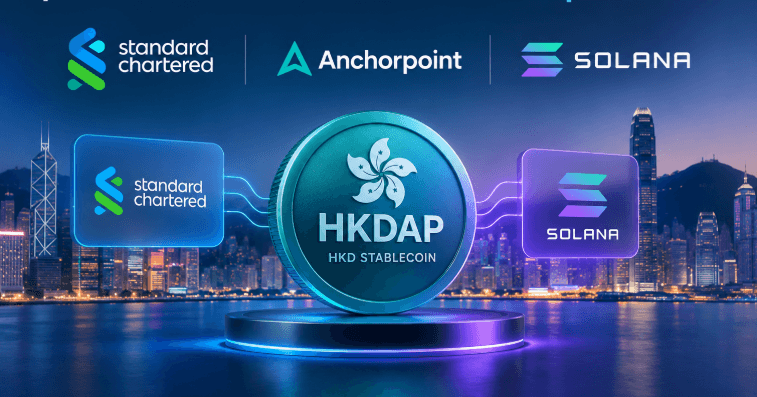
The launch builds on Hong Kong’s move toward a regulated stablecoin market. In April 2026, the HKMA granted its first two stablecoin issuer licences to Anchorpoint Financial and HSBC under the city’s regulatory framework.
Together, these developments suggest that Hong Kong is moving beyond the rulemaking stage and testing how regulated stablecoins can function in everyday payments and more sophisticated financial transactions.
Hong Kong is also working to expand trading opportunities for tokenized investment products.
On October 26, the Securities and Futures Commission (SFC) approved secondary-market trading for two public tokenized money market funds through a licensed virtual asset trading platform. The arrangement allows trading around the clock.
The approval builds on a framework introduced by the SFC in April 2026 to facilitate secondary-market trading of regulated tokenized investment products. The framework seeks to broaden investor access while maintaining safeguards covering fair pricing, liquidity, disclosure and investor protection.
This development complements the objectives of EnsembleTX. Tokenized deposits and digital central bank money could provide the settlement infrastructure needed to support more efficient transactions involving tokenized funds.
Combining continuous trading with digital settlement could help financial markets operate beyond conventional banking hours. However, achieving this in practice will depend on sufficient liquidity, reliable infrastructure and appropriate operational controls.
Alongside its settlement initiatives, the HKMA has introduced the T-Connect Launchpad in partnership with Cyberport.
The platform is designed to bring together financial institutions, technology companies and digital asset developers to explore practical applications involving tokenization, payments, settlement and interoperability.
Participants will have an opportunity to develop and test solutions while connecting them with relevant financial infrastructure. The initiative aims to help move tokenization projects beyond limited experiments and toward commercially viable applications.
It also reflects Hong Kong’s broader effort to strengthen cooperation between established financial institutions and technology developers, particularly as tokenized assets become more closely integrated with conventional financial services.
The expansion of EnsembleTX points to a broader ambition: developing an interconnected financial ecosystem in which tokenized deposits, central bank money, regulated stablecoins and digital investment products can work together.
One of the longstanding challenges facing tokenized financial assets has been the mismatch between the speed of digital trading and the operating schedules of traditional banking settlement systems. Enabling continuous settlement could help address that gap, allowing transactions to move more closely in line with the pace of digital markets.
But 24/7 settlement alone will not guarantee the development of fully continuous financial markets. Institutions will still need adequate liquidity, interoperability between different systems and robust controls to manage operational and compliance risks.
The planned inclusion of regulated stablecoins will provide another important test: whether different forms of digital money can be connected within a common settlement infrastructure without compromising the safeguards expected of the financial system.
Ultimately, the next phase will be measured by the extent to which these experiments translate into sustained institutional use, broader transaction volumes and support for a wider range of tokenized assets.

Disclaimer of Warranty
The information provided in this article is for general informational purposes only. We make no warranties about the completeness, reliability, and accuracy of this information. Read full disclaimer

Editor's Picks
Binance After the $6.3B Hack: A Turning Point for the Exchange

Walid Abou Zaki

Nov 2, 2026

10 min

“One Financial System”: What OKX’s New Investors Are Backing
Walid Abou Zaki
Oct 8, 2026
6 min
When Assets Move—or Stop—Without Consent: The Limits of Crypto Wallet Control
Walid Abou Zaki
Sep 29, 2026
6 min
Read More Articles

In the Same Space
The Stablecoin Race Is Coming to Community Banks
News Desk
Oct 27, 2026
6 min

China Is Bringing Crypto Into Its Wider War on Hidden Wealth
News Desk
Nov 2, 2026
5 min
Binance After the $6.3B Hack: A Turning Point for the Exchange
Walid Abou Zaki
Nov 2, 2026
10 min
Bitcoin ETFs See $643 Million Exit in One Day, Reversing Much of 2026’s Gains
News Desk
Nov 2, 2026
6 min