
Advertisement
Research & Analysis
Share
WA
CEO & Editor-in-Chief


There is a version of the Haifin story that reads like a UAE fintech success. A blockchain-powered platform, built by banks for banks, quietly solving one of trade finance's most persistent problems — duplicate and fraudulent invoice financing. By 2023, the platform had processed AED 120 billion in a single year, with a total exceeding AED 200 billion since its commercial launch. It was profitable. It was expanding. And for those tracking distributed ledger technology in UAE banking, it was the most credible real-world proof point the region had produced.
Then, quietly, things started to shift.
To understand where Haifin stands today, you need to understand what it was built to fix.
Duplicate invoice financing fraud had long been a structural blind spot in the UAE banking system. A trader could present the same invoice to multiple banks simultaneously, securing financing from each without any of them knowing. The damage was real — it had caused some institutions to exit entire client segments, with SME financing and the broader economy bearing the consequences. No single bank could solve it alone. The fix required every institution to see the same picture at the same time.
The answer was a shared, decentralized ledger — one where no single bank owned the data, but all could verify against it in real time. Data stayed at each bank's own node; only a hashed, encrypted version synchronized across the network. It worked. Within the first eight months of operation, the platform had already processed AED 10 billion worth of invoices. Banks began blacklisting customers, restricting credit limits, and in some cases reporting suspected fraud to regulators — not because the system flagged theoretical risks, but because it was catching real ones.
UAE Trade Connect launched commercially in April 2021 with seven founding banks and the backing of Etisalat Digital — now e& enterprise. FAB was a key champion from the start, but its prominence created an early political challenge. As one of the UAE's largest banks, FAB's active involvement risked making other institutions feel they were joining a competitor's platform rather than a neutral industry utility. FAB stepped back from the frontline — a deliberate move that helped attract a broader coalition and reinforced the platform's identity as shared national infrastructure.
The network grew steadily. Dubai Islamic Bank joined, then Abu Dhabi Commercial Bank, then United Arab Bank in 2023. By early 2024, the platform had grown to 15 institutions and rebranded as Haifin, signaling ambitions beyond the UAE — into Egypt, Turkey, South Africa and beyond. The tagline "Built by Banks, For Banks" was not just marketing. It reflected a genuine co-creation model that gave the platform real credibility with its own members.
Yet beneath the strong numbers, a tension was never fully resolved — and it was never technological.
Haifin was always a private initiative. e& enterprise built it. Banks joined voluntarily. The Central Bank of the UAE was supportive and publicly endorsed it at launch as a meaningful step toward reducing fraud risk in trade finance. But that endorsement stopped short of the one thing that would have made the platform truly indispensable: a regulatory mandate requiring all banks operating in UAE trade finance to participate.
Without it, the system had a permanent ceiling. A trader working with a bank outside the consortium — and major international players like HSBC and Citi never joined — could still present the same invoice to a member bank with no alarm raised. The fraud risks the platform was built to eliminate could simply migrate to its edges.
This created a quiet asymmetry that was difficult to ignore over time. Banks inside the consortium bore the full cost of operating the infrastructure. Those outside faced none of those costs, while their clients could still exploit the gaps in coverage. Joining was the right thing to do for the integrity of UAE trade finance — but it came at a price that non-members never had to pay. The Central Bank was not indifferent to the platform. But it never sent the signal the industry needed: that participation was not optional.
In recent months, Haifin has gone through a visible period of transition. The platform's founding CEO has moved on to a new chapter — a natural part of any company's evolution. What is more significant, from an industry standpoint, is the quiet exit of two founding members: RAKBank and Emirates NBD — both among the original seven banks that built this from the ground up.
Neither has commented publicly, which is understandable. But their departure raises questions the industry deserves answers to. Was it a commercial decision? A response to the cost structure? Uncertainty about the platform's direction under e&? The answer matters — not just for Haifin, but for every consortium-based blockchain initiative that follows this model in the region.
Haifin's journey is one of the most instructive case studies the UAE fintech ecosystem has produced — and one of the very few blockchain deployments in banking anywhere in the world that moved beyond pilots into genuine commercial operation at scale.
The technology worked. The problem was real. The execution, for several years, was impressive. What the platform could not solve alone was the political economy around it: the reluctance to mandate participation, the challenge of sustaining institutional commitment when the cost equation felt asymmetric, and the difficulty of maintaining a private network without the regulatory anchor that would have made it essential to every bank in the system.
Haifin is still live, still hosting 14 commercial and Islamic banks and five fintechs, and still carrying global expansion ambitions on its website. e& has yet to make any public statement about the platform's future direction.
Our hope is that this is a moment of recalibration — not retreat. The problem Haifin was built to solve has not gone away. As the UAE cements its position as a global trade and financial hub, the need for a comprehensive, unified fraud-detection network across the entire banking system is greater than ever.
We hope to see RAKBank and Emirates NBD return to the table. We hope HSBC, Citi, and the international banks still on the sidelines recognize that their absence weakens a system that ultimately serves their own clients too. And we hope the Central Bank of the UAE will consider whether the time has come to move from endorsement to mandate — making participation in the UAE's blockchain trade finance infrastructure a requirement, not a choice.
Haifin proved the technology works. The ecosystem now needs to prove it is serious about using it.

Disclaimer of Warranty
The information provided in this article is for general informational purposes only. We make no warranties about the completeness, reliability, and accuracy of this information. Read full disclaimer

Editor's Picks

As U.S. Crypto Legislation Stalls, Circle Launches Its Own Financial Network

Walid Abou Zaki

Sep 16, 2026

9 min

Stablecoin Yield Fight Helps Derail CLARITY Act in Senate
Walid Abou Zaki
Sep 15, 2026
8 min
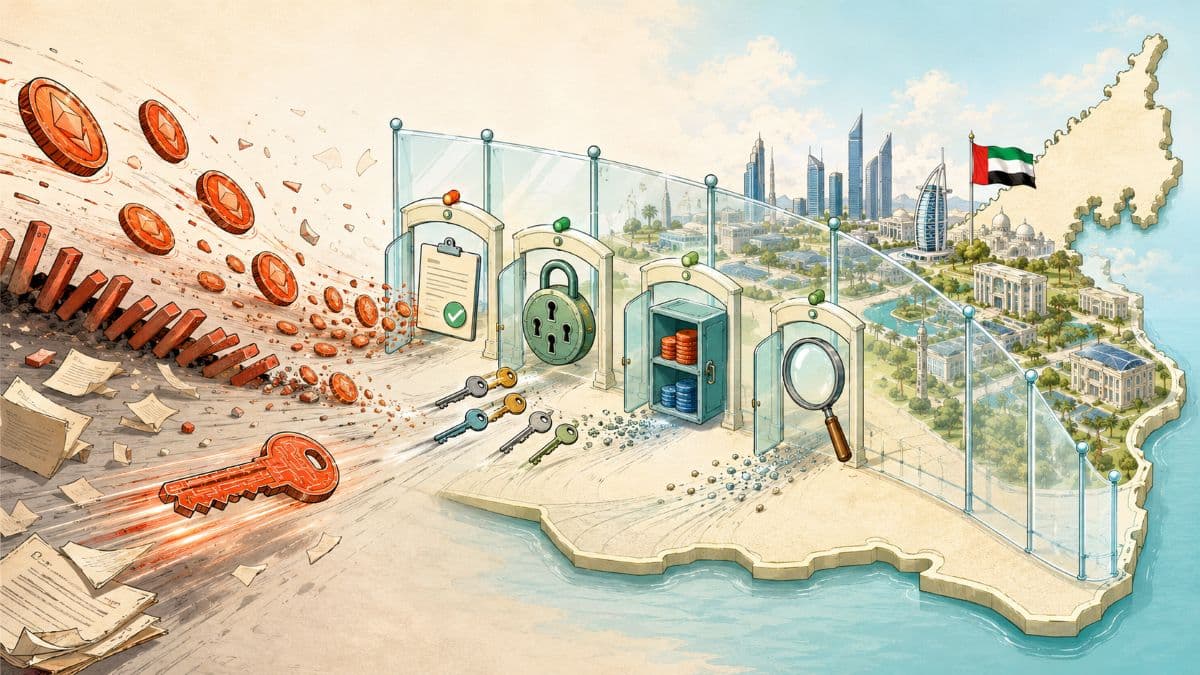
Why Zondacrypto’s Collapse Would Unfold Differently in the UAE
Walid Abou Zaki
Aug 28, 2026
8 min
Read More Articles

In the Same Space
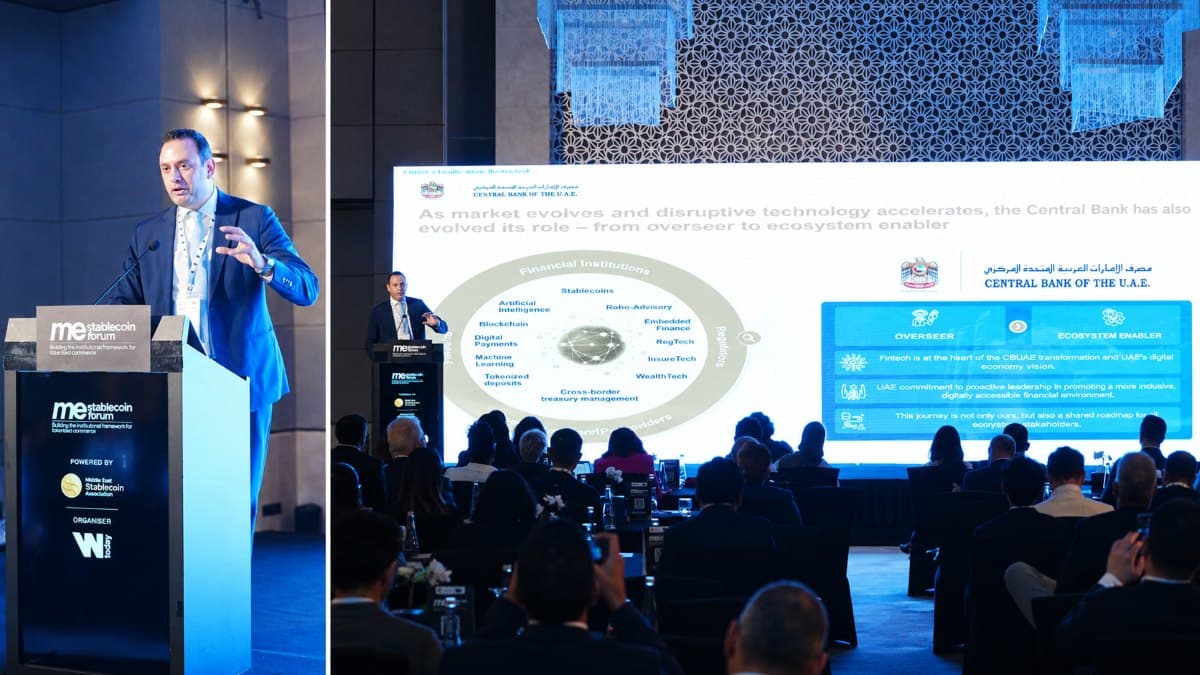
UAE Stablecoin Market Expands as Digital Dirham Enters Next Phase
News Desk
Sep 18, 2026
7 min

Lunar Ark Secures VARA In-Principle Approval for Virtual Asset Brokerage
News Desk
Sep 17, 2026
2 min
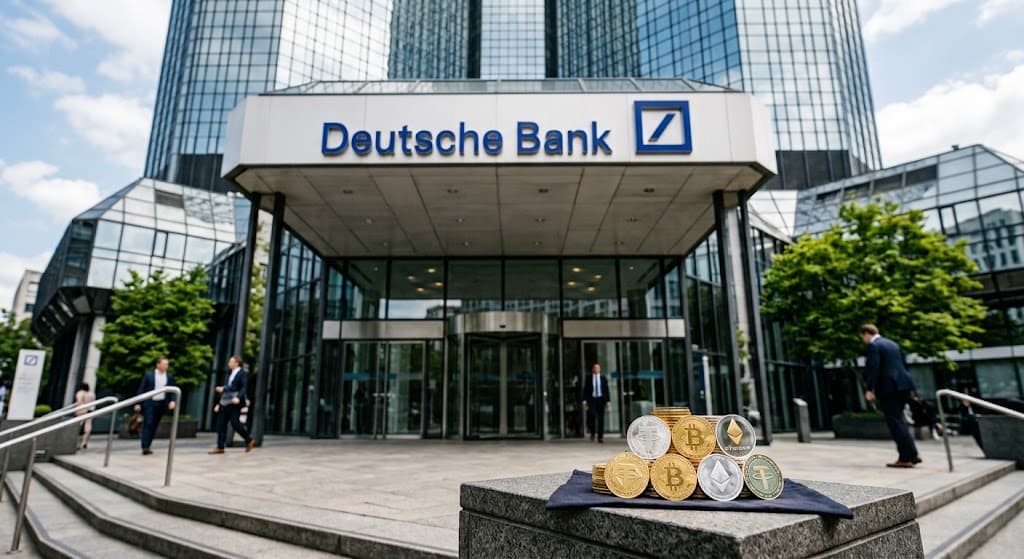
Deutsche Bank Moves Into Institutional Crypto Custody With Bitcoin, Ether and Stablecoins
News Desk
Sep 17, 2026
4 min

USDU Expands UAE Reach With Crypto.com App Integration
News Desk
Sep 10, 2026
4 min