Advertisement
Policy & Industry
Share
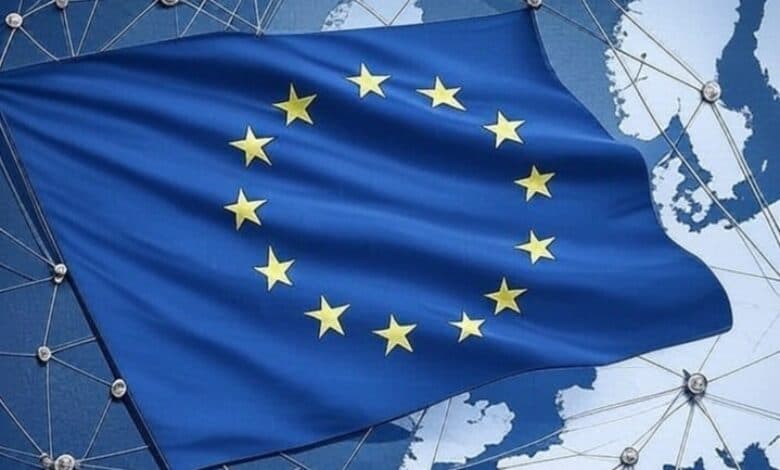
The European Union has proposed broadening its sanctions regime to target crypto platforms and financial intermediaries accused of helping Russia bypass existing restrictions, as part of its upcoming 21st sanctions package.
European Commission President Ursula von der Leyen, announcing the measures, said the package will focus on high-impact sectors, including financial services, energy, and digital assets.
The European Commission (EC), the EU’s executive arm, said it plans to extend transaction bans to around 20 non-EU entities, including banks, crypto platforms, and commodity traders linked to sanctioned Russian individuals and entities.
A key development in the proposal is the potential introduction of a country-level ban on crypto services provided by non-EU jurisdictions where platforms are believed to facilitate sanctions evasion.
Von der Leyen said the measure would act as a deterrent for jurisdictions hosting platforms involved in circumventing EU sanctions.
Earlier reports indicated the EU had already been evaluating broader restrictions on crypto transactions involving Russian entities, reflecting a gradual tightening of digital asset enforcement across the bloc.
The proposed package comes amid rising concerns over illicit crypto flows. According to Chainalysis, the total value received by illicit crypto addresses reached $154 billion in 2025, with a significant share linked to state-affiliated activity.
Blockchain analytics firms have also highlighted the role of Russia-linked flows, including activity associated with the ruble-backed stablecoin A7A5, which recorded approximately $93.3 billion in transaction volume, according to industry data.
Research by Elliptic previously identified several exchanges that allegedly provided pathways for sanctions evasion. Separately, the UK’s Financial Conduct Authority has taken enforcement action against crypto platforms linked to Russian activity.
In parallel, Russia is preparing a comprehensive crypto regulatory framework expected later this year, which would establish licensed domestic trading infrastructure.
The move signals an effort to formalize parts of its digital asset market while global regulatory pressure continues to intensify.
Beyond digital assets, the EU’s proposed package also targets Russia’s energy and trade sectors, including oil shipping vessels and fisheries, marking an expansion of enforcement into previously less regulated areas.
Von der Leyen said the measures are designed to strengthen economic pressure on Russia.
“Our sanctions keep biting hard and cutting deep,” she said. “They are weakening the economic foundations of Russia’s war effort.”

Disclaimer of Warranty
The information provided in this article is for general informational purposes only. We make no warranties about the completeness, reliability, and accuracy of this information. Read full disclaimer

Editor's Picks
Why Zondacrypto’s Collapse Would Unfold Differently in the UAE

Walid Abou Zaki

Aug 28, 2026

8 min

The Missing Orchestration Layer Holding Back Institutional Digital Assets
Julian Sawyer
Aug 18, 2026
5 min

Beyond Crypto Access: How ARP Digital Is Building the UAE’s Digital Capital Infrastructure
Anna K.
Aug 17, 2026
8 min
Read More Articles

In the Same Space
EU Puts Crypto Wallets on 24-Hour Breach Clock as Revolut Data Leak Highlights Security Risks
News Desk
Sep 14, 2026
5 min

CoinEx Winddown Shows the Rising Cost of Running a Global Crypto Exchange
News Desk
Sep 15, 2026
4 min

Crypto Won. Now It Will Disappear
Juha Viitala
Sep 15, 2026
6 min

Final CLARITY Act Draft Puts Stablecoin Yield Under Treasury’s Watch
News Desk
Sep 15, 2026
4 min