
Advertisement
Insights
Share
The digital asset industry is gradually shifting away from speculative trading toward practical financial use cases, according to Alex Svanevik, founder and CEO of blockchain analytics firm Nansen, who believes tokenization is reshaping the role blockchain will play in global finance.
Speaking to Trade Secrets, Svanevik said the industry is transitioning from what he described as blockchain's "gaming era" into a new phase focused on real-world financial infrastructure.
He pointed to the growing adoption of tokenized equities and the ability to trade traditional financial products, including S&P 500 exposure, on decentralized platforms such as Hyperliquid as evidence that blockchain is expanding well beyond its origins in cryptocurrencies.
According to Svanevik, blockchain's greatest opportunity today lies in enabling a much broader range of traditional assets to be represented and traded digitally.
Rather than focusing solely on native digital assets, Svanevik believes blockchain is increasingly becoming financial infrastructure capable of supporting tokenized versions of conventional investments.
The emergence of tokenized stocks, indexes, and other real-world assets signals what he sees as the industry's next stage of development, where practical utility begins to outweigh speculative trading.
As institutional interest in tokenization continues to grow, blockchain networks are increasingly competing to support financial products traditionally offered through legacy capital markets, according to Cointelegraph.
Among public blockchain networks, Svanevik expressed confidence in Solana, arguing that the network's long-term potential extends far beyond its association with meme coins.
He dismissed the notion that Solana is primarily a platform for speculative tokens, saying its technology and developer ecosystem have evolved into one of the strongest in the industry.
Svanevik also praised Solana's business development efforts, describing the network's team as one of the most effective in driving ecosystem growth and attracting new applications.
Despite his optimism about the network itself, he stopped short of making a bullish prediction for SOL, noting that a successful blockchain ecosystem does not necessarily translate into equivalent price appreciation for its native token.
"I think Solana as an ecosystem and as a network will perform well," he said. "I don't know what that means for the price of SOL."
Svanevik founded Nansen in 2019 alongside Lars Bak Krogvig and Evgeny Medvedev.
The company has since become one of the leading blockchain analytics platforms, tracking millions of labeled cryptocurrency wallets across multiple blockchain networks to provide institutional investors and market participants with on-chain intelligence.
Beyond Nansen, Svanevik also joined the advisory board of NFT project Pudgy Penguins in 2022, expanding his involvement across the broader digital asset ecosystem.
Svanevik also shared an optimistic outlook for Bitcoin, saying he does not expect the cryptocurrency to fall below $60,000 again.
His view is based largely on Bitcoin's role as a hedge against ongoing monetary expansion by central banks, arguing that global liquidity conditions are unlikely to tighten enough to trigger a sustained decline below that level.
The comments come as Bitcoin analysts remain divided over whether the market has already established its cycle bottom after briefly falling toward $60,000 earlier this year before recovering and later returning to trade near that range.
Not all market participants share Svanevik's optimism.
Veteran crypto investor Michael Terpin recently told Cointelegraph that Bitcoin could experience another significant decline before establishing a definitive market bottom.
Terpin suggested the cryptocurrency could ultimately retrace as much as 66% from its all-time high of $126,100, recorded in October 2025, potentially placing Bitcoin in the $40,000 range before finding long-term support.
The contrasting forecasts highlight the uncertainty that continues to surround Bitcoin's price outlook, even as institutional adoption accelerates.
The differing views on Bitcoin illustrate a broader divide in how the digital asset industry is increasingly being evaluated.
While short-term price movements remain closely watched, the more significant transformation may be taking place beneath the surface, as blockchain evolves into infrastructure capable of supporting tokenized versions of traditional financial assets.
As tokenized equities, indexes, and other real-world assets continue gaining traction, competition among blockchain networks may increasingly revolve around attracting institutional users, providing deep liquidity, and enabling real financial activity rather than simply fueling speculative trading.
If that trend continues, the long-term success of blockchain ecosystems could depend less on meme coin activity and more on their ability to serve as the foundation for next-generation financial markets.

Disclaimer of Warranty
The information provided in this article is for general informational purposes only. We make no warranties about the completeness, reliability, and accuracy of this information. Read full disclaimer

Editor's Picks
In the Same Space

Solana Begins Testing Alpenglow Upgrade Targeting 150ms Finality

News Desk

Sep 23, 2026

3 min

JPMorgan Predicts Bitcoin Rally Against Gold Amid Shifting ETF Strategies
News Desk
Sep 18, 2026
3 min
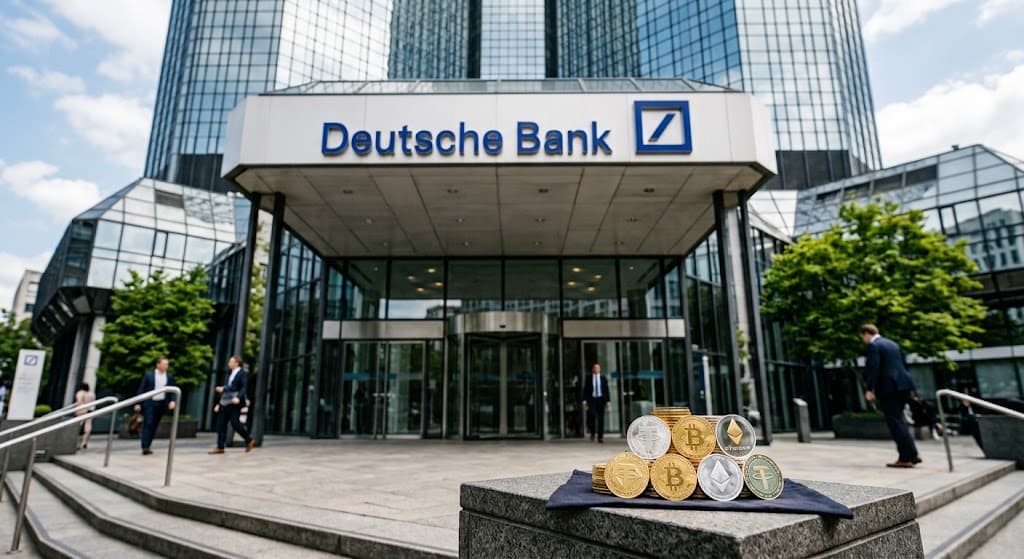
Deutsche Bank Moves Into Institutional Crypto Custody With Bitcoin, Ether and Stablecoins
News Desk
Sep 17, 2026
4 min

Ethiopia Slashes Bitcoin Mining Power by 77%, Why?
News Desk
Sep 16, 2026
6 min